




























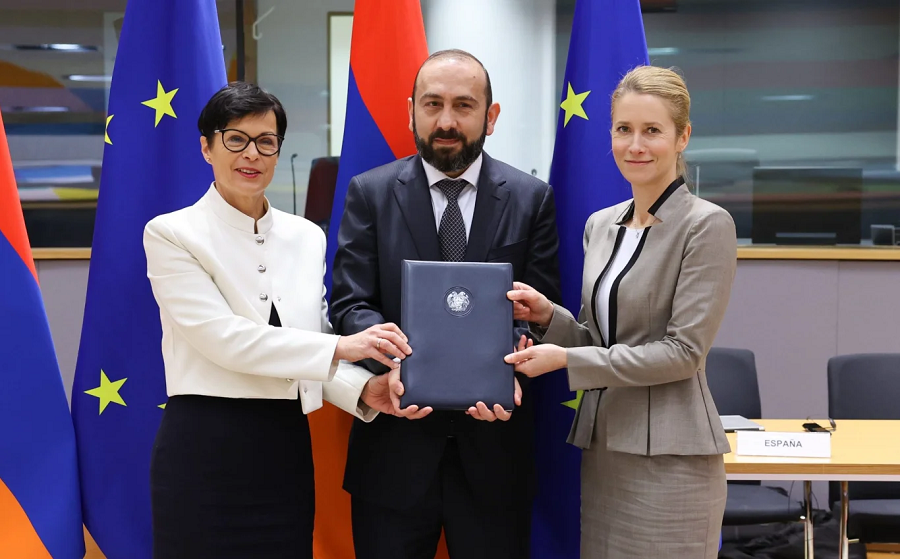
EU NEIGHBOURS east. The European Union and the Republic of Armenia have adopted a new Strategic Agenda for the EU-Armenia Partnership.
The document was endorsed by the EU-Armenia Partnership Council on 2 December and replaces the 2017 Partnership Priorities, setting out a comprehensive framework for joint action.
Building on the foundations of the EU-Armenia Comprehensive and Enhanced Partnership Agreement (CEPA), the Strategic Agenda responds to Armenia’s expressed ambition to strengthen ties with the European Union.
The document covers a wide range of areas, including democracy and rule of law, justice reform, human rights, socio-economic development, connectivity, energy security, digital transformation, trade diversification, and new cooperation on security and defence.
Read also
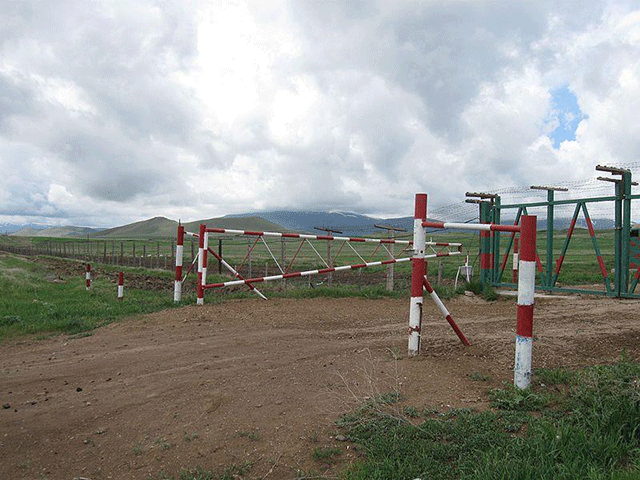
“There is a once in a generation opportunity to build peace in the South Caucasus,” said EU Commissioner for Enlargement Marta Kos. “Stability in the region is key to diversify our trade.”
Connectivity is the central pillar of the document, highlighting joint efforts to enhance transport, digital and energy links between Armenia, the region and the EU.
The Agenda emphasises strategic investments under the Global Gateway and support for initiatives such as the ‘Crossroads of Peace’ to improve regional interconnections, boost economic resilience and open new opportunities for trade and mobility.
The Agenda introduces short-term (3-4 years) and medium-term (7 years) priorities, designed to deliver tangible benefits for citizens and support Armenia’s resilience in the face of a challenging regional environment.
It also reaffirms the EU’s strong commitment to supporting Armenia’s reform agenda, including through technical and financial assistance under the Resilience and Growth Plan.
The Strategic Agenda also underscores the importance of mobility, notably through the ongoing visa liberalisation dialogue, and support for the social and economic inclusion of displaced Karabakh Armenians. It also strengthens cooperation in the fields of security, crisis management, hybrid threats and cyber resilience, while maintaining the EU’s full support for efforts towards lasting peace in the region.
According to the EU, the Agenda “confirms the EU’s readiness to work closely with Armenia, its civil society and international partners to advance shared values, promote stability and prosperity, and deliver concrete results for citizens on both sides.”