








































— The Genocide Education Project highlights nationwide education efforts, urgent need for teacher training resources to build a more humane future
WASHINGTON, DC – Educators and advocates gathered on Capitol Hill this week to update legislative offices on progress in promoting comprehensive genocide education in U.S. schools and to press for passage of the Armenian Genocide Education Act (H.R. 2585), a bipartisan measure to authorize $10 million over five years to support genocide education and teacher training nationwide.
The December 3rd briefing, titled “Preventing Genocide through Education” and hosted by the Armenian National Committee of America (ANCA), featured expert educators from The Genocide Education Project (“GenEd”) who detailed their programs across 34 states, while stressing the critical need for federal resources to scale their work and reach millions more students.
The briefing was live webcast on ANCA’s and The Genocide Education Project’s social media channels and can be viewed at https://www.youtube.com/watch?v=vgWYWo9-D8o.
Read also
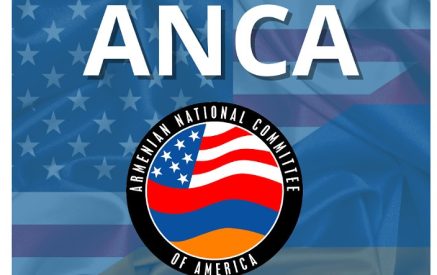


“The Armenian people have suffered genocide twice in one century – perpetrated by the same by the same actors, motivated by the same ideology,” said ANCA Policy Director Alex Galitsky, opening the briefing. “Having witnessed history repeat itself in Artsakh, it is now more important than ever for us to ensure genocide education is accessible and supported by federal funding – because genocide prevention begins with education.”
GenEd Co-Founder and Executive Director Roxanne Makasdjian detailed GenEd’s 25-year track record developing curriculum materials, conducting teacher training workshops, and partnering with numerous state departments of education. The organization provides free secondary-level lesson plans and resources through its website, but reaches only a fraction of the teachers who need support.
Makasdjian provided compelling testimony of what comprehensive genocide education can accomplish when properly funded and supported. For example, in the four years of GenEd’s Teacher Fellowship Program in Armenia, the organization has trained 60 teachers across 34 states. Through a multiplier effect where each fellow trains 20 additional teachers, the program is projected to reach over one million students by 2028.
Referring to the initial California laws mandating Armenian Genocide education, Makasdjian said, “what we learned from the California state experience was that a huge obstacle of getting that mandate carried out was the fact that there were absolutely no financial appropriations designated to create materials or to offer training. So, everything stops right there.”
Kerri Flynn, Education Director at GenEd and a 25-year veteran high school social studies educator, emphasized that teaching about genocide requires specialized training and appropriate pedagogy. Flynn created a Human Rights and Genocide course at Washington High School near St. Louis, Missouri, and serves as Executive Secretary for the Missouri Council for the Social Studies.
“Teaching about genocide is teaching the human story. This isn’t like your history class where you can just memorize dates and places,” Flynn said. “This is about people, the impact and the power of the story and the experience.”
Flynn stressed the consequences when mandates pass without funding. “In many states they will pass a mandate for teaching a certain genocide, or even the Armenian case, and they won’t fund it. That doesn’t do much good,” she said. “If you don’t train teachers how to teach about genocide, you’re going to get very poor results.”
She described how her own genocide course disappeared when she retired because her successor lacked proper training. “This bill is going to help fund that professional development so that teachers aren’t paying to improve themselves, to fulfill a mandate out of their own pockets,” Flynn said. “If we want them to deliver the very best, we have to put the money out.”
Alex Riddell, a sixth-year teacher at Marshall High School in Falls Church, Virginia, explained how the Armenian Genocide often gets buried in overcrowded curriculum standards. In Virginia, the Armenian Genocide appears as “a single bullet point at the very bottom of the standards, with seven other genocides,” removed from its World War I context.
“It is at the very bottom and as a teacher sometimes we might not get to that last bullet point because we have to teach 500 years of history in nine months,” Riddell said. She participated in GenEd’s Teacher Fellowship Program, traveling to Armenia for intensive training that transformed her teaching approach.
“I focus with my students a lot on prevention,” Riddell explained. “And so we go through the 10 stages [of genocide]. And I say, if you see this polarization, this classification of people, if you see the violence that is occurring, how do you stop it? What can you do as future leaders?”
Riddell noted that not all teachers have access to the resources she found in Fairfax County’s well-stocked public libraries. “Not every town is going to have a public library that’s so stocked with the research that’s available to them,” she said. Riddell also credited the GenEd Teacher Fellowship Program, stating “I’m very lucky in my sixth year of teaching that I was given this opportunity.”
ANCA Policy Director Galitsky connected genocide education to contemporary policy challenges, noting how the impunity Turkey has enjoyed for its perpetration and denial of the Armenian genocide has emboldened and enabled its aggression today. He pointed to Biden’s failure to prevent the ethnic cleansing of Artsakh in 2023, and President Trump’s failure to acknowledge Armenian Genocide in his April 24th statement, as examples of the consequences of our failure to truly learn the lessons of history.
“The Armenian Genocide never really ended,” Galitsky said. “It continued in Azerbaijan’s ethnic cleansing of Artsakh. It also continues in Turkey’s ongoing denial of the crime, in the continued destruction and erasure of Armenian heritage in modern-day Turkey, and in the ongoing threats Armenian and other Christian minorities face today in Turkey.” Galitsky went on to describe how Turkey’s coercive efforts to block U.S. recognition of the Armenian Genocide also led Washington to be “far more reluctant to hold Turkey accountable” for its aggression and human rights abuses in the region happening today.
The Armenian Genocide Education Act, spearheaded by Representatives Dina Titus (D-NV), Gus Bilirakis (R-FL), Ted Lieu (D-CA), and David Valadao (R-CA), currently has 63 cosponsors in the U.S. House of Representatives. The legislation would direct the Library of Congress to implement a nationwide education program about the genocide committed by the Ottoman Turkish Government from 1915 to 1923 against Armenians, Assyrians, Greeks, Syriacs, Arameans, Maronites, and other Christians.
The bill supports development and dissemination of educational materials, teacher training, online resources, and curriculum integration to teach students across the U.S. about the causes, consequences, and enduring lessons of this unpunished crime against humanity.
Galitsky noted that the goal of the Armenian Genocide Education Act is to “provide resources to empower the teachers and organizations who are already doing the work to bring genocide education to schools across the country” and to “scale and institutionalize the incredibly important work already being done by organizations like the Genocide Education Project.”
“Even the modest funding that this bill would seek to allocate – $10 million over 5 years – would go an incredibly long way,” Galitsky said, noting that GenEd has accomplished extraordinary reach over 25 years while relying largely on private donations.
The briefing took place just days before the National Council for the Social Studies Conference in Washington, DC, where GenEd is participating and conducting additional teacher training workshops.
Armenian Americans and genocide education advocates can urge their Representatives to cosponsor the Armenian Genocide Education Act by visiting https://anca.org/education.
The full text of H.R. 2585 is available at https://anca.org/assets/pdf/0425_AGEA_Titus_BillText.pdf
The ANCA policy brief on the role of the Armenian Genocide Education Act in preventing future genocides is available at https://anca.org/educationbrief.
Armenian National Committee of America