




















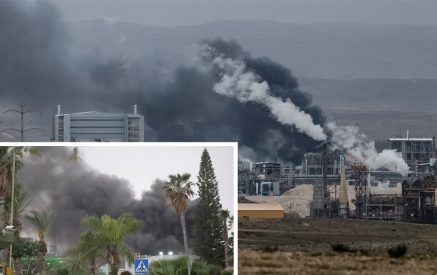














The year began with a dramatic yet predictable development: the United States attacked Venezuela and changed the country’s government. At least, that is how U.S. President Trump has described it. This is hardly new. In previous years, power was changed in roughly the same way in Iraq, Libya, Syria, and several other countries. Authoritarian (truly authoritarian) regimes were replaced by regimes that are very difficult to call “democratic.” The degree of chaos in those countries varies, but state institutions have been dismantled to one extent or another.
The United States had just as many “grounds” for attacking Venezuela as Russia had for attacking Ukraine. In the first case, it was the “establishment of democracy” and the “fight against drug trafficking” (oil is mentioned less often). In the second case, it was the protection of the “Russian-speaking population.” Pretexts for aggression can always be found. There are also “high-minded ideological” justifications: the “Russian world,” “empire,” and perhaps some modern reformulations of the Monroe Doctrine as well — whatever happens in the Western Hemisphere must be under U.S. control.
But the point is that today any great power can attack any country, and there is no effective international mechanism to prevent such an attack. And for us — that is, for the “non-great powers” — the lesson is this: any war takes place with the “okay” of the great powers. In 2020, Azerbaijan had the “okay” from Russia and the West, and that is why it attacked Artsakh. Now it does not have that “okay,” it does not attack Armenia, and “peace has been established.”
…Too bad it never occurred to Venezuelan President Nicolás Maduro to build a wall in his country’s “Kirants.” * Had he done so, the United States would not have attacked.
Read also
Aram ABRAHAMYAN
* “Cadastre certificate”
The phrase “cadastre certificate” https://radar.am/en/news/politics-2569812661/ refers to a statement by Armenian Prime Minister Nikol Pashinyan, who argued that Armenia, as a state, has historically lacked clearly fixed and fully institutionalized borders, metaphorically saying that the country has never had a “cadastre certificate.” The expression has since entered Armenian political discourse as shorthand for the vulnerability of states whose borders are disputed or weakly formalized.
* “The wall in Kirants”
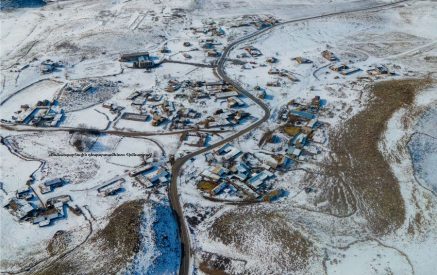
Kirants is a border village in Armenia’s Tavush province, where a concrete wall was built in 2024 following the delimitation of the Armenia–Azerbaijan border. Prime Minister Pashinyan has described the wall as a security measure https://armenpress.am/eng/news/1236994.html and has linked the absence of incidents in that area to the new border arrangements. In Armenian political commentary, the “wall in Kirants” is often used ironically to question simplified explanations of peace and security.