














In my view, Armenia is currently going through a difficult period, partly because society is experiencing a spiritual, intellectual, and moral crisis. This is my assessment, though many disagree and believe that there is no crisis at all — that this is actually the brightest period in Armenia’s history.
Let me try to explain what I mean by “crisis.”
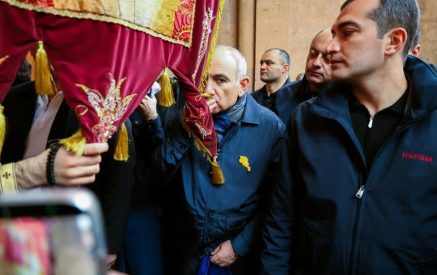
I’ll give an example that may seem minor in itself, but it is telling. I see a moral and spiritual crisis in the fact that a local mayor, an overly zealous supporter of the ruling party, causes a disturbance during a religious ceremony, and society immediately splits into two camps — “he did well” versus “he did wrong” — depending on political, clan, or personal preferences. Previously, such a thing would have been impossible. Any prominent member of the Armenian National Movement (ANM), Kocharian-era authorities, or the Republican Party of Armenia (RPA) would have opposed it if someone from their “team” acted this way, insisting that the blessing of pomegranates (a ceremony traditionally held in Armenian churches on December 31), the liturgy, the matins, and all other religious ceremonies are beyond politics. Today, no member of the Civil Contract party or a supporter of Nikol Pashinyan would say anything like that.
It is not new, of course, that such hooligan behavior has no legal consequences. The same could have happened 10 or 20 years ago: then as now, if someone “loyal” to the authorities broke the law, law enforcement could — and can — turn a blind eye. The crisis of justice, therefore, has been constant over the past 34 years. What is new is that there is also no societal consensus that such actions are unacceptable — that they are wrong and must be condemned in every case, regardless of political or personal preferences.
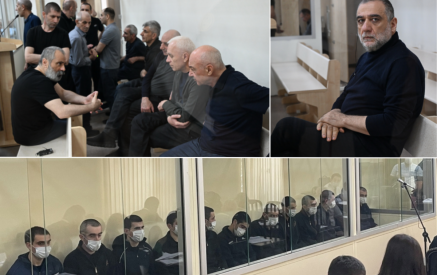
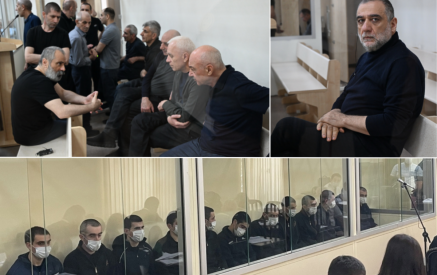
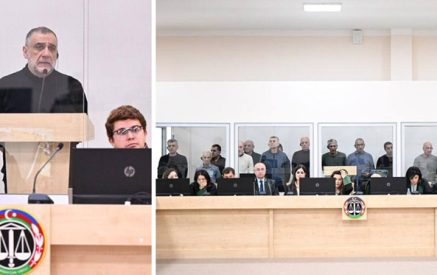
The same applies to obscene gestures in the Mother See, the same applies to calls to “smash” someone with a stone. The same applies to cruel, inhuman posts and comments about our compatriots being tortured in Baku’s prisons.
Read also
All of this is supposedly rooted in “political” disagreements — “pro-Russian vs. pro-Western,” “current vs. former,” “for the Catholicos vs. against the Catholicos” — and many other dividing lines that, in my opinion, are deliberately fostered by Pashinyan, his regime, and his propaganda. In reality, however, I am convinced that no individual — not the most ardent supporter of Pashinyan, not the most ostentatiously pro-Western, and not the most anti-Catholicos — should lose their human face. They should, for example, respect religious rites and not rejoice when people are imprisoned for crimes they did not commit.
The crisis lies precisely in the absence of shared standards.
Aram ABRAHAMYAN