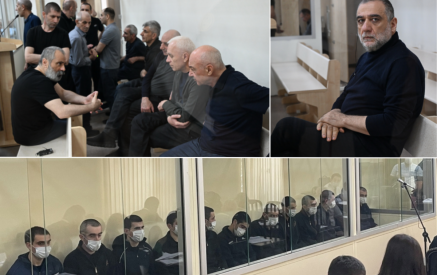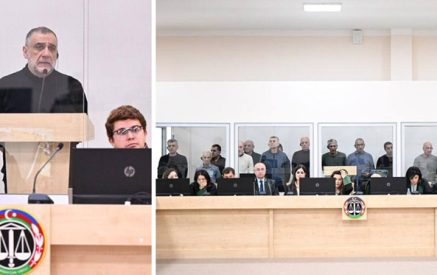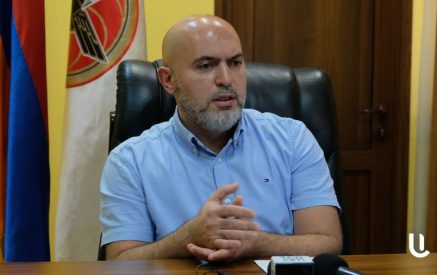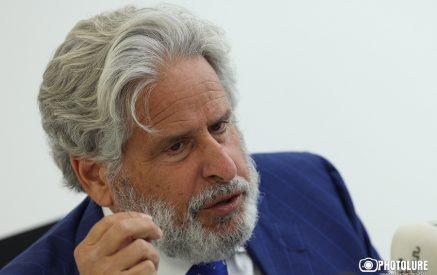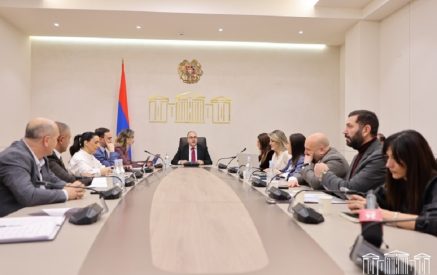


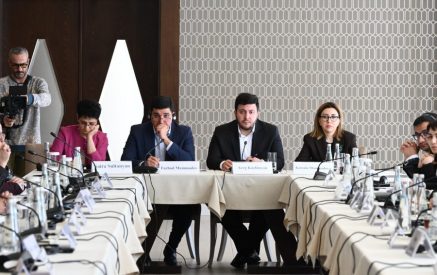












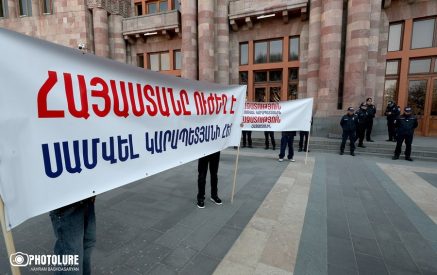
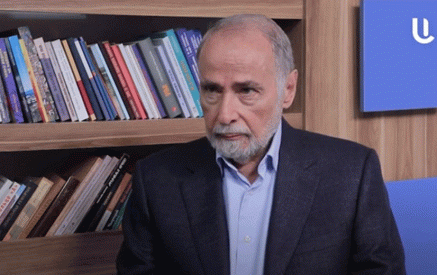







On the anniversary of the so-called “trial” of Armenian prisoners of war and political detainees illegally held in Baku, a press conference was held today by Siranush Sahakyan, the legal representative for Armenian prisoners of war and other captives at the European Court of Human Rights and head of the International and Comparative Law Center, during which the following facts were presented:
- On January 17, 2025, exactly one year ago, the so-called “trial” of 16 Armenian prisoners of war and political detainees illegally held in Baku began at the Baku Military Court.
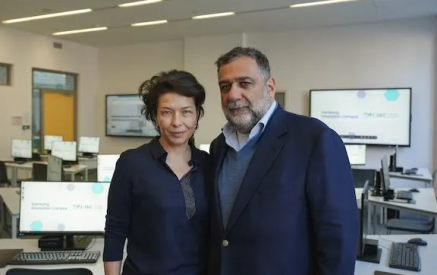
- During this period, two parallel trials have been conducted. The case of seven Artsakh figures – former NKR presidents Arkadi Ghukasyan, Bako Sahakyan, and Arayik Harutyunyan; NA Chairman Davit Ishkhanyan; former Foreign Minister Davit Babayan; former Commander of the Artsakh Defense Army Levon Mnatsakanyan; former Deputy Commander Davit Manukyan; and eight other prisoners (“the case of the 15”) -is being examined separately from that of former NKR State Minister Ruben Vardanyan. This is despite the fact that at the very first hearing, Ruben Vardanyan petitioned for his case to be joined with the others in unified proceedings, given the nearly identical nature of the charges. The court rejected that motion, as well as his other petitions.
- These “trials” cannot be considered legitimate, as they are being conducted with gross violations of the guarantees of a fair trial, in particular the principles of equality of arms and adversarial proceedings. The charges are politically motivated and fundamentally distort core legal principles.
- Although the Azerbaijani authorities declared these to be “open trials,” only the state outlet AZERTAC has been allowed to attend. All requests by international independent observers to be present have been rejected or ignored. The Azerbaijani Prosecutor’s Office has even denied Ruben Vardanyan’s international counsel, Jared Genser, entry into the country, thereby violating norms of international law.
- On December 16, 2024, Ruben Vardanyan’s defense team revealed that approximately 42 charges had been brought against him and that. Fabricated materials were submitted in 422 volumes totaling 105,000 pages, all in Azerbaijani. Neither adequate translation nor sufficient time to review them was provided.
- The other defendants have likewise been charged with nearly the same number and substance of accusations. Additional details in Vardanyan’s case are due to the fact that, until October 2025, he was represented by a privately retained lawyer, Abraham Berman, while the others were represented by state-appointed public defenders.
- On January 16, 2025, on the eve of the start of court hearings, Ruben Vardanyan managed to convey a message through his family, stating that, from the first day of his arrest, he had given no testimony, all records bearing his signature were falsified, and both his lawyer and translator had been forced to place their signatures on those documents.
- On January 17, 2025, the international human rights organization Amnesty International responded to this statement, calling on the Azerbaijani authorities to ensure the right to a fair trial.
- On January 19, 2025, while being illegally detained in Baku, Ruben Vardanyan announced a second hunger strike in protest of the judicial farce being conducted against him, stating: “This so-called ‘trial’ is not just against me. It is an attempt to criminalize all Armenians – all those who supported and demonstrated compassion toward Artsakh and its people, all those who showed compassion. This is an attack on an entire nation. I refuse to participate in this farce.”
- On March 12, 2025, the European Parliament adopted a resolution condemning Azerbaijan’s inhuman treatment of Armenian hostages and demanding their immediate and unconditional release.
- As of September 3, 2025, at the demand of the Azerbaijani authorities, the International Committee of the Red Cross (ICRC) officially announced the suspension of its activities in Azerbaijan. The ICRC was the only international organization with access to Armenian prisoners held in Baku. Prior to the closure of its office, ICRC representatives last visited the Armenian prisoners in early June 2025.
- On October 22, 2025, Ruben Vardanyan, through his family, communicated the reasons for waiving his right to counsel, citing the absence of conditions necessary for a lawyer to perform professional duties: “I was not allowed to review the case materials or the indictment. In this theater of the absurd, the role of the attorney – regardless of his will or efforts – has been reduced to maintaining the illusion of legality in the proceedings. I refuse to take part in this farce.
- At the November 13, 2025 hearing, the prosecutor demanded life imprisonment for Arayik Harutyunyan, Davit Ishkhanyan, Davit Manukyan, David Babayan, and Levon Mnatsakanyan. In the cases of Bako Sahakyan and Arkadi Ghukasyan, the prosecutor proposed 20 years’ imprisonment due to their having reached the age of 65. The remaining Armenian prisoners face sentences of up to 20 years.
- During subsequent hearings, the Artsakh officials and other prisoners delivered their final statements, declaring that they do not accept the charges brought against them and presenting their counterarguments.
- On December 18, 2025, the prosecutor demanded that Ruben Vardanyan be sentenced to life imprisonment. Ruben Vardanyan, who has never engaged in military activity, is nevertheless being tried before a military court and is accused of acts that he could not have committed, even from a chronological standpoint. The hearing scheduled for December 26 did not take place, allegedly due to the lawyer’s ill health, according to Azerbaijani media. The hearing scheduled for December 30 was postponed on the grounds that, in the other case, the judicial panel was in the deliberation room. The date of the next hearing is not known.
- On December 26, 2025, the final hearing in the case of the 15 political detainees and prisoners was held, after which the panel of judges withdrew to the deliberation room. According to Azerbaijani media, the verdict will be announced upon their return.
***
Throughout the entire year of the “trial,” no evidence has been presented of the alleged “crimes” of the Armenian prisoners. The prosecution treats their Armenian identity itself as grounds for criminal liability. The scope of the charges suggests that national origin is being used as the primary evidence of guilt. The indictments characterizes the Republic of Artsakh (Nagorno-Karabakh) as a criminal organization. This contradicts one of the fundamental principles of international law: the right of peoples to self-determination. This right is falsely interpreted as incitement to hatred. In essence, it retroactively criminalizes a political entity that, for decades, participated in negotiations within the framework of the OSCE Minsk Group.
Free Armenian Prisoners