








by Muriel Mirak-Weissbach
Is artistic talent hereditary or is it learned? In families with several great musicians, like the Bach or the Strauss families, and in the visual arts, as in the cases of Italian Renaissance painters like Fra Filippo Lippi and son Filippino or Dutch and Flemish masters Pieter Bruegel the Elder and sons Peter and Jan, creativity seems to have passed from father to son. In modern Armenia, too, many families may boast successive generations of fine artists: Archi Galentz and Marina Vagharshyan as well as the Elibekians represent third and fourth generation talents.
Recently art lovers in Yerevan and Beirut were treated to exhibitions of works by three generations of one family, that of Nona Gabrielyan and her late husband Van Soghomonyan, their daughter Lilit Soghomonyan and her husband, Gagik Ghazanchyan, and their son Guy. The solo exhibition of Nona Gabrielyan’s works took place in the second half of September in the Armenian capital and was followed in December by the show in Lebanon of works by daughter and son-in-law, as well as grandson Guy.
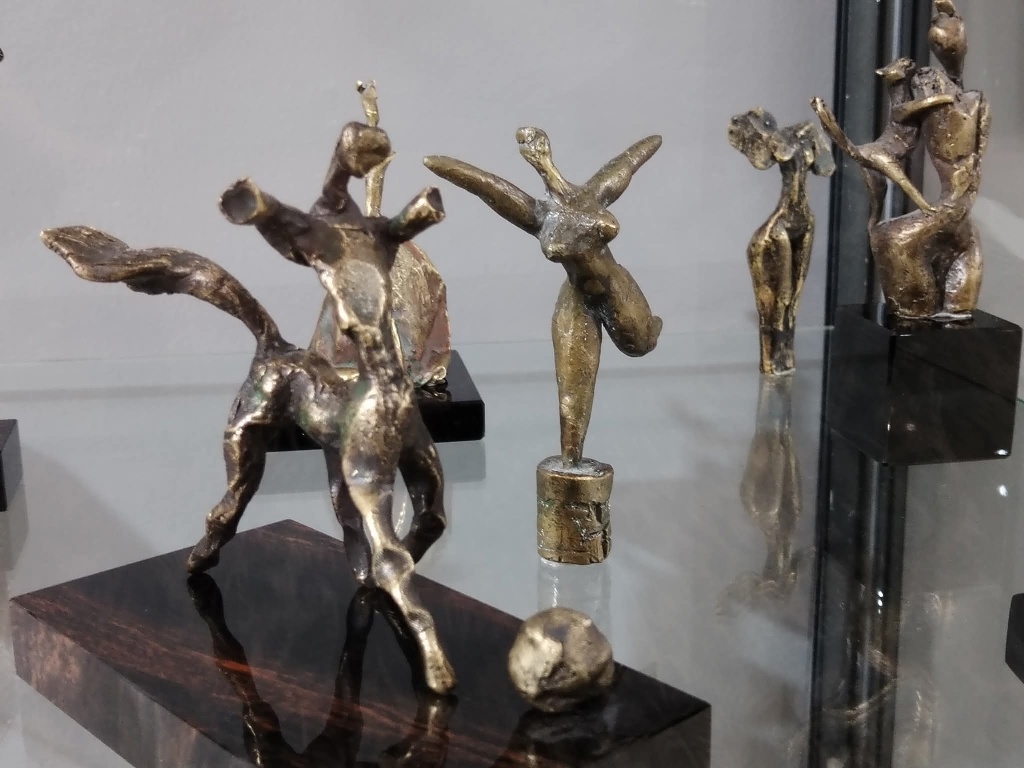
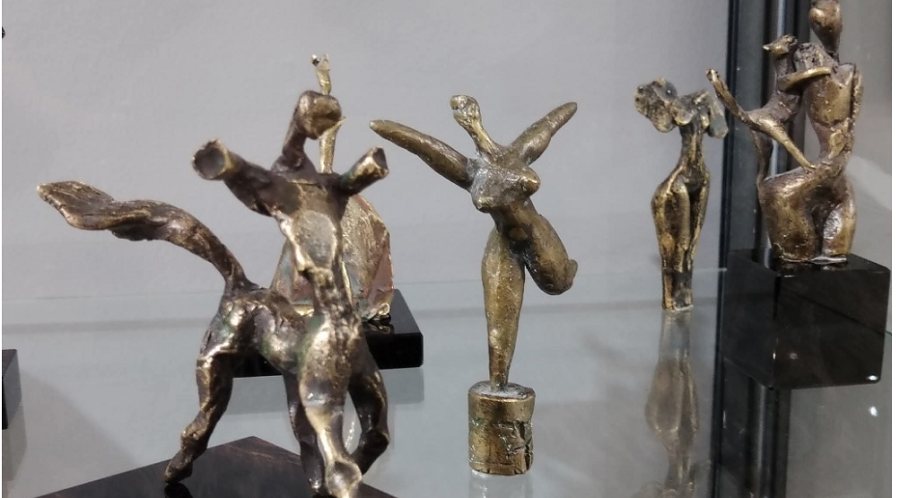
The Centaur, Pirouette, Friends, Nona Gabrielyan
First Generation
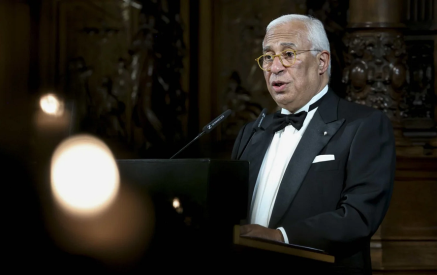
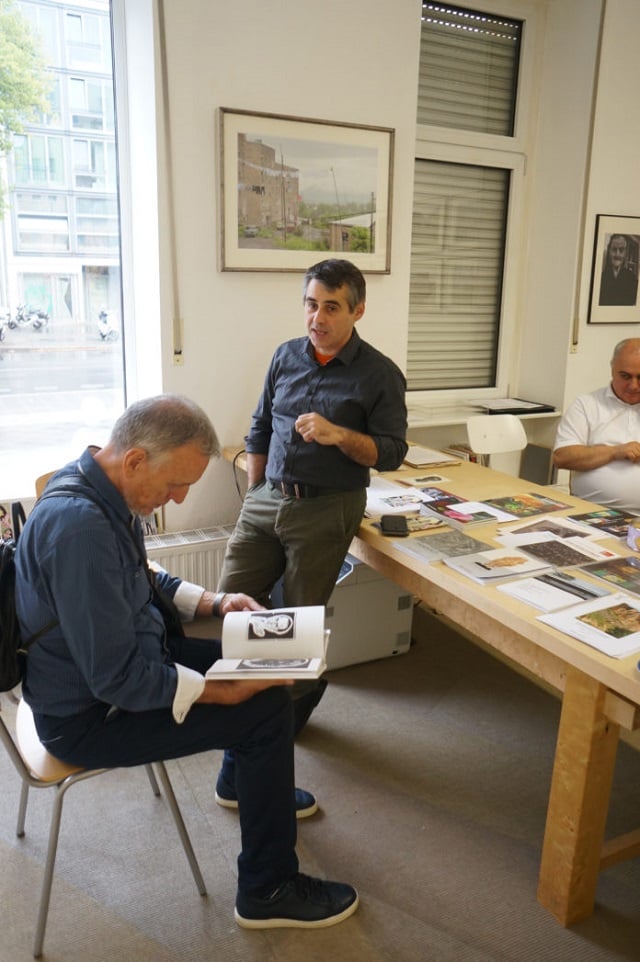
Nona Gabrielyan’s solo exhibition in Yerevan was officially opened on September 12 in the Grand Hall of the Union of Artists of Armenia, by Suren Safaryan, Chairman of the Union. In attendance were members of the entire family, as well as many friends, fellow artists and art lovers, representatives of the German and Lebanese Embassies, the First Channel of Armenian Public Television and press. The magnificent catalogue produced in Armenian, Russian, German, and English was presented at the vernissage.
Not only painter and sculptor, Gabrielyan is also a published author, whose works have appeared in Armenian, Russian and German. The exhibition concluded with a literary evening, during which she presented her books of poetry and prose published between 2003 and 2017. During the event, opened by writer Sevak Olaniyan (“Aramazd”), Gabrielyan also read as-yet unpublished autobiographical short stories about the life of an artist and the extraordinary events that accompany it. These texts were written between 1992 and 2022, while she and her husband were living in Wiesbaden, Germany and were completed after her return to Yerevan.
In the opening pages of the sumptuous catalogue for her exhibition, Nona Gabrielyan reflects on the primacy of creativity in human history, from the Stone Age to the present. Quoting, “In the beginning was the Word,” she writes, “The Word is the first step in creating the world. Through the Word ideas are born that fill the world with meaning. Thus, humanity follows its path … united by a single impulse: the desire to create. My reflections on creativity,” she continues, “are an attempt to comprehend its profound nature, place, and significance, in each person’s life. Creativity is a gift, a chance, an opportunity to leave behind a trace or simply a memory. And each of us is free to choose whether to use it or not.”
The richly illustrated catalogue contains photos of over 120 works from various periods of her activity, including several produced since her repatriation. It provides an overview of Gabrielyan’s exploration of creativity in multiple genres and media. Her paintings, which fill the vast rooms of the exhibition, are abstract, and depict human figures, often almost caricatured, flowers, landscapes, interiors; bold primary colors dominate, accompanied by works with multiply nuanced shades of one hue. Although her exploration in styles may seem to echo the cubism of Picasso or Braque, her fine excursions into pastel variations recall that of the French impressionists; but her mastery of color is distinctly Armenian, and her style is uniquely her own.
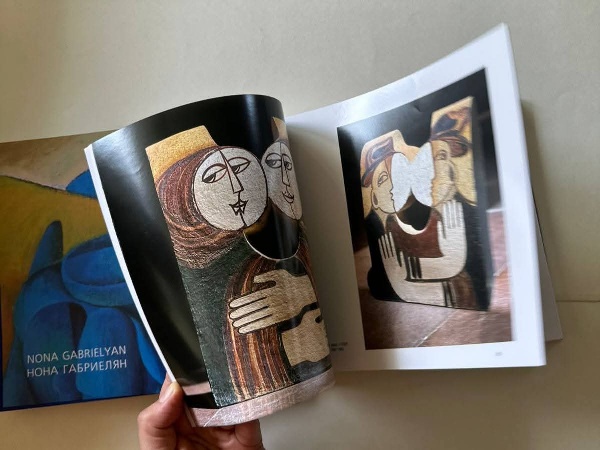
The Two, Nona Gabrielyan
Second and Third Generation in Dialogue
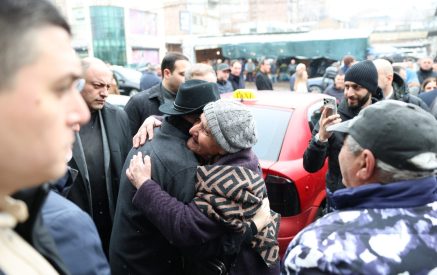
Just two months following Gabrielyan’s exhibition, in Beirut the Lucy Tutunjian Art Gallery welcomed guests to an exhibition announced on a large poster: “Gazanchyan Family Gagik, Lilit Soghomonyan, Guy” — the first time the three had presented their works together as a family. The invitation to exhibit together came from Hamazkayin, and the family accepted immediately. The fact that, as they point out, each has a very distinct artistic language, different style and individual way of seeing and interpreting the world, does not lead to conflict, but rather to fruitful exchange. The exhibition emerged as a rich, multifaceted, and engaging artistic dialogue. In total, they presented more than fifty works.
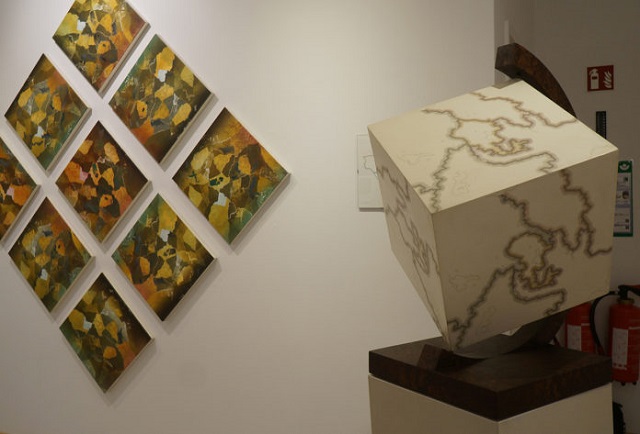
Indeed, their works as shown in the gallery halls seem to enter into dialogue. Gagik Ghazanchyan’s bold, broad strokes across massive canvases speak an abstract language, whereas Lilit Soghomonyan’s figurative paintings depict warm emotions, tender love, as mother embraces child. Delicately drawn strokes trace the contours of Cupid or a female figure, and soft pastel tones lend body and warmth to the gestures. Son Guy experiments with subjects in several directions, from female figures, birds, haunting faces and historical portraits; from a stylized realism to the abstract, as if engaging in reflected exchanges with statements of both mother and father. The mastery of technique, and of techniques, in all members of the family testifies to years of study in Armenia and abroad.
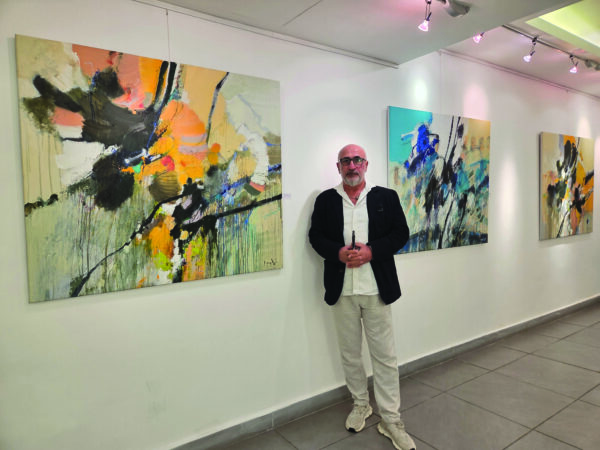
Gagik Ghazanchyan
Vitality of Art in Times of Crisis
The opening ceremony brought together artists, representatives of cultural institutions, and members of the Armenian community in Beirut. As reported in the Armenian newspaper Aztag, the exhibition was held under the patronage of M. Philippe Jabre, founder and CEO of the Jabre Foundation.
Anita Mouchoyan, a lecturer at the Lebanese and American Universities of Beirut, delivered a welcoming address. Stressing the uniqueness of this premier family appearance, she reviewed their individual artistic journeys, noting that each member is a prominent figure at home and abroad.
Gallery director Yakob Havatyian later honored Jabre with a special memento. The fund he created is noteworthy also for its inclusiveness, fostering the development of young people from all Lebanon’s many communities.
The mere fact that such an ambitious exhibition could take place in a country located in a politically turbulent region deserves mention. Yakob Havatyian, in delivering final remarks, referenced the limitations that had been imposed on the gallery’s activities in recent years by political crises, and expressed hopes that, as conditions improve, it would resume former activities. As Aztag reported, he singled out the importance of this particular exhibition, which “injected new passion and energy into this activity,” fostering confidence that through joint efforts, the gallery would be able to further its mission. The exhibition was originally scheduled to run from November 24 to December 6, but it has been extended until January 15.
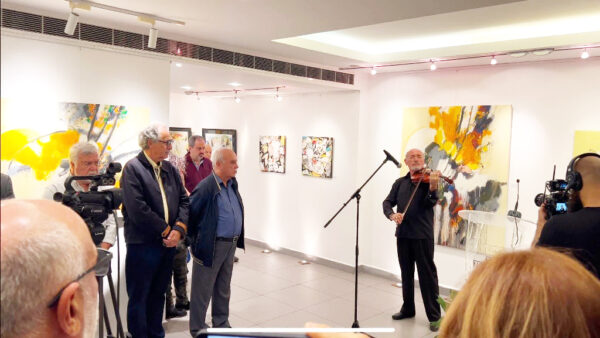
Violinist Armen Jenterejian
The Source of Creativity
In her writings, Nona Gabrielyan has always stressed the universality of creativity and has actively contributed to promoting cultural dialogue through art. In the thirty years she and her husband lived in Germany, their atelier was a meeting place for art lovers and painting students, who attended classes she gave regularly. In addition to exhibiting widely throughout Germany and abroad, she promoted exchange programs for students, accompanied her own students to Armenia, and in 2016 collaborated on an exhibition in Wiesbaden’s Haus der Heimat, of works by six young Armenian artists, among them her grandson Guy.
Guy had been to Wiesbaden with his mother and grandparents in 1992 and stayed for a year. In December 2016, while he was in Wiesbaden again for the group exhibition, he was asked about how he became an artist. “I spent my entire childhood in my family’s atelier,” he said, “with my parents, and with grandma and grandpa.” Art was the natural environment in which he grew up. He had certainly inherited talent from his parents and grandparents, but there was more: art was an integral, necessary part of family life. “I always thought everybody was an artist,” he said quite matter-of-factly, “I began to talk and to scribble at the same time.”
(Photos courtesy of Lilit Soghomonyan, Union of Artists of Armenia, Lucy Tutunjian Art Gallery)