



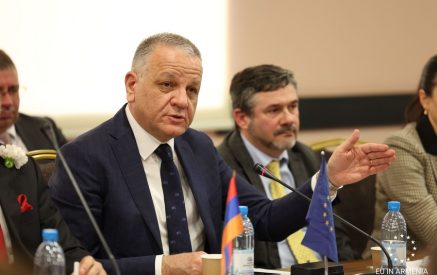























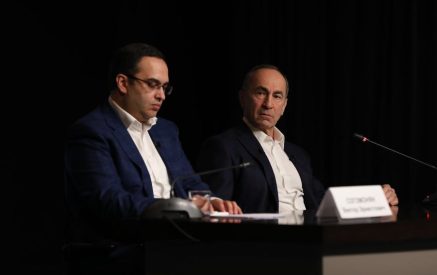





The speech of Armen Gevorgyan, a Member of the National Assembly of Armenia and a deputy of the “Armenia” faction, published on the official website of the Parliamentary Assembly of the Council of Europe (PACE)
Dear colleagues,
The international justice system established in Europe was designed for states that generally recognised the rule of law and limits on power — and were prepared to be limited by it.
That system no longer corresponds to the political reality it is meant to regulate.
After the collapse of the Soviet Union, a vast new political space emerged where democracy and human rights did not need to be reformed — they had to emerge. However, instead of re-formatting the system, Europe simply extended old institutions to new realities.
Read also

It was at this point that new categories entered international justice: compromise, geopolitical expediency, and the balance of interests. Politics began to limit law, whereas law was created to limit politics. As a result, the number of mature democracies has declined in recent decades. This demonstrates that existing human rights protection mechanisms have ceased to fulfil their transformative and restraining function.
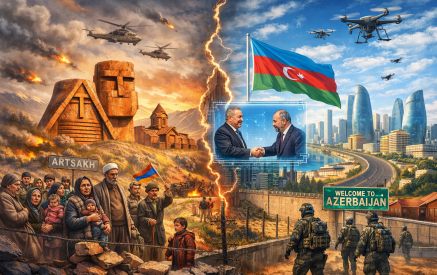
Today, international justice increasingly records catastrophes but fails to prevent them. A system created to protect individuals from the state risks becoming a system that protects states from accountability. This is precisely the situation we wanted to avoid when we raised the issue of the ethnic cleansing of Armenians in Artsakh in this Hemicycle.
The ethnic cleansing of Armenians marks the moment when international justice ceased to be a mechanism of protection and became a backdrop for accepting a reality created by force. We saw how the destruction of the rights of an entire population was translated into the language of “difficult but necessary compromises.” How responsibility was replaced by consequence management. How the language of law was supplanted by the language of geopolitical realism.
Dear colleagues,
Artsakh revealed more than the tragedy of one people. It demonstrated what the international justice system has become. Europe has effectively accepted a reality shaped by force and set a dangerous precedent: when a situation reaches an impasse, the law ceases to restore justice; it begins to serve the consequences.
Such precedents do not remain local. They shape the pattern of future crises. Where the law ceases to restore justice, the future is shaped not by norms, but by possibilities. This is not only about the Armenian people. It is about the future of Europe — including strategically important regions such as Greenland.
Today’s discussion is not about the past. It is about the rules by which Europe will live. We have to remember: international justice suffers when it is violated. But it dies when the consequences of violations are accepted as political reality.