




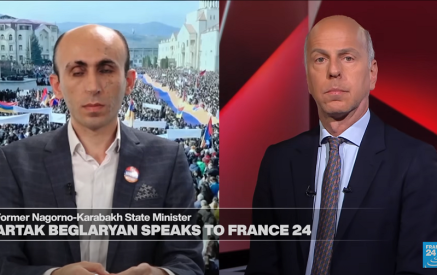
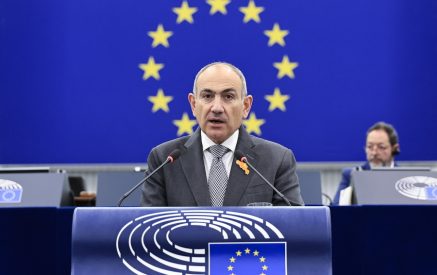


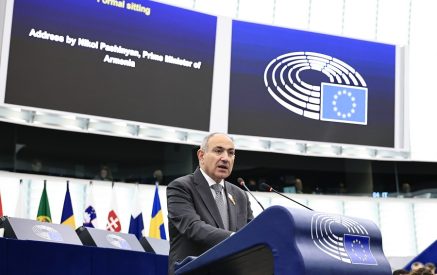







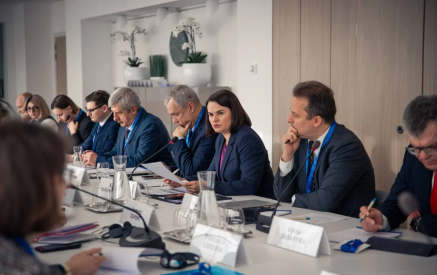


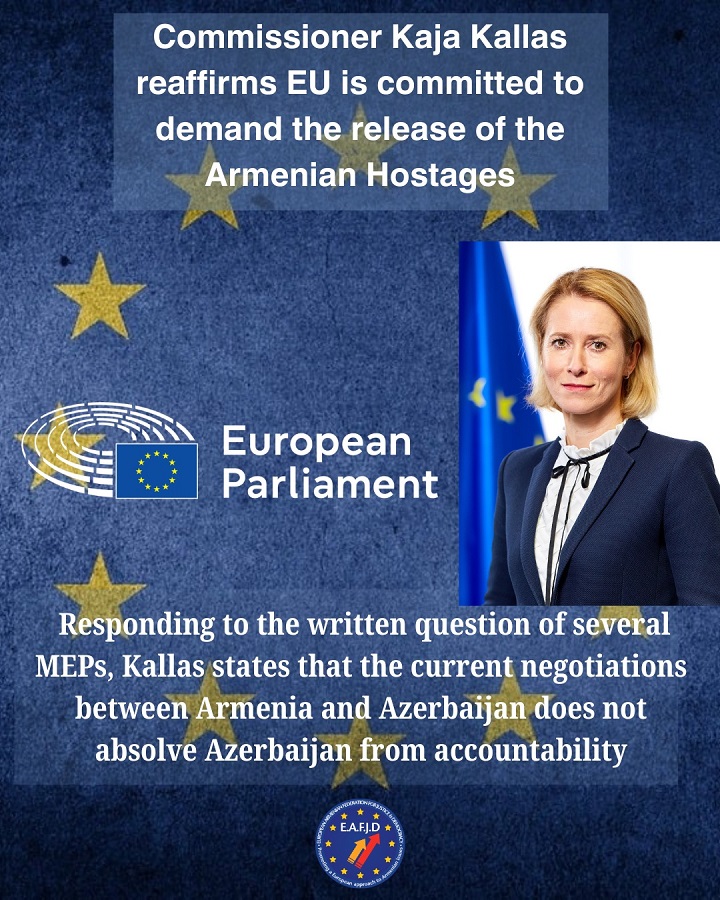
In a significant development following the August 2025 Washington peace treaty, the European Commission has issued an official response to the formal inquiry regarding Azerbaijan’s unfulfilled human rights obligations. This push for accountability was spearheaded by a group of MEPs, including Thijs Reuten Nacho Sánchez Amor, Juan Fernando López Aguilarr, and Marie Toussaint, who challenged the EU leadership to address the status of those still held in Baku and the overall human rights record of the Azerbaijani authorities.
Commissioner Kaja Kallas reaffirmed that the European Union has consistently called for the release and repatriation of all conflict-related detainees, specifically naming those from Karabakh. The EU framed these releases as essential confidence-building measures and emphasized that Azerbaijan must respect due process while ensuring transparent investigations into allegations of war crimes.
Sarkis Zelveyan
Read also
Europe: Between the Language of Values and the Reality of Interests
For decades, Europe has been presented not merely as a geographic space, but as a moral system. European courts, parliamentary assemblies, human rights conventions, declarations of values—together they have created the image of Europe as a center of justice, law, and human-centered thinking.
Yet historical experience and the events of recent decades force a more sober assessment of this image.
In reality, Europe has never been guided by pure values. It has been guided by interests, while values have served as the language that justifies those interests. When interests and “values” align, Europe speaks loudly. When they do not, Europe falls silent, delays action, or hides behind procedures.
This duality is not new.
Already during the Cilician period, European powers promised protection to the Armenian population. Based on those promises, Armenians disarmed themselves, trusting international guarantees. But once European interests shifted, those guarantees vanished. Troops withdrew, and the Armenian population was left alone, facing massacres and displacement. No one was held accountable. No “human rights” mechanism intervened.
The same logic continued from the Treaty of Sèvres to Lausanne. When the Armenian Question was useful, it appeared in international documents. When it became inconvenient to new geopolitical calculations, Europe simply removed it from the agenda. Rights did not disappear—they became expendable.
In the twenty-first century, this same mechanism reappeared in the case of Artsakh.
After 2020, and most explicitly in 2023, a process unfolded in Artsakh that international law defines as forced displacement and ethnic cleansing: the complete removal of a population, destruction of cultural heritage, captivity, and the total violation of fundamental rights.
And what did Europe do?
European institutions documented, discussed, and expressed concern. The European Court of Human Rights initiated legal processes that had no real impact on events. The Parliamentary Assembly of the Council of Europe adopted resolutions that remained on paper. In practice, nothing was stopped.
Most revealing was the language used. Even in this case, Europe avoided naming responsibility clearly. It spoke of “tensions,” “humanitarian concerns,” and “complex situations,” while avoiding accountability. When there is a clear victim and a clear aggressor, “balanced language” becomes a form of silence.
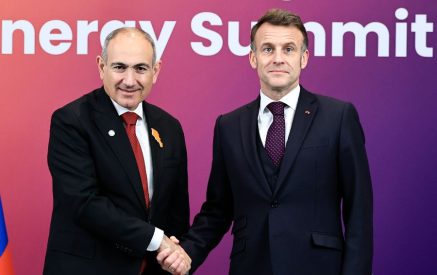
France provides another revealing example. President Emmanuel Macron repeatedly voiced pro-Armenian rhetoric. Yet alongside this rhetoric, political and economic cooperation with Turkey and Azerbaijan continued. Words remained words; policy remained calculation.
All of this exposes a simple truth: Europe’s human rights system functions selectively. It is swift and decisive when aligned with political agendas, and slow, vague, and ineffective when questions concern the survival of peoples, self-determination, or historical justice.
The most dangerous aspect is not Europe’s behavior itself, but the illusion imposed on us for years—that standing with Europe automatically means being civilized. In reality, civilization is not measured by declarations or the number of courts. It is measured by whether one is willing to defend truth when doing so carries a cost.
And it is precisely at those moments that Europe most often chooses silence.
This does not mean that European peoples are enemies, nor that Europe as a place is inherently evil. But as a political and ideological system, Europe has long lost the moral authority to speak from a position of superiority.
It is time to acknowledge this calmly, without hysteria—but also without self-deception.
And above all, to stop confusing the language of values with actual values.
EAFJD – European Armenian Federation for Justice and Democracy’s Post