






















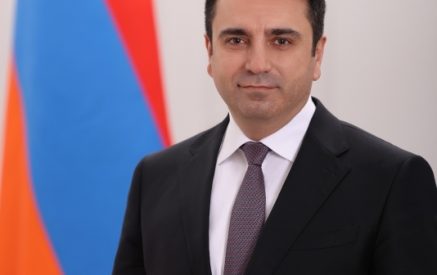

“What has Pashinyan done to you personally that you criticize him so emotionally?” readers sometimes ask me. I answer that, personally, the Prime Minister of Armenia has done nothing bad to me. But the loss of Artsakh, which occurred through his fault, and the attack on the Church, being carried out on his initiative, are things I take very hard—yes. I believe any normal Armenian should take them hard.
I have nothing personal against anyone. I will say more (which may not please many): I am perfectly OK with the fact that the prime minister and his partner are married neither in church nor through the civil registry office. That is their private affair, and I do not consider criticism on that front appropriate. Nor am I interested in how Pashinyan’s wife or children dress. I have not, of course, seen their clothing myself, but I do occasionally come across various comments (again, in my view, unnecessary ones).
What interests me are events of serious public significance. How Pashinyan beats a drum is, once again, his private matter. But who went and danced to his drum—that is already a public issue. Because it is an indicator of a political regime—specifically, of entrenched authoritarianism.
Brezhnev or Turkmenbashi wrote books; Turkmenistan’s next president, Berdymukhamedov, sang rap. One might think: so what—let them write or sing for themselves. But when the rest of the mass of courtiers and sycophants showed up at these events and displayed calf-like rapture at the leader’s “talents,” it had nothing to do with music or literature. It demonstrated how, and by what means, people rise via official and social (material) elevators. The prime minister’s drumming belongs squarely to that same series. I am convinced that if Pashinyan ordered it, the ten bishops who have turned against the Catholicos—traitors—would readily join that dance.
Read also
In exactly the same way, education and reading books are wonderful things. I myself, within my modest means, try to promote them. But when this takes on the character of a political PR campaign, participation in it pursues goals far removed from education—for example, making a political career or landing a spot on the Civil Contract party’s electoral list.
Aram ABRAHAMYAN