






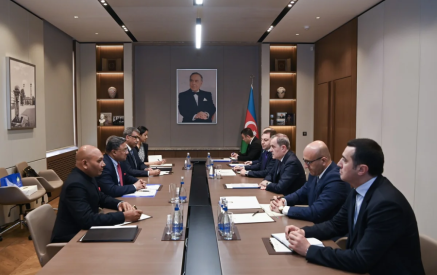
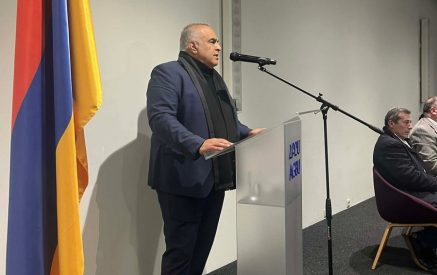




























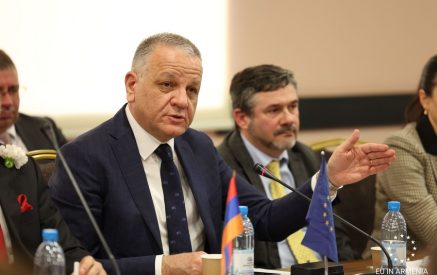



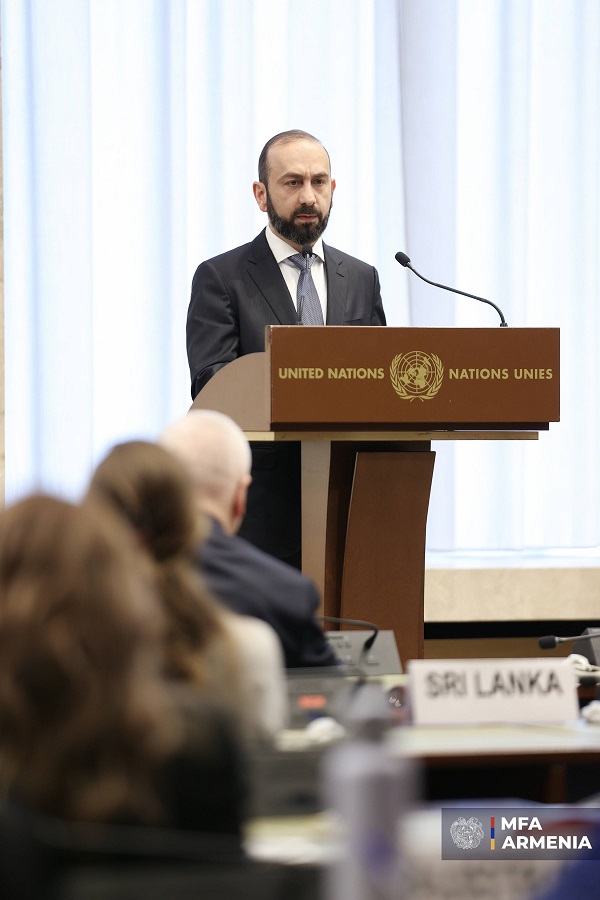
On February 23, in Geneva, Foreign Minister of Armenia Ararat Mirzoyan participated and delivered remarks at the high-level segment of the Conference on Disarmament. The full speech is presented below.
“Honorable Chair,
Ladies and Gentlemen,
It is an honor to address the High-Level Segment of the Conference on Disarmament in our capacity as an observer state. The historic significance of the Conference on Disarmament and its vital role in reinforcing international peace and security are undeniable. Yet against the backdrop of continued geopolitical tensions, the Conference must demonstrate renewed political will and overcome longstanding procedural deadlocks in order to advance global disarmament and broader security objectives.
2026 will be pivotal, as our nations convene for the upcoming 11th Review Conference of the Treaty on the Non-Proliferation of Nuclear Weapons. Armenia reaffirms its steadfast commitment to fulfilling its obligations under the treaty and underscores the necessity of the balanced and full implementation of its three pillars – non-proliferation, disarmament and the peaceful uses of nuclear energy. We consider that the upcoming Review provides a unique opportunity for the international community to once again express its common commitment to the purposes and principles of the Treaty.
Read also



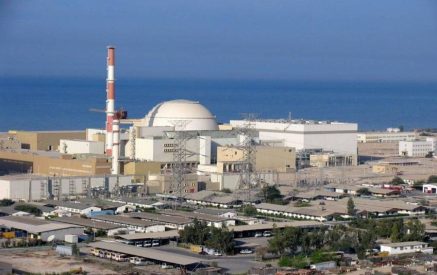
In this vein, the safe and secure use of nuclear energy for peaceful purposes remains a priority of Armenia’s national policy. The Government of Armenia has adopted a policy of maintaining nuclear energy as a key component of the country’s electricity mix. As the operational lifetime of the Armenian Nuclear Power Plant has been extended till 2036, we are now exploring a smooth and secure transition toward a new nuclear power unit. In this regard, Armenia is currently carefully examining available technological options of Small Modular Reactors (SMR) and assessing proposals from international partners. The selection process is guided by reliability, long-term sustainability and our commitment to the highest standards of nuclear safety, security and non-proliferation.
Ladies and gentlemen,
Arms control regimes can only be effective when they are implemented in good faith, guided by fundamental principles, including transparency, verifiability, sufficiency, and restraint. These principles are indispensable for maintaining predictability and preventing destabilizing arms races.
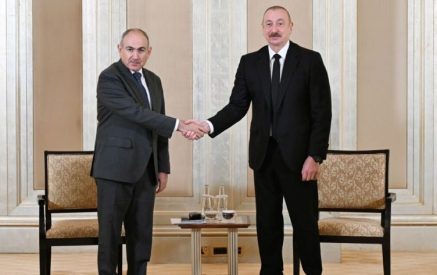
Following the breakthrough achieved on 8 of August last year in Washington, DC, with the signing of the Joint Declaration by Armenia’s Prime Minister, Azerbaijan’s President and the United States President as a witness, a new chapter of peace, prosperity and regional cooperation has opened in the South Caucasus. The present circumstances offer a genuine opportunity to advance interconnectivity, trade and confidence-building measures between Armenia and Azerbaijan, which can play a meaningful role in consolidating peace, enhancing trust, and promoting regional cooperation.
Dear colleagues,
Rapid advances in artificial intelligence are transforming many aspects of contemporary life, including the military domain. While technological innovation offers new capabilities, it also introduces profound ethical, legal, and security challenges, particularly when applied to the conduct of hostilities.
International humanitarian law applies fully and without exception to all weapon systems, including those incorporating artificial intelligence and autonomous functions. With regard to Lethal Autonomous Weapon Systems, where compliance with the core principles of distinction, proportionality and precaution cannot be reliably ensured, appropriate regulatory measures, including restrictions, are required.
Ensuring meaningful human control in the development, deployment, and use of military AI systems is therefore of critical importance. Decisions related to the use of force, as well as responsibility and accountability for their consequences, must remain firmly with humans and cannot be delegated to machines. Armenia emphasizes that human judgment remains indispensable for lawful, responsible, and ethical conduct in armed conflict.
Armenia places strong emphasis on the responsibility of states in the international transfer of conventional arms. Weapons must not be supplied where there is a risk that they could be used to commit or facilitate violations of international humanitarian law or international human rights law, or to cause harm to civilians in a deliberate manner. Armenia underscores the importance of thorough, evidence-based risk assessments in arms transfer decisions, with a view to ensuring that weapons do not end up reinforcing instability or fueling violence beyond state control.
We strongly believe that despite today’s complex and uncertain environment, we can work together to address the issues of disarmament and non-proliferation in a balanced, equitable and sustainable manner.
I thank you.”