










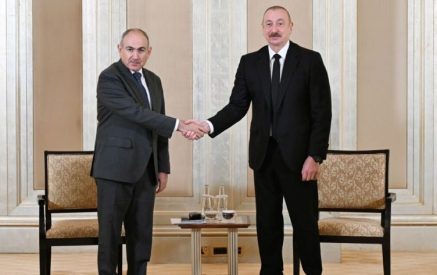







For years, Armenians have watched helplessly as troubling public confrontations have unfolded among prominent figures across the Armenian world, with political disagreements escalating into ignominious political theater.
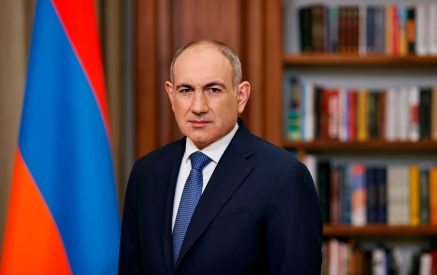
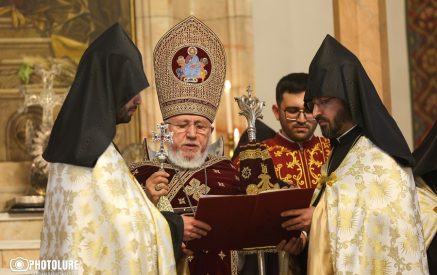
On February 12, 2026, nine prominent Armenians — Noubar Afeyan, Anthony Barsamian, Lord Ara Darzi of Denham, Eric Esrailian, Vahe Gabrache, Vatche Manoukian, Joseph Oughourlian, and Berge Setrakian — published an open letter through Mediamax addressing one such escalating discord: the conflict between Prime Minister Nikol Pashinyan and His Holiness Karekin II, Catholicos of All Armenians. The dispute, which had simmered for years, reached a boiling point when the Prime Minister publicly called upon the Church to remove its leader.
The signatories emphasized that “the Armenian Church provides spiritual nourishment to all Armenians,” and argued that diasporan Armenians are obliged to seek the assistance of their governments — including political remedies and legal action if necessary — in protecting their religious rights.
Two days later, on February 14, Garo Armen responded with a bold open letter published in MassisPost. He argued that “Institutions survive only when they serve the people who sustain them. When the burden flows in only one direction—upward—faith turns into weight, that political elements within the Mother See had long resisted the post-2018 reform agenda, that the Church must renew itself through integrity and genuine reform, and that the February 12 letter’s attempt to internationalize Armenia’s internal disputes risked undermining the country’s sovereignty while deepening the divide between homeland and diaspora”.
Read also
Then, on February 17, Greg Sarkissian — another widely respected Armenian voice — wrote in Aravot that “Armenia’s domestic decisions must reflect the consent and priorities of citizens living in Armenia,” and called for a clearer definition of the Church–State relationship.
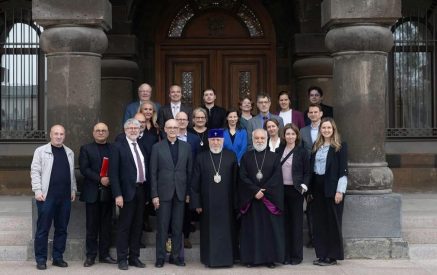
These public interventions reflect not merely a disagreement between individuals, but a deeper fracture within Armenian public life. Yet one question remains: could these respected figures — many of whom command trust across opposing camps — sit around the same table? Could they think and act with wisdom, free from the pressures of public positioning, and play a constructive, stabilizing role?
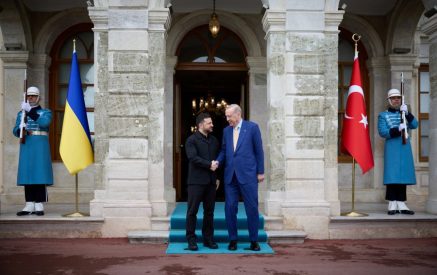
The global geopolitical turbulences of 2025 remind us that no statesman is infallible. Even the leaders most powerful countries have made consequential decisions unilaterally — and paid a devastating price for it. Wisdom is rarely found in isolation. Our societies require safeguards: mechanisms of reflection, deliberation, and restraint.
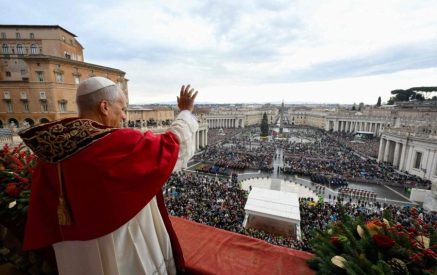
Looking back, one might recall the resignation of Pope Benedict XVI. Was it simply fatigue? Or was it an act of conscience — an awareness that a different voice was needed to say what his successor did: “Who am I to judge homosexuals?” Perhaps, unlike the public Armenian spectacle we now endure, there existed within the Vatican a quiet council of the wise that counseled resignation for the greater good.
Today, Armenia needs precisely that: a council of the wise. Not a public forum issuing competing open letters, but a discreet and principled gathering of individuals capable of rising above personal loyalties and factional alignments — a body able to see beyond courtyards and camps, toward the long-term interests of the nation.
Such a council should, alongside its powerful men, include accomplished and discerning women whose judgment and perspective would strengthen its balance and legitimacy.
Armenia stands at a delicate juncture. The nation does not need louder voices. It needs wiser ones.
Hovel Chenorhokian
Feb 26, 2026