


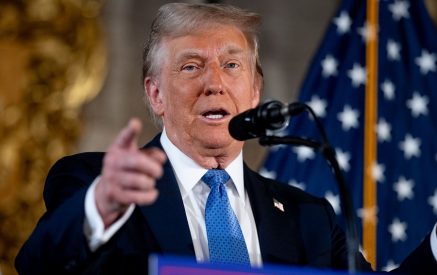








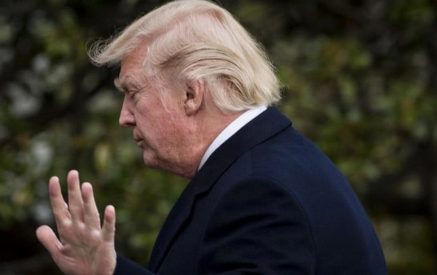















What would you say if the leader of one country declared that he must necessarily be involved in the “appointment” of another country’s leader (“I have to be involved in the appointment”)? Until recently, you would probably have said, first, that leaders of states are not supposed to be “appointed,” and second, that the question of who governs a particular country should be decided by that country’s citizens.
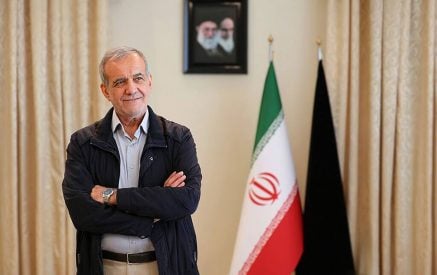
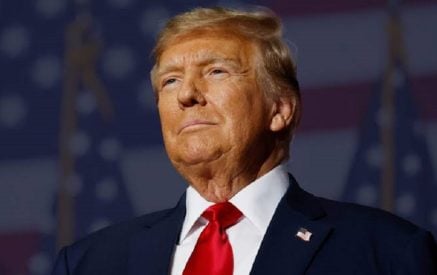
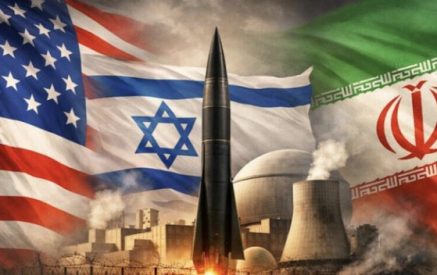
But since the person making such a statement is Donald Trump, the president of the United States (a position once commonly referred to as the “leader of the free world”), and the country whose leader he claims a role in “appointing” is Iran, the usual notions of democracy and international law seem to stop applying. Instead, geopolitical sympathies and antipathies come to the fore. According to this logic, country X—or a group of countries—belongs to the “axis of good,” while country Y—or another group—belongs to the “axis of evil.” Such an approach contradicts not only common sense but, even more importantly, the basic principles of responsible statecraft.
Incidentally, in 1953 the United States, together with the United Kingdom, had already once been “involved” in appointing a leader in Iran. The operation was carried out by the Central Intelligence Agency and MI6, and the real issue—naturally—was the same old oil. At least back then they were somewhat embarrassed to talk about it openly and insisted that the return of the shah was “the choice of the Iranian people.”
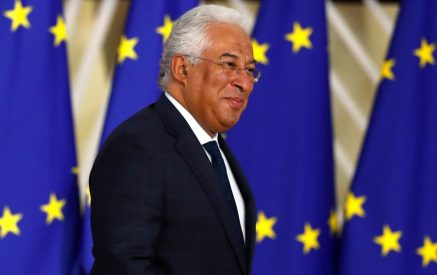
As for sympathies: whenever a “samodur” (a Russian-derived term for an overbearing ruler who uses his power arbitrarily and pressures everyone around him) appears, whether in Armenia’s domestic politics or on the international stage, my sympathies lie with those who resist him. One example is the prime minister of Spain, Pedro Sánchez, who refused to allow the bases located in his country to be used for strikes against Iran. Another is the conservative commentator Tucker Carlson, who described such strikes as contrary to the interests of the United States.
Read also
Donald Trump called the Spanish prime minister a “loser” and threatened to sever economic ties with the country, while saying of Tucker Carlson that he is not smart enough to understand what “make America great again” means.
…At the same time, however, we can note that the United States is a country with long-standing democratic traditions. I assume that Tucker would not face something like the “confiscation of illegally obtained property,” and it is even less likely that he would be imprisoned for calling for the overthrow of the constitutional order or for hooliganism.
Aram ABRAHAMYAN