
























The Lemkin Institute strongly condemns the illegal war of aggression launched by Israel and the United States against Iran. The U.S.-Israel war should be of specific concern for everyone interested in genocide prevention, since wars of aggression are frequently the catalyst for genocidal violence. Most wars of aggression are undertaken by states and regimes that have committed genocide, are committing genocide, or plan to commit genocide. This one is no different. While the current aggression against Iran does not itself appear to amount to an attempt at genocide, at least not yet, the Lemkin Institute recognizes that the powers launching this war have a history of genocidal rhetoric, intent, and practice. The leadership of both states has been guilty of escalating Islamophobic rhetoric and policies and regularly engage in the dehumanization of Muslim populations. The Lemkin Institute joins the many voices globally that are calling for an immediate return to negotiations between the U.S. and Iran. This war of choice by two of the world’s most aggressive powers must be stopped and the principles of the UN Charter must be clearly reaffirmed.
The U.S. Military Religious Freedom Foundation reports that U.S. commanders are framing the conflict as a war against Islam, with one commander telling soldiers that “President Trump has been anointed by Jesus to light the signal fire in Iran to cause Armageddon and mark his return to Earth.” Such instructions to soldiers gives this war a cosmic quality, which is highly correlated with the crime of genocide. Given their rhetoric and track records, the war could easily radicalize U.S. and Israeli goals. We can expect that the U.S. and Israel will pursue violence without respect to ethics or international law. Both regimes will also have the opportunity to use this war to speed up genocidal processes against specific non-Iranian target populations closer to home.
Early in the morning of 28 February 2026 the United States and Israel began launching massive strikes inside the territory of Iran while negotiations with Iran over its nuclear program were still ongoing. In fact, Israel and the United States launched their illegal war just two days after the latest round of negotiations between the U.S. and Iran in Geneva. According to persons closely involved, the negotiations were showing signs of success. If this is true, then, for the second time within a year, the United States has violated the rules of diplomacy, undermined traditions of mutual respect, and flouted internationally accepted norms, dramatically adding to the growing distrust among nations and enabling the conditions in which an ever increasing number of states will seek to solve disagreements through the use of force.
Various claims are being made about the exact state of the negotiations. Iran’s Foreign Minister, Seyyed Abbas Araghchi, told NBC News that an understanding had been reached at those talks to continue the dialogue, with both sides planning to engage in more detailed discussions on critical issues. According to Oman’s Foreign Minister, Badr Al Busaidi, who mediated the talks, both sides agreed to meet the following week in Vienna to discuss technical details. Al Busaidi further told CBS News’s “Face the Nation” program that Iran had agreed to a zero stockpiling commitment according to which it pledged to never accumulate nuclear material capable of producing a bomb, a commitment he described as “completely new and going beyond the 2015 nuclear deal.” Under the agreement, Iran would maintain zero stockpiles of enriched uranium, down-blend existing stockpiles to the lowest possible level for use in civilian purposes, and implement full International Atomic Energy Agency (IAEA) verification. A breakthrough seems to have been at hand. Then the bombing began.
Read also
On February 28 Al Busaidi expressed his dismay that active negotiations were once again undermined by the actions of the United States and Israel.
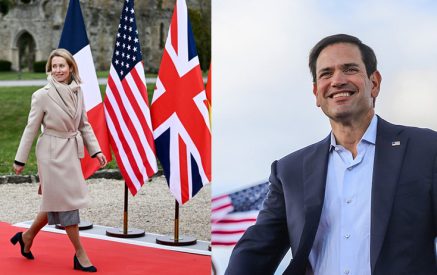
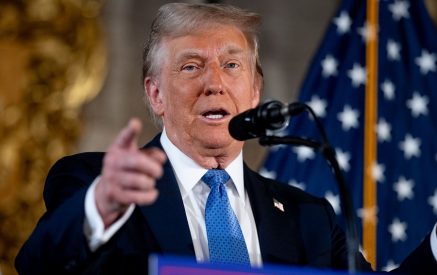
The United States and Israel have expressed positions on the talks that are diametrically opposed to that of Iran and the Omani mediators. On Friday, the day before the U.S.-Israeli bombing campaign began, U.S. President Donald Trump told the press that he was “not happy” with the negotiations. In particular, he wanted Iran to give up its entire nuclear program and its ballistic missiles. Since Saturday, the U.S. has deflected accusations that it was engaging in negotiations in bad faith by leveling that same charge at Iran. After the bombings began, Israeli Prime Minister Benjamin Netanyahu also alleged that Iran had been engaging in “fruitless and deceitful negotiations.” The U.S. is having a hard time making this argument, however, given the insights into the negotiations offered by the Omani negotiators. Further complicating matters is the confounding response of U.S. Secretary of State Marco Rubio to a reporter’s question on March 3. Rubio attempted to explain the Trump Administration’s decision to go to war with the argument that the U.S. was defending itself pre-emptorily against the Iranian attacks it knew would be the response to an already-planned attack from Israel, thereby suggesting that the U.S. knew of Israeli plans to launch a war of aggression during negotiations. Pre-emptory self-defence does not exist in international law. Furthermore, it is illogical to claim that one is defending against retaliation by becoming part of the initiating act of aggression.
We will not know for some time the backroom discussions that led to the U.S. joining Israel’s planned attacks, but what is clear is that the United States made the decision to go to war during active diplomatic negotiations and after Iran had made considerable compromises at the negotiating table.
Any claims about President Trump’s unhappiness with the negotiations providing justification for military actions are further weakened by Israeli defence minister Israel Katz’s remark that Israel decided to assassinate Iranian Supreme Leader Ali Khamenei back in November of 2025. According to Katz, Israel had originally planned to commit this crime in the middle of 2026, but moved the plans up following the riots in Iran. These statements directly contradict everything the U.S. has said to justify its involvement.
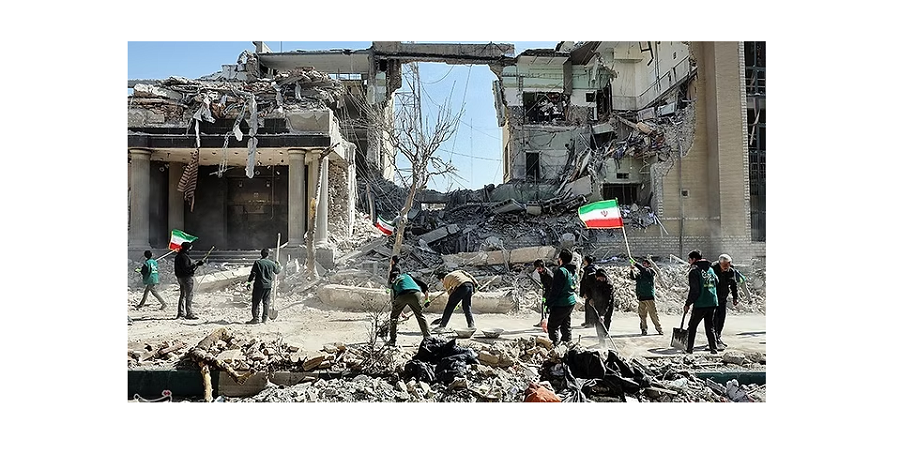
No matter what the case is with negotiations, this war is a war of choice. Particularly important in understanding its causes and possible execution is the fact that the war was started by two states that are actively engaging in genocide. Both Israel and the U.S. are perpetrating genocide against Palestinians. The United States is further engaged in domestic genocidal processes against transgender and immigrant communities. The genocidal character of these two regimes should not be overlooked, as it helps to explain their ongoing recklessness and breathtaking disrespect for international law. Genocidal regimes are self-radicalizing entities that see power only in wanton violence and actively seek out dramatic displays of brute force in efforts to control ever more territory (and enrich themselves while doing so). They are willing to countenance high numbers of civilian casualties to get their way and have little trouble papering over the horror and tragedy they cause with overwrought, eschatological, and particularist ideology. We can see all of this in their attacks against Iran, where both countries are attacking civilian objects, especially hospitals and schools, and threatening the use of mass casualty weapons.
Regarding the genocide in Palestine specifically, it has been clear for some time now that it is closely connected to Israeli Prime Minister Benjamin Netanyahu’s larger plans for a ‘Greater Israel’ in the Middle East that would realize Israeli hegemony over the region. Iran is the greatest obstacle to this plan and a war with Iran further presents the perfect cover for the continued destruction of Palestinian life in Gaza and the Occupied Territories. While Israeli expansionism was somewhat contained under previous U.S. presidents, with the exception of the illegal settlements (which have been steadily growing over the 21st century), the Biden and Trump Administrations seem to have given Prime Minister Netanyahu a green light to expand into neighboring states. Moreover, the Gaza carnage has become a model for Israel’s prosecution of war in general. On March 5 Israeli Finance Minister Bezalel Smotrich posted a video on social media in which he threatened that southern Beirut will “soon resemble Khan Younis,” referring to the city in the southern Gaza Strip that has been leveled by Israeli bombardment.
The Greater Israel plan has wide support within the Trump Administration, linked to the Christian Zionist movement that has been President Trump’s core voting bloc. U.S. Ambassador to Israel Mike Huckabee recently told American right-wing podcaster Tucker Carlson that Israel has a biblical right to claim the lands that stretch from the Mediterranean to the Euphrates and that “it would be fine if it took it all.” While he later stated that he did not believe Israel was planning on taking all of that land, the original statement was well received in Israel. Israeli opposition leader Yair Lapid was quick to support Huckabee’s point, stating a few days later that “the borders [of Israel] are the borders of the Bible.”
As is suggested by statements, decisions, and behaviors of the U.S. and Israeli leadership, the war with Iran is about geopolitical domination, in particular access to and control over trade corridors that stretch from the Middle East and South Caucasus to Central Asia. While the Western media is not devoting much coverage to the geostrategic rationale for the war, one can find support for the war across the Western political spectrum precisely because of the geopolitical agenda. For example, U.S. Democratic Congressional Representative Greg Landsman, a well-known Trump opponent, supports the war against Iran as a chance to create a new Middle East. “Absent Iran’s chaos,” he told the New Yorker, “I believe there’s enough space to see the region come together and create an entirely different Middle East.” Such enormous goals, combined with the blame for conflict in the Middle East being placed solely on the Iranian regime, almost guarantees that this war will spiral into a region-wide conflict and seriously threaten global security.
Furthermore, there is a very good chance that the U.S., as part of its efforts to impose a new order in the Middle East, will give a green light to expansionist ‘friendly’ states in the region, such as Israel, Turkey, and Azerbaijan, to take lands they have long coveted in Palestine, Egypt, Lebanon, Jordan, Syria, Iraq, Iran, and Armenia. This process would likely result in genocidal violence against the diverse populations in these areas, especially if they resist. Particularly vulnerable are Palestinians, ancient Christian communities, Kurds, Yezidi and other national and religious minorities in Syria and Iraq, and Armenians in the Republic of Armenia. There is no reason to believe that there have not already been meetings between the U.S. and regional powers to discuss new spheres of interest. Ethnic minorities in Iran, including Azerbaijanis, Kurds, and Baluch, among others, are also vulnerable, particularly if they are perceived by Iranian authorities to be supporting the war against Iran. Moreover, given the stakes of a U.S.-Israeli victory for the balance of power globally, there is a dangerous chance that this war will expand into a global conflagration. Already the war has great powers arming or actively engaged on one of the two sides, with clear and potentially catastrophic global economic implications. Finally, governments around the world are likely to use the distraction of a renewed violent conflict in the Middle East to pursue land and power grabs that result in gross human rights abuses.
Already we see the fog of war opening up opportunities for further human rights abuses by Israel. For example, while this new conflict is dominating the world’s attention and the news cycle, Israel temporarily shut all of Gaza’s border crossings immediately after launching the attack on Iran, trapping everyone – including those needing to leave to access medical care – inside and preventing any humanitarian aid from entering, including food and medicine. Three days later, on 3 March, Israel re-opened the Rafah border crossing for the “gradual entry of humanitarian aid.” It did not allow any Palestinians through that crossing on that day, and as of this writing it is at yet unclear whether anyone has been allowed in or out. Israel also closed all crossings into and through the West Bank, severely disrupting daily life and preventing those completing the pilgrimage of Umrah from re-entering the West Bank. Israeli forces have further raided a refugee camp in the West Bank twice and sealed off the Al-Aqsa Mosque in East Jerusalem, the third holiest site in the world for Muslims.
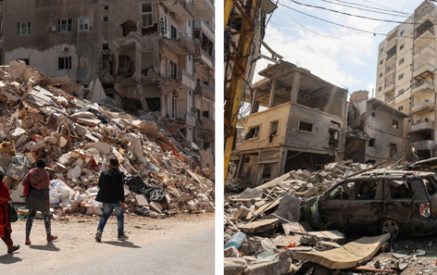
Israel has also expanded its violent campaign to Lebanon amidst the chaos it has unleashed in the region. According to Israel, it is launching attacks against “Hezbollah infrastructure in Beirut.” In reality, it has targeted areas densely populated by civilians. These attacks came after Hezbollah claimed to have launched rockets and drones at Israel. However, the Middle East Eye reported that Israel had approved military action against Lebanon before Hezbollah struck. Israel has already killed at least 102 people in Lebanon. It has also ordered large swathes of the Lebanese population – millions of people – to evacuate the south, including southern Beirut, leading many to believe Israel is preparing to launch a ground invasion in the South of the country. The world has already borne witness to what follows an Israeli order to evacuate. The Lemkin Institute anticipates that Israel will not shy away from using the same tactics in south Lebanon that have resulted in the horrific humanitarian crisis in Gaza today.
It must be stated clearly: Aggression is a crime under international law, as defined in Chapter VII, paragraph 39 of the UN Charter and in the 2010 Kampala amendments to the Rome Statute of the International Criminal Court (ICC), which established ICC jurisdiction over the crime. The prohibition on “the threat or use of force against the territorial integrity or political independence of any state,” enshrined in Article 2(4) of the UN Charter, was created precisely to avoid the emergence of uncontrollable chains of events that result in devastating world wars and massive civilian casualties. The first and second world war both began over threats to state sovereignty. World War II in fact started with Germany’s war of aggression against its neighbors. The two wars combined killed over 100 million people worldwide, with the first war leading directly to the second. Each war also provided cover for genocide, against Armenians and other minorities in World War I and Jews, Roma-Sinti and other groups in World War II. When the leaders of 51 independent states met in 1945 to create a new order that would support international peace and security, they were acting to avoid the horrors that had devastated so much of Europe and East Asia in the previous decades.
While the UN system has not brought an end to conflict, it has, up until now, managed to ensure that conflicts remain fairly localized. The importance of the UN Charter has only increased in the 21st century, when the world entered another multipolar power arrangement, with the United States, Russia, and China vying for control over regions previously ‘contained’ by the post-1945 bi-polar and then unipolar eras. If we allow the great powers, particularly Russia and the United States, to destroy the UN Charter and the principle of peaceful multilateralism through aggressive war, we can be sure that a devastating global conflagration will eventually follow, one that will rival in intensity World Wars I and II combined.
Already this war is taking on the character of a mass casualty event. As is always the case in war, particularly in imperialist wars over land, resources, and spheres of influence, it is ordinary people who pay the highest price. According to Al-Jazeera, 1,230 people have been killed in Iran in the first five days of the war. More than 100 have been killed in Israel’s renewed bombardment of Lebanon. One of the first airstrikes against Iran on Saturday morning destroyed the “Shajareh Tayyebeh” (The Good Tree) school in Minab, southern Iran, killing at least 175 people, the vast majority of whom were girls between the ages of 7 and 12. At least 95 others were wounded in the attack, many critically. While neither Israel nor the USA have taken responsibility for the airstrike, Western accusations that the blast was caused by Iran have been debunked. Most news outlets are reporting the tragedy as the result of a U.S.-Israeli airstrike.
Satellite imagery analysis and corroborating evidence show the school was a clearly distinct civilian structure, separated from an adjacent military site for at least ten years. At the time of the strike around 10am, dozens of students and their teachers were inside beginning their school day. According to an investigation by Al Jazeera, there are only two possibilities to explain the attack: either it was a grave intelligence failure with possible links to the American’s military’s reliance on Anthropic’s Claude AI system – meaning the bombing relied on outdated databases that failed to account for the successive and visible changes to the complex’s layout since at least 2016, or it was a deliberate attack on civilian children. Regarding the latter possibility, it is relevant to note that many of the girls in that school were the daughters of members of the Iranian Revolutionary Guard Corps (IRGC) navy.
Both scenarios demand urgent scrutiny. Israeli officials have rejected blame, and the U.S. says it is “investigating” the incident, but it is in no way an isolated tragedy. It fits a harrowing pattern. In Palestine, across the Middle East, and in other theatres of conflict, it has been well-documented that the United States and Israel have conducted strikes that have killed and maimed civilians by the hundreds and thousands. Despite the claims made by both states that their militaries carefully avoid civilian targets, civilian infrastructure — homes, schools, and hospitals — are destroyed too often, and civilian lives are treated as unavoidable collateral. The attack on the Shajareh Tayyebeh school, if not a deliberate attempt to inflict harm on IGRC members by killing their children, is still a stark illustration of the disregard for international humanitarian law that currently exists in the U.S. and Israeli militaries.
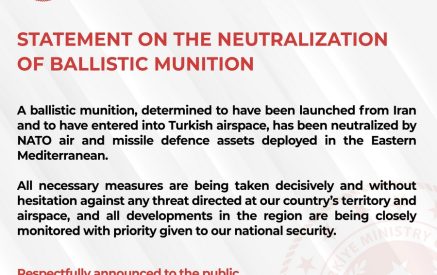
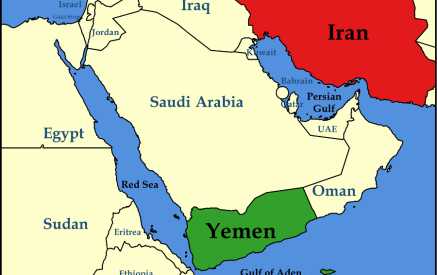
So far, Iran has launched retaliatory strikes against Israel and against US and UK assets in eight countries in the Middle East: Bahrain, Iraq, Jordan, Kuwait, Oman, Qatar, Saudi Arabia, and the United Arab Emirates. There are conflicting reports of Iranian attacks on Turkey, Cyprus, and Azerbaijan. Eleven people were confirmed dead in Israel, four in Kuwait, three people in the United Arab Emirates, two in Iraq, one in Oman, and one in Bahrain. Six U.S. soldiers have also reportedly been killed. Hundreds more people have been injured in strikes across the region. While the Gulf States and Western Europe condemned Iran’s military response at the United Nations Security Council meeting on Saturday, it must be remembered that Gulf countries permitted the United States to position military bases within their territories in the full knowledge that, if war were to break out involving the U.S., these assets would likely become targets. Western Europe has been asserting for over four years now that Ukraine has a right to defend itself against Russia. States bombed by the United States, Israel, and Europe have exactly the same right to self-defense as Western nations bombed by Russia. In fact, all states targeted by aggressive war should be expected to respond militarily. It is simply absurd to assume that any state would willingly give up its right to self-defense when attacked. Of course, self-defense must also respect the established laws of war.
On the 6th day of war, Israel and the United States have already committed multiple grave violations of international law, beginning with a crime of aggression. By carrying out military operations while nuclear negotiations were actively ongoing, the U.S. has further committed the crime of perfidy, betraying both the principles of good faith diplomacy and the sovereignty of another nation. These actions are not isolated and can be added to Israel’s and the United States’ disturbing pattern of impunity and disregard for the rules that govern the international order.
The justifications for the war that are being put forth by Israel and the U.S. do not hold legal water. They also often do not make any logical sense. And they are remarkably unethical. Attempts to frame this attack as a “preemptive war” are both misleading and legally unfounded. The U.S. and Israel are using similar arguments today as the U.S. used to encourage support for its illegal war against Iraq in 2003: that Iran is a justified target because it has – or is on the cusp of having – weapons of mass destruction (WMDs). We all know that Iraq did not have WMDs and the accusation was a complete fabrication. The state of Iran’s nuclear program today is the subject of disagreement. However, the fact remains that international law – then and now – permits the use of force only in cases of legitimate self-defense against an imminent armed attack or when explicitly approved, either by the UNSC or by the targeted State itself. Secretary Rubio’s logic aside, the threat of an imminent attack by Iran simply did not exist in the weeks leading up to the 28 February war, just as it did not exist from Iraq in 2003.
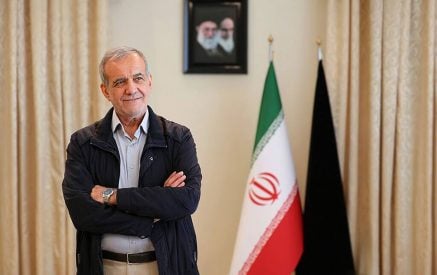
The first wave of Israeli and American attacks targeted the highest levels of Iran’s political and military leadership, so clearly the goal of the war extends well beyond President Trump’s differences with Iran over weapons. On the night of 28 February, Iranian state television confirmed the killing of Supreme Leader Ali Khamenei. Reports further indicate that among other targeted leaders were President Masoud Pezeshkian, Islamic Revolutionary Guard Corps Commander Mohammad Pakpour, Defense Minister Amir Nasirzadeh, senior security adviser Ali Shamkhani, and former President Mahmoud Ahmadinejad. This effort to decapitate the state’s governing structure is not self-defense but a declaration of a regime change operation. Prime Minister Netanyahu has in fact openly called for Iranians to rise up against their own government. Similarly, in a televised address, President Donald Trump urged Iranians to “take over” their government once U.S. strikes end. Addressing Iranians directly, he said “[t]he hour of your freedom is at hand.”
Along these lines, and rather absurdly, the United States and Israel have attempted to characterize their war as one that is being undertaken specifically on behalf of the Iranian people and in the name of their freedom. The former Shah’s son, Reza Pahlavi, penned an exuberant OpEd in the Washington Post of the day of the U.S.-Israeli attacks praising both countries for their regime change agenda. Blindly pro-Israel U.S. pundits have unironically called for the “eradication” of the Iranian regime due to its poor human rights record after having remained silent about, and in some cases having championed, Israel’s genocide in Gaza for over two and a half years. Trump Administration officials speak of “annihilation” of Iran’s military capabilities and meting out “retribution” to its leaders. While the Iranian regime is widely regarded as a theocratic police state with an undeniably poor human rights record, Western intervention in Iran has never been about—nor has it achieved anything close to—freedom for Iranians. While President Trump lists in his justifications for military action the number of times Iran has attacked the United States in the past 50 years, he fails to mention that it was the U.S. Central Intelligence Agency (CIA), in collaboration with the UK, that assassinated the democratically-elected president of Iran, Mohammed Mossadegh, in 1953 and installed the brutal dictatorship of Shah Mohammad Reza Pahlavi, whose repressive rule marred by corruption and widespread economic destitution were instrumental in bringing about the 1979 revolution and the Islamic Republic’s rise to power. Historians working with the Council on Foreign Relations rated the Mossadegh assassination the fourth worst foreign policy decision in U.S. history. President Trump would be wise to consider the lessons of the past as he moves forward.
The war on Iran does not seem to be about Iran’s nuclear program, though that argument lies at the center of attempts to manufacture consent for this attack. U.S. Vice president JD Vance stated last week, during U.S.-Iran negotiations, that “Iran cannot have a nuclear weapon.” But, when it became clear that Iran was willing to give up the technology and resources needed to produce a nuclear weapon, the U.S. attacked rather than sign a peace deal. Unfortunately this attack is likely to further accelerate worldwide nuclear proliferation, because it has demonstrated that the United States is currently an entirely unreliable negotiation partner: Iran cooperated with every element of the Joint Comprehensive Plan of Action until Trump unilaterally pulled out in 2018 and now has been bombed twice by the U.S. while engaging in negotiations with the Trump Administration. Ironically, the attack on Iran could suggest that a nuclear arsenal is the only reliable protection against land grabs and regime change efforts by the great powers, something that has been tragically demonstrated by Ukraine, which gave up its nuclear arsenal in 1994 in exchange for guaranteed protection against Russia. Whatever short-term security gains the Trump administration thinks it has made will be erased by long-term destabilization of global norms and cooperation.
Having said all of this, the Lemkin Institute continues to stand with the people of Iran in their fight for freedom from tyrannical rule. The Islamic Republic, apart from being a destabilizing force in the region, has also ruled Iran through terror and bloodshed. In our latest statement on Iran, we condemned the most recent instance of brutal state repression carried out by the Iranian authorities against their own citizens. The systematic suppression of dissent and the use of violence against civilians remain deeply concerning and warrant unequivocal condemnation, diplomatic pressure, and referral to international judicial bodies. However, we emphasize that, regardless of how oppressive or objectionable the Iranian regime may be, it is not the role of Israel or the United States to overthrow it. The people of Iran alone have the right to determine their political future and shape their own destiny. External powers attempting to impose regime change through war violate the fundamental principles of self-determination and national sovereignty and risk making life immeasurably worse for ordinary Iranians. History has repeatedly shown that such interventions bring suffering and instability to the population of the targeted state, not liberation.
Regretfully, and for reasons that are not entirely clear, the Trump Administration has decided that it is not only willing to kill civilians overseas but also to risk the lives of its own soldiers in order to impose a ‘Greater Israel’ vision on countries and peoples who have no interest in such an arrangement. The Lemkin Institute stands with countries who are rejecting this illegal use of force and who are looking for practical solutions to conflict in the Middle East. We acknowledge with gratitude Spanish Prime Minister Pedro Sánchez’s “no to war” stance and encourage more European nations to follow his lead. Furthermore, we support many of the ideas raised during Saturday’s UNSC meeting, particularly Colombia’s call for a framework for regional dialogue and the convening of a peace conference for the Middle East under United Nations auspices. At the same meeting, Somalia, delivering a statement on behalf of the A3 members (DRC, Liberia, and Somalia), called for a “Middle East zone free of nuclear weapons and other weapons of mass destruction.” We hope that the war against Iran can become a spark for a renewed movement towards international peace and security, nuclear disarmament, and a commitment to multilateralism the world over.
Lemkin Institute for Genocide Prevention