




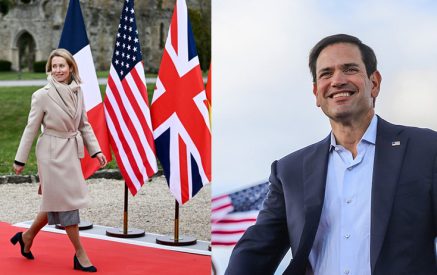
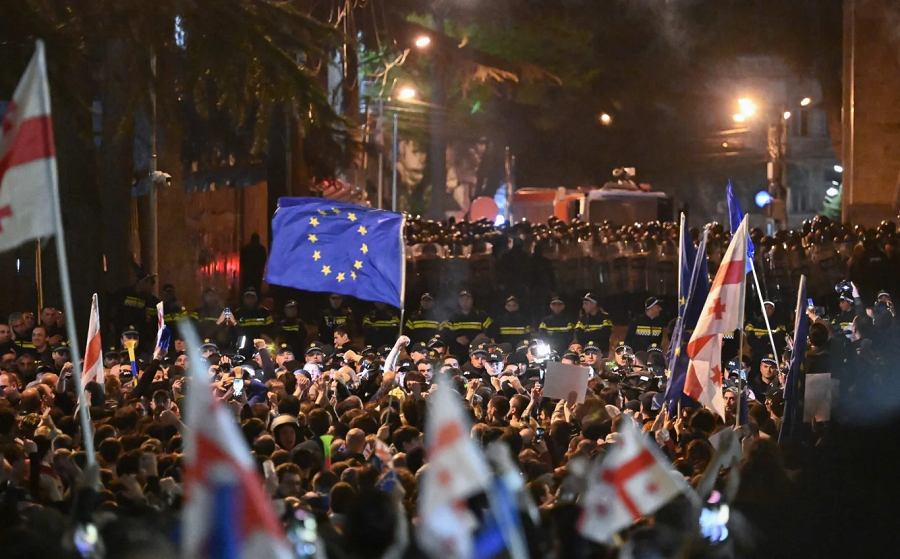
EU NEIGHBOURS east. The adoption of the legislative package on foreign funding and political activity by the Georgian Parliament on 4 March is part of a systematic effort of the Georgian authorities to restrict the country’s democratic and civic space, EU High Representative Kaja Kallas and Commissioner for Enlargement Marta Kos said in a statement on 6 March.
The new legislation establishes an extensive system of state control over political activity in the country. It introduces potential criminal liability for individuals or entities receiving support from foreign sources. “Its vague provisions create profound legal uncertainty and major risks of arbitrary and selective enforcement,” the statement said.
“By adopting this legislative package, the Georgian authorities further disregard their international human rights obligations, their commitments taken in the EU-Georgia Association Agreement and move further away from the objective of EU membership enshrined in the Constitution of Georgia,” Kallas and Kos said. “This in addition to the actions already taken by Georgian authorities, leading to the unjust detention of politicians, journalists and activists that must be released immediately.”
In response, on 6 March the European Commission suspended visa-free travel for Georgian holders of diplomatic, service or official passports under the revised Visa Suspension Mechanism.
Read also
At the same time, the EU high officials reminded that the EU stood by Georgia and its population during times of economic crisis, providing financial support, and would continue to support Georgian people on their European path: “Following Russian restrictions affecting Georgian exports, the EU expanded trade opportunities for Georgian producers. Unlike Georgian holders of diplomatic, service or official passports, citizens of Georgia can travel to the EU visa-free. Young people from Georgia are welcomed in the EU through hundreds of scholarships. The EU’s support for Georgia’s security, territorial integrity and sovereignty within its internationally recognised borders is unwavering. We opened the door for Georgia to join the EU family by granting it candidate status in 2023.”
Kaja Kallas and Marta Kos also said that the Georgian authorities “put this longstanding partnership at very serious risk and are regrettably moving Georgia further away from the EU path”, adding that, at this point, Georgia is a candidate country “in name only”.