

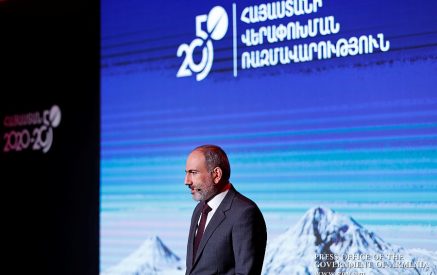









When a country’s leader addresses the European Parliament, they usually, as far as I know, speak about international politics and their country’s position on one or another issue on that agenda. But given the EU’s, let’s say, rather peculiar relationship with Pashinyan, Armenia’s prime minister chose instead to dwell on our country’s domestic political life—complaining about the clergy and the opposition while simultaneously justifying the political repressions he himself has initiated.
Pashinyan, in particular, said the following:
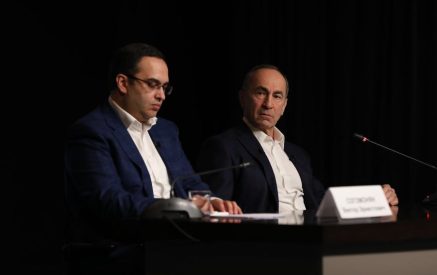
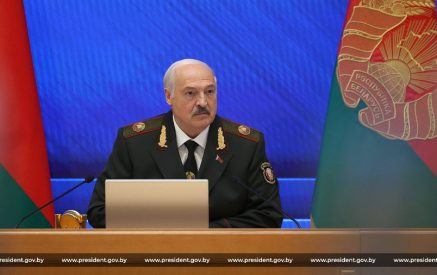
“The reality is that certain clergymen, who have cynically violated all the rules of spiritual morality, have taken on the leadership of the party of war in the Republic of Armenia—gathering around them former leaders of the Republic of Armenia, certain forces affiliated with them, as well as some oligarchs based in Russia and pro-Belarus oligarchs—and are attempting to sacrifice Armenia’s independence to the interests of third countries. We will not allow a new conflict or a new war.”
In other words, in a single sentence he voiced at least four unsubstantiated claims:
that “clergymen have taken on the leadership of the party of war,”
Read also
that “they have rallied former leaders of Armenia around them,”
that “oligarchs based in Russia (Karapetyan) and pro-Belarus oligarchs (Tsarukyan) are connected with those former leaders,”
that “they are trying to sacrifice Armenia’s independence.”
No evidence for any of these claims is presented, of course. But even if these assertions were 100 percent true, that would in no way justify the court rulings concerning defrocked priests and a bishop, the criminal prosecution of clergymen, or the decisions by the National Assembly and the Ministry of Defense directed against the Church—not against some allegedly “militaristic” or “anti-independence” clergy.
I cannot rule out that ordinary members of the European Parliament who are unfamiliar with the realities in Armenia believe Pashinyan’s claims and applaud them sincerely. The leaders of the EU, of course, know perfectly well what is happening in our country. But geopolitical interests are more important to them.
Aram ABRAHAMYAN