





Preliminary Assessment of Democracy Monitoring Organization Follows Week of Meetings with Representatives of Civil Society, Political Parties, and Government Authorities
Yerevan, Armenia — A deteriorating environment for political and civil rights in Armenia raises serious concerns about the democratic conditions necessary for a fair and free election, said the International Observatory for Democracy in Armenia (IODA) in a press conference in Yerevan today to present its preliminary assessment following its initial fact-finding mission in the country this week. Evidence of the government’s interference in the independence of the judiciary and religious establishment, as well as politicized prosecutions of perceived political opponents, including political leaders, media figures, lawyers, and members of the clergy, have undermined confidence in a level playing field for political competition.
“A small country surrounded by hostile neighbors, Armenia’s most precious asset is its democracy. That rarity in the region makes it particularly troubling to see the government chipping away at democratic freedoms in the country ahead of the June 7 parliamentary election,” said Kenneth Roth, IODA executive board member.
“The international community has unfortunately misfocused its attention on securing a partisan outcome, whether ‘pro-West’ or ‘pro-Russian’, rather than on preserving what’s most important of all: a thriving democracy,” said Philippe Kalfayan, IODA executive board member.
Read also
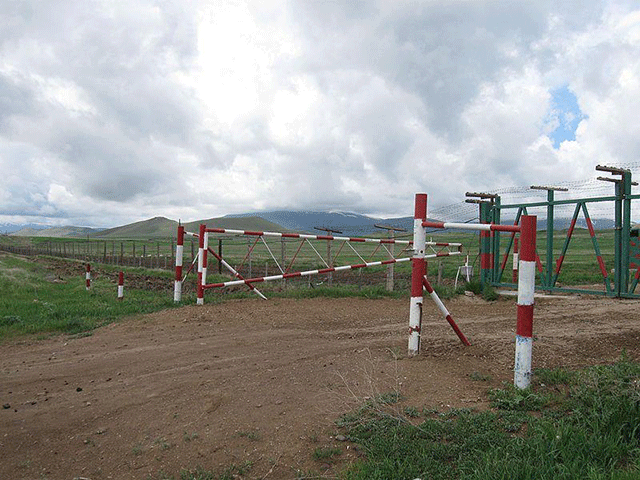

The IODA is an independent, non-partisan organization formed to monitor democracy and human rights conditions in Armenia ahead of the June 2026 elections. IODA has no affiliation with any national or multinational government or agency, and is composed entirely of independent human rights experts.
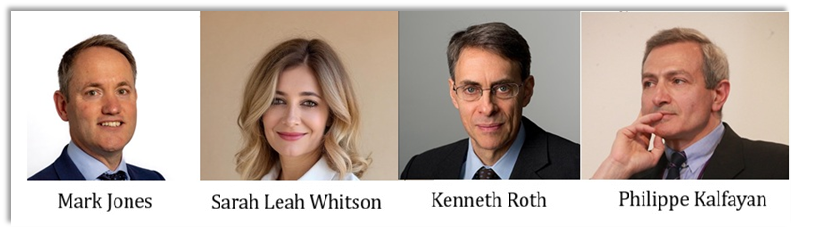
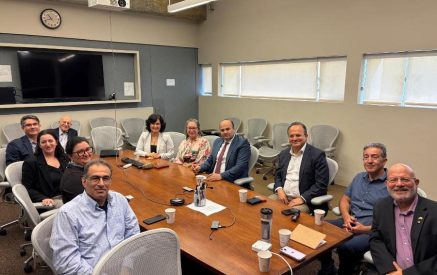
A delegation of IODA representatives in Armenia from March 7 to 12 has consulted with a broad range of actors in the country to reach their preliminary assessment, including members of political parties, the clergy, non-governmental organizations, and national authorities responsible for ensuring human rights and election integrity. The justice and interior ministries, the Constitutional Court, and the political party associated with the government, Civil Contract, declined to meet with the delegation. The delegation participating in this initial mission includes Kenneth Roth, Philippe Kalfayan, Sarah Leah Whitson, and Mark Jones.
Key concerns identified by the IODA delegation in its preliminary assessment include evidence of:
· Politically motivated arrests and detentions of political opposition figures, including Strong Armenia political party leader Samvel Karapetyan, Archbishops Bagrat Galstanyan, Mikayel Ajapahyan, Arshak Khachatryan and Bishop Mkrtich Proshyan, in some cases involving the excessive use of harsh and disproportionate police force and often involving prolonged and unnecessary pretrial detention;
· Efforts to interfere in the independence of the judiciary, including through the Supreme Judicial Council, resulting in the summary dismissal of judges on apparently politically motivated grounds, and suggestions of political bias in the appointment of judges to hear cases involving political opponents;
· Excessive misuse of vague penal code provisions that criminalize speech offenses including allegations of “hooliganism” and “calling for the overthrow of the government,” to prosecute members of parliament, political opposition, and the media; and
· The apparent weaponization of the judiciary and security forces by the government against political opponents.
“It is hard for Armenian authorities to insist that the election will be fair and free when the country’s leading opposition leader, Samvel Karapetyan, remains under house arrest on what appear to be baseless charges,” said Sarah Leah Whitson, IODA executive board member. “The government seems to be weaponizing evidence-free claims of foreign interference to lull European officials into looking the other way as it exercises increasingly authoritarian powers. The government also seems so determined to secure another term in power that it is willing in the process to compromise Armenia’s emerging democracy.”
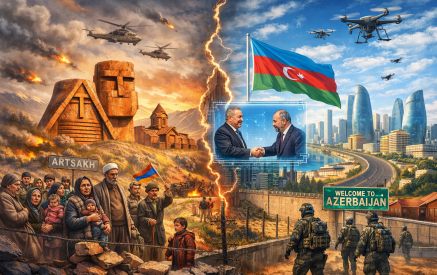
The upcoming elections will take place in a tense political environment following the controversial agreement negotiated by Prime Minister Nikol Pashinyan with Azerbaijani President Ilham Aliyev after Armenia’s defeat in the Artsakh (Nagorno-Karabakh) War. The IODA delegation noted that European Union, American, Turkish, and Azerbaijani officials have sought to influence Armenia’s election process by publicly expressing their endorsement of and support of the Pashinyan. The European Union has committed €12 million to Armenia largely for monitoring foreign interference in the election. While the government has charged several political opposition leaders, the religious establishment and political parties with being “pro-Russian,” it has presented no evidence to date of any unlawful conduct by any of these groups.
“If European Union officials truly want to support Armenia, the best thing they can do is insist that the government respect the rights of Armenian citizens and ensure a truly fair and free election in the country,” said Mark Jones, IODA executive board member. “Treating Armenia like nothing more than a space for geopolitical competition is a disservice to the people of Armenia, who have fought and struggled so hard for their independence, freedom and democracy. Europe should not stand for sacrificing democracy in the name of geopolitical competition.”
More information is available at ArmeniaObservatory.org
IODA