





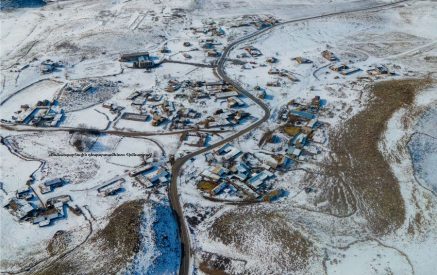



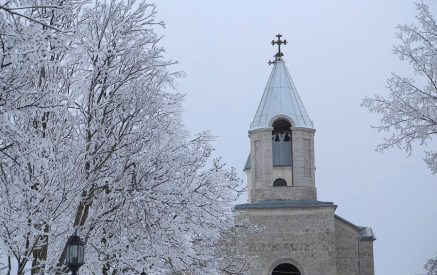




















In October 2020, during the 44-day war, Azerbaijan bombed the Ghazanchetsots Cathedral in Shushi twice – one of the well-known Armenian religious monuments in the region. Later, when Shushi came under Azerbaijan’s control, the cathedral was subjected to structural alterations, as a result of which the main religious symbols were removed. Other churches, cathedrals, and khachkars in Artsakh have suffered the same fate as Ghazanchetsots. The St. John the Baptist (“Kanach Zham”) Church of Shushi was destroyed after the war, while attempts were made in official Azerbaijani statements to deny its Armenian identity. Similar changes have also been recorded at the Vankasar Church, where Armenian inscriptions were removed and Christian symbols were damaged, while the St. Hambardzum Church of Berdzor was completely demolished. In addition to individual monuments, cases of the destruction of entire settlements have also been recorded, including in the villages of Mokhrenes and Karin Tak, where satellite images show large-scale destruction of residential areas.
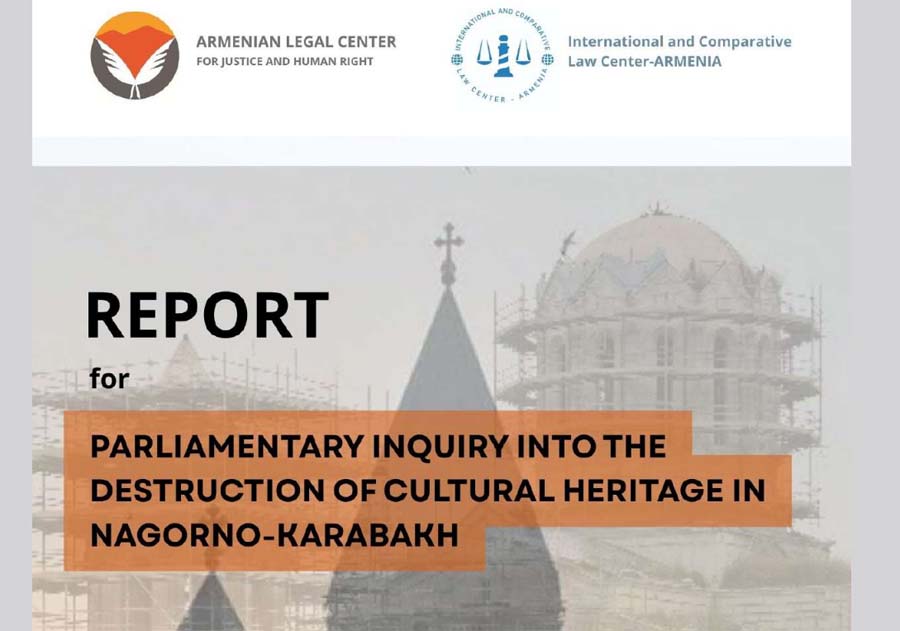
After the 2020 war, and especially following the September 2023 military operations and the forced displacement of more than 100,000 Armenians, numerous cases of the destruction, alteration, and appropriation of Armenian cultural heritage sites have been recorded in Artsakh. As a result of these processes, not only the fate of historical monuments is endangered, but also the cultural identity of Armenian communities and the evidence of their historical presence in the region. The International and Comparative Law Center, in cooperation with the Armenian Legal Center for Justice and Human Rights, has prepared a report on the current state of Armenian cultural and religious heritage in Nagorno-Karabakh and on their destruction, which was submitted to the International Bar Association’s Human Rights Institute.
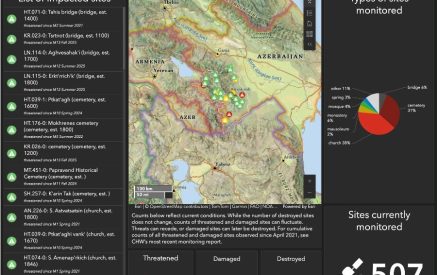
Since 2021, the Center has carried out continuous monitoring, documentation, and legal assessment of the condition of Armenian cultural and religious heritage in Nagorno-Karabakh. The Center’s studies are based on a multilayered methodology that includes the examination of high-resolution satellite imagery, open-source verification methods, consultations with international experts, analysis of official Azerbaijani statements, and testimonies from representatives of displaced communities, supplemented by materials from international monitoring platforms and academic sources.
The Center’s studies show that since 2021 many important sites of Armenian cultural heritage – including churches, monasteries, cemeteries, historic villages, and monuments – have been subjected to vandalism, structural alterations, or have simply been destroyed. Satellite studies conducted by independent monitoring organizations also confirm the physical erasure of numerous settlements that had previously been inhabited by Armenian communities.
Read also
The research indicates that the recorded cases occurred under different circumstances: from damage caused by military operations to post-war alterations, including the transformation of cultural landscapes and the removal of Armenian inscriptions and symbols. Although each case is the subject of separate examination and occurred under specific circumstances, the overall picture points to repeated and ongoing damage to heritage that carries cultural identity. The forcibly displaced Armenians of Artsakh are deprived of the opportunity to visit the graves of their relatives and to carry out memorial and mourning rituals that play an important role in Armenian culture.
International law considers the protection of cultural heritage to be an important obligation. The 1954 Hague Convention and its additional protocols oblige states to protect cultural property during armed conflicts. In addition, within the framework of the European Convention on Human Rights and other international instruments, the destruction of cultural heritage may be linked to violations of the rights to private and family life, freedom of religion, and participation in cultural life.
The report also addresses the absence of access for independent international missions to Nagorno-Karabakh, which is a serious obstacle to the comprehensive assessment of the condition of cultural heritage. The report notes that there are serious risks of violations of international obligations for the protection of cultural heritage. “The destruction of cultural monuments or the alteration of their identity may give rise both to international legal responsibility of the state and to individual criminal responsibility under international criminal law,” the report states.
The protection of the cultural heritage of Nagorno-Karabakh requires a coordinated international response. It is necessary to ensure access for independent international experts to the region in order to conduct continuous monitoring, as well as to ensure the protection of the cultural rights of displaced citizens. The International and Comparative Law Center continues its fact-finding and analytical work with the aim of contributing to the preservation of Armenian cultural heritage, as well as to the development of effective mechanisms of accountability and protection within the framework of international law.
ICLaw | The Center of International and Comparative Law