










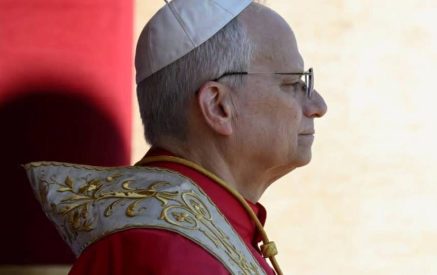


“Hayatsk Yerevanits” Journal – Has anyone ever seen a head of government publicly undermine the reputation, honor, and dignity of the country and people he leads? It is akin to someone openly discrediting his own family, telling colleagues that his wife is immoral, his eldest son is a drug addict, one daughter is promiscuous, and another is shallow, and so on. Anyone who airs such dirty laundry in public, especially a high-ranking official, may be described in many ways, but in plain terms, people would simply say, “There’s something wrong with him.”
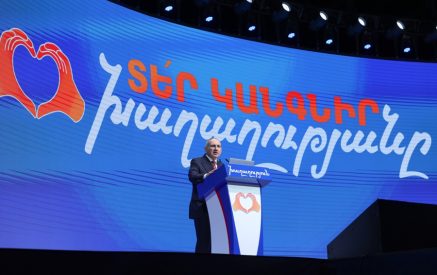
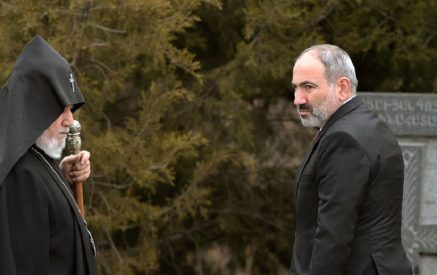
If one listens to Nikol Pashinyan’s speech delivered on March 11, 2026, in the hemicycle of the European Parliament in Strasbourg, it is difficult to regard it as a substantive address by a leader of a sovereign state, someone genuinely concerned with the interests of his country rather than his personal standing and retention of power. The Strasbourg speech, which was expected to address pressing security challenges and regional realities, remained largely confined to Armenia’s domestic political agenda. In effect, Pashinyan used this prestigious international platform to criticize his political opponents and members of the clergy of the Armenian Apostolic Church, while at the same time praising a neighboring rival country and its president.
In essence, Pashinyan appeared to be trying to convince his European audience that the political opposition existing in Armenia must be neutralized. He presented Armenia’s internal political struggle as a geopolitical one, portraying critics of the government as “supporters of war” or “agents of foreign influence.” This is a dangerous approach that not only deepens social polarization but also risks inviting external actors into Armenia’s internal political conflict, in an attempt to gain legitimacy from Western centers for domestic repression.
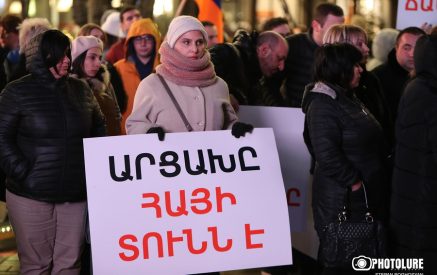
One of the most pivotal elements of the speech was his statement regarding Artsakh, which warrants closer attention. Pashinyan referred to the more than 100,000 Armenians of Artsakh, who were forcibly displaced from their millennia-old homeland and effectively subjected to ethnic cleansing, as “refugees,” adding that they should be assisted in settling in Armenia “so that they forget about returning to Artsakh.” However, this characterization is deeply contested. An Artsakh Armenian is not merely a refugee; he was forcibly expelled, under threat of death, from his ancestral homeland, land that spans thousands of years of heritage. Regardless of political narratives, many believe that, sooner or later, they will return home.
Read also
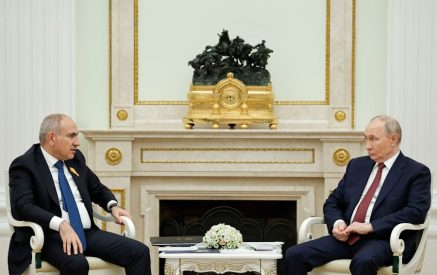
It is noteworthy that immediately following Pashinyan’s speech, 36 members from three major political groups in the European Parliament opposed his statement in a letter addressed to Kaja Kallas, the High Representative for Foreign Affairs and Security Policy and Vice-President of the European Commission. They called for efforts to ensure the right of forcibly displaced persons to return to Artsakh. At the same time, the MEPs urged targeted sanctions against Azerbaijan, the release of Armenian prisoners of war held in Baku, the suspension of the gas memorandum with Azerbaijan, and the adoption of similar measures.
A resolution of similar content had also been adopted by the European Parliament in 2025, supported by around 500 members. This reflects a broader political position within the European Parliament that does not align with Pashinyan’s vision and priorities, one that has been expressed in numerous resolutions in recent years. In other words, the person occupying the chair of the prime minister of Armenia spoke from the European Parliament’s podium about something that much of European political thought does not share. On the issue of the return of Artsakh Armenians, the positions of the U.S. Congress and other Western actors are largely synchronised, suggesting a wider international perception.
Does Nikol at least understand that the guarantee of peace is not a few wagons of low-quality wheat, nor a few barrels of oil? The guarantee of peace is a just and strong state.