












What are the authorities of the Republic of Armenia and the international community remaining silent about?
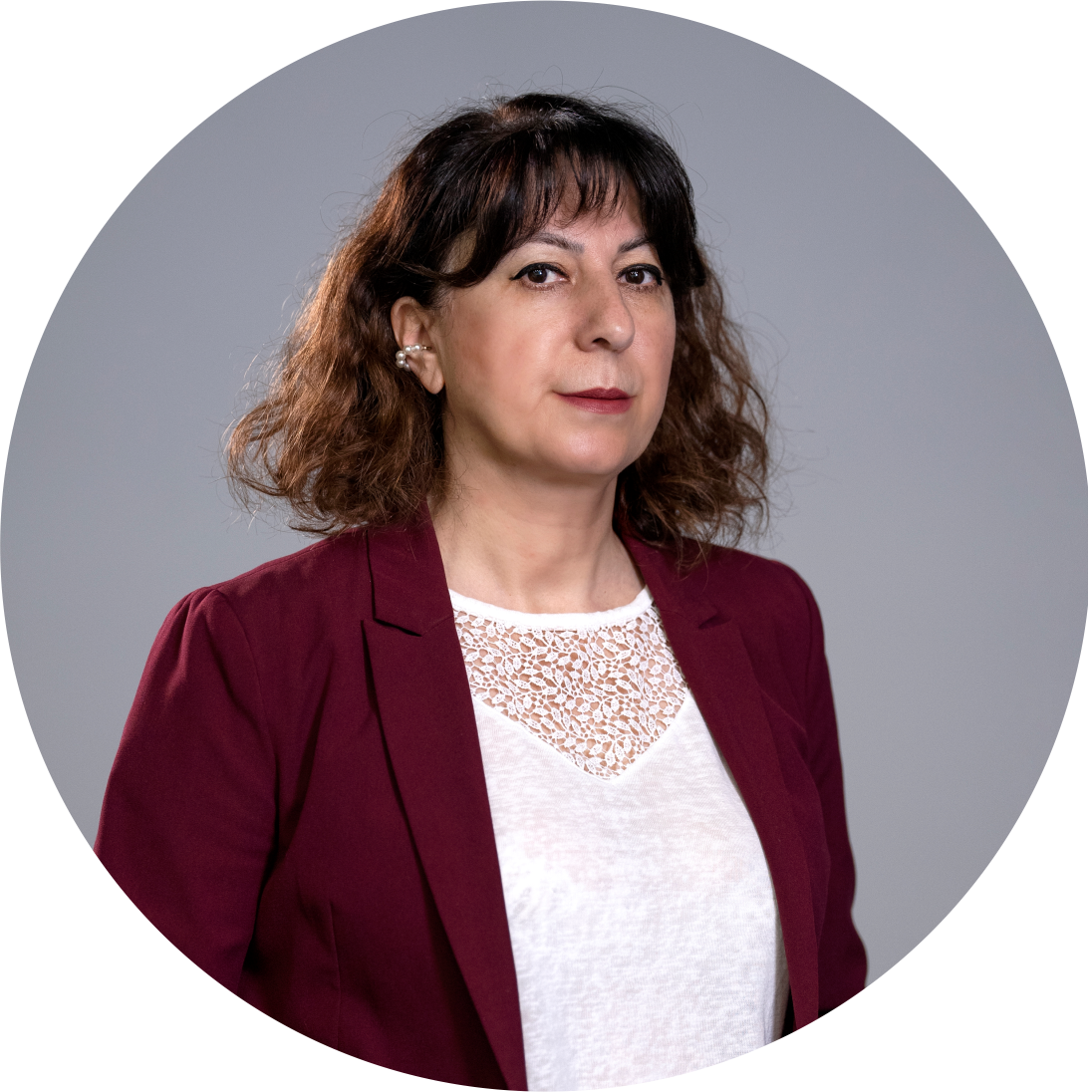
“The Office of the Human Rights Defender of Azerbaijan is not an effective mechanism for the protection of human rights in Azerbaijan. Even under these circumstances, when we all understand that this office does nothing without the approval of its country’s presidential administration, they do not even attempt to pretend that it is an accessible avenue for a person deprived of liberty to establish contact, report possible violations, or share concerns,” said Anna Melikyan, legal expert at the Protection of Rights without Borders NGO, in an interview with Aravot.
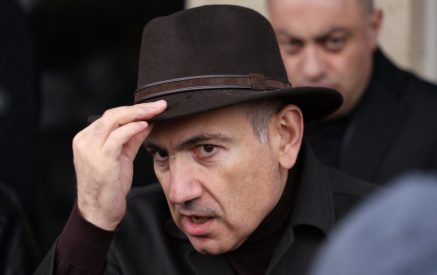
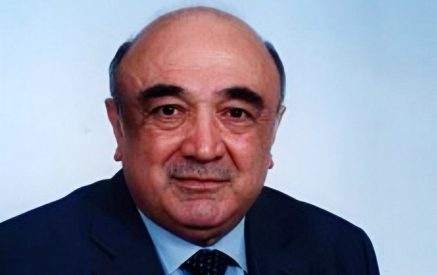
The interview was prompted by a deeply concerning audio recording recently released by the family of Ruben Vardanyan, who is being unlawfully detained in Baku. During a phone conversation with his family, Vardanyan attempted to make a public appeal to Azerbaijan’s Ombudsperson, Sabina Aliyeva, but the call was forcibly interrupted. According to his family, he was compelled to take this step because over the previous 10 days, attempts to reach the Ombudsperson through his lawyer, via written appeals and phone calls, had yielded no results.
“I am asking for a meeting with you. You are the only head of a public institution I can appeal to in this situation, since all other Azerbaijani bodies either exercise state control or…” [the recording is interrupted by law enforcement officers]. “And now, they are not even allowing me to do that. I want to say that, unfortunately, they are not allowing me to appeal to you, so that you, the only person who can, in this situation…,” Vardanyan says in the cut-off recording.
Read also
Officially, the Azerbaijani Ombudsperson’s office holds a “B” status, meaning it is not fully independent and has deficiencies.
“According to various international assessments and reports, that office is not an accessible mechanism for people in detention — not only for Armenians, but in general. In the case of Armenians, the problem is compounded, as it also takes on a more political dimension. Essentially, this was an obvious indicator or an illustration of that practice. Even taking into account that, afterward, the Azerbaijani side issued a statement saying that Azerbaijan’s Human Rights Defender had visited Ruben Vardanyan’s place of detention and was aware of the issues, this does not eliminate the concerns and problems,” said Anna Melikyan. She added that both during the trial and especially now — when there is no international pressure on Azerbaijan, considering regional developments, the war, and Azerbaijan’s growing role in terms of communications — we are witnessing a situation where there is no response whatsoever to the human rights conditions in Azerbaijan.
Our interlocutor agrees that even prior to this, the international community’s response to the poor (to put it mildly) human rights situation in Azerbaijan had already been quite limited: “There are no references to this issue, either in the European Union or in the United Nations (UN). Moreover, if the Armenian government or delegations stop raising this issue in international organizations, no one will address these matters on their own initiative.”
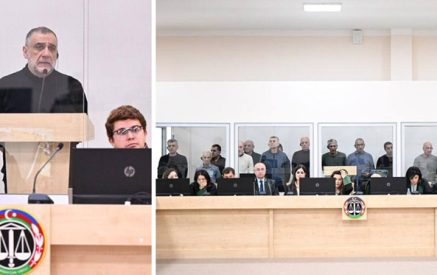
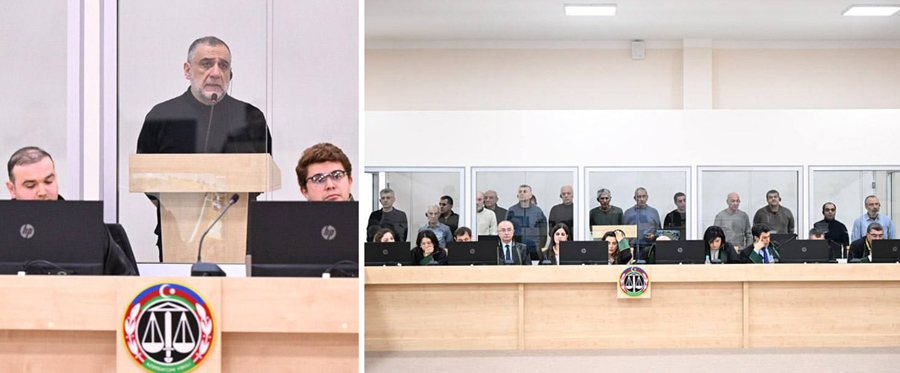
At the same time, Anna Melikyan recalls that in various UN reports, including those of the Committee Against Torture, all the violations committed by Azerbaijan are very clearly documented, especially in cases with a political dimension or those concerning opposition figures and independent journalists. “The same violations were also recorded several years ago in relation to Armenians detained in Baku. The problem, in fact, has not disappeared, but has only intensified, as we no longer have regular visits by the Red Cross to ensure that treatment and detention conditions are appropriate. We also no longer have court proceedings, which, although flawed and very one-sided in coverage, at least gave us some visibility. We could see that people, judging by their appearance, were in a normal condition. Now, when there are almost no means of communication with the outside world and we rely exclusively on the goodwill of the Azerbaijani authorities for detainees to be able to contact their families once a month or periodically… This can be prohibited at any moment, without any consequences for them. Beyond everything else, this is also part of the problem.”
Ruben Vardanyan, in his recorded message addressing the Human Rights Ombudsman of Azerbaijan, also reports that they are unable to obtain the court verdicts: “For one month now, I have not been able to receive the verdict in Russian, Armenian, or Azerbaijani. I do not know what I have been convicted of or under which articles. I am requesting a meeting so that we can discuss all of this.” It is presumed that other Armenians held in Baku prisons, whose trials have concluded, are in the same situation.
On this occasion, Anna Melikyan notes: “We all knew that there was not even a hint of justice in those trials. It was a fiction: a staged process to punish Armenians, especially those who fought for the independence of Nagorno-Karabakh (Artsakh). On the other hand, providing a convicted person with their verdict is a basic guarantee so they can understand exactly what they were convicted of and what charges were brought against them. The monitoring of the trials, which was only partially possible, clearly showed that the charges were not individualized. All the testimonies looked more like a show, rather than specific episodes tied to specific individuals and specific alleged crimes. All 15 individuals, and Ruben Vardanyan separately, were essentially accused of the same thing: the same case file spanning more than 30 years. Regardless of whether a person was a reserve officer, a civilian, or a high-ranking official, they were all tried together as a group. The failure to provide the verdicts is an indicator for us: they are clearly showing that it is their authorities’ decision whether to provide something or not. But since this is also formal in nature, they do not even attempt to demonstrate that they are ensuring basic guarantees.”
“Unfortunately, the Red Cross has left. There is no other institution here that can maintain contact with us. The Armenian government does not have representation here and is occupied with logistics… [the call is interrupted, the connection ends],” Ruben Vardanyan also states in his appeal to the Human Rights Ombudsman of Azerbaijan.
This was followed by a letter from Ruben Vardanyan’s wife, Veronika Zonabend, addressed to the President of the International Committee of the Red Cross, Mirjana Spoljaric Egger, requesting clarification of the legal status of Armenian detainees in Azerbaijan. She emphasized that for the families of those unlawfully detained, it is extremely important to know what legal status their relatives had during visits by ICRC representatives in Azerbaijan: “The need for clarification becomes even more urgent in light of the evidently flawed judicial proceedings in Azerbaijan, considering trials lacking fundamental guarantees and charges devoid of factual and legal grounds,” Veronika Zonabend noted.
It is worth noting that the ICRC suspended its activities in Azerbaijan on September 3, 2025.
“The International Committee of the Red Cross also has the ability to operate through individual visits, which took place in December last year when a delegation came from Geneva. It was important for the Red Cross office in Azerbaijan to function, because this allowed problems to be recorded on a daily basis, and it made possible more regular and frequent visits to Armenians held in Baku. We were able to meet them, resolve some issues, and maintain their connection with the outside world. Since June of last year, there have been no regular visits, and from September, the office officially ceased operations. In this case, it becomes much more difficult to negotiate the possibility of visits each time through diplomatic channels. The Geneva delegation visited in December, and it is unclear when the next visit will take place or how frequently visits can be organized. This uncertainty also creates problems. Essentially, the issues remain at the discretion of the Azerbaijani authorities: if they do not want to allow it, they will not grant permission, and no visit will take place. This leaves the captured Armenians in a very vulnerable position, especially given that the country’s Ombudsman’s office, in practice, does not play a role in protecting human rights,” says Anna Melikyan.
Our interlocutor was asked whether she is aware of how actively the Armenian government is following up on the issues related to the detainees at this stage, since Armenian officials do not provide clear answers to questions, only stating very generally that they are “working on the issue” and are concerned.
“We try to follow the statements made in various international organizations, such as the OSCE or the UN, that are publicly available, as well as press releases. In practice, in some cases the issue of the detainees’ presence is acknowledged, but the approach has actually changed. Previously, this was presented by Azerbaijan as a serious violation, since people were being held there illegally. Now, the issue is more often framed as a humanitarian matter that would contribute to peace between the two countries. It is said that not returning the detainees does not help achieve full peace between the countries. In reality, if we were confident that such an approach would accelerate their return… But we, as human rights defenders, act from our role and continue to present the issue as a violation, and we cannot back down from our position, because keeping Armenians in Baku’s prisons is clearly illegal,” said Anna Melikyan.
She emphasized that it is important for the Armenian government to continue speaking about this issue, but noted that it is not always noticeable: “For example, last year, both at the UN and the European Parliament, the issue did not receive an adequate response at the highest levels. The matter was not included in the Prime Minister’s speech, and when it was raised by European Parliament members, the Armenian Prime Minister expressed a very mild position. Justice and the exclusion of impunity are important to us, especially in cases of such serious violations. On the other hand, we see that the government’s approach has changed, and accountability or punitive measures for the war crimes and crimes against humanity committed by Azerbaijan are no longer being pursued, neither in criminal courts nor in UN forums. We are also aware that within the framework of the peace agreement, the detainees’ issue is not formally included as a provision. Moreover, there is an obligation to withdraw interstate claims from the European Court of Human Rights and the UN’s International Court of Justice.”
“This gives rise to serious concern, because in this case, it appears that Azerbaijan’s responsibility is being completely excluded, both as a state and in terms of violations committed by individuals. Not only do we not see active efforts from the Armenian government, but the returned detainees are already individually, without relying on the government, trying to pursue the restoration of their rights,” Melikyan added.
In response to the observation that the Armenian government’s position has changed and the detainees’ issue is either not being pursued or pursued only formally, and that the international community’s stance is also becoming neutral — either due to the Armenian government’s position or Azerbaijan’s growing political weight in the region — Melikyan replied: “As human rights defenders, we do not stop our efforts. We try to activate all available and relevant justice mechanisms, continue to oppose the withdrawal of interstate complaints, and express concerns about the text of the peace agreement in the forums available to us. We will continue to do so, regardless of political expediency, because for us, there can be no sustainable peace if issues of justice are unresolved and violations have not been properly addressed.”
She added: “We cannot simply wake up one day and say we can live peacefully with soldiers who decapitate elderly people. When a violation goes unpunished, there is no guarantee it will not happen again. In the Armenian government, issues are primarily framed from the perspective of economic development, rather than resolving the root causes of the conflict or assessing them properly. Therefore, not only is justice lacking, but there are no alternative mechanisms for victims to understand how to move forward regarding their property and human rights violations.
The only option left is that we — and our government, as well as the international community — must continue to demand that this issue is not forgotten and that all obligations undertaken by international actors and states are fulfilled. But we must admit that things are becoming increasingly difficult, because tomorrow we may find that no one is interested in this topic. The Armenian authorities constantly use the peace agreement as a counterargument whenever we speak about human rights and justice, claiming that addressing these issues hinders peace and that even raising them is not allowed.
On the other hand, when we try to raise issues through other states, they very reasonably ask: if your government or authorities do not see a problem and do not speak up, why should we? Only those issues with serious advocacy make it onto the international agenda. Conflicts and violations around the world, unfortunately, are continuous and widespread across various sectors. It is very difficult to maintain attention on any issue without consistent work. When the government does not engage, it becomes much harder for individual human rights defenders or civil society organizations to achieve meaningful results.”
Nelly GRIGORYAN
“Aravot” Newspaper
27.03.2026