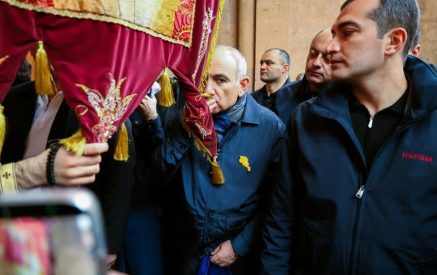








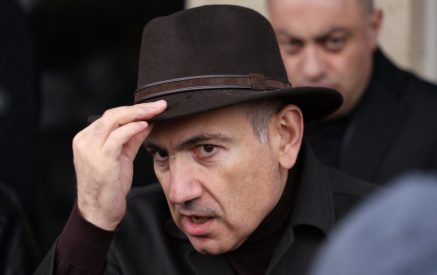






Last Sunday, arriving late to the liturgy, Pashinyan—carrying out his political/official activities (according to investigators)—plowed into the crowd with several dozen bodyguards, thereby disturbing the worshippers with his “political activity.” The message is clear: “I am the anointed of the people; I come when I want, and do whatever I please.”
If we add to this the fact that he calls the Catholicos “Ktrich Nersisyan,” gossips about bishops, arrests clergy, appoints heads of dioceses, and involves himself in the ordination of priests, such brazen and improper behavior cannot but provoke outrage.
Most observers believe this was a deliberately staged provocation. I don’t know—I cannot assert that; I often struggle to understand even relatively adequate politicians, let alone Pashinyan.
The problem is that politicians, in general, are far from what I consider to be adequate. Especially politicians like Pashinyan. What should an ordinary, conscientious, decent (in my view—adequate) person have done on November 10, 2020? He should have acknowledged that he lacked the diplomatic skill to prevent the war and then the organizational ability to mount resistance; he should have apologized and withdrawn from political and public life forever.
Read also
But Pashinyan did not do that—he began lashing out hysterically, insulting everyone left and right, issuing threats, and resorting to harsh repressions that even Putin and Lukashenko might envy. Naturally, the refusal to admit guilt inevitably leads to the “appointment” of scapegoats: former leaders, the Russians, the “fifth column,” generals, deserters, and so on. It even went so far that he claimed he had deliberately lost the war in order to free himself from Russia’s influence. (This is directly related to today’s topic—“premeditation.”)
Although the thesis of a “deliberate defeat” sounds like the height of cynicism, the opposition seized upon it—“there, you see, he admitted it.” But the fact is that this claim by Pashinyan is… also a lie. It is easier for him to say that the defeat was a carefully calculated ploy than to admit his inability to govern the country.
So I doubt the “premeditation” of Pashinyan’s actions. Had we, God willing, somehow miraculously won the war, he would have erected a bronze statue of himself, and the courtiers would have glorified him as a great commander who crushed the enemy—just as they now praise his “peacefulness.”
Aram ABRAMYAN