






























by Aram Arkun
MEGHRI, Armenia — Meghri, one of the southernmost towns in Armenia, is constantly in the news nowadays because of the Trump Route for International Peace and Prosperity (TRIPP) project. Its municipal head, Khachatur Seyrani Andreasyan, during an interview in mid-October of last year, declared: “Before when we would go somewhere, they would ask where are you from, and we would say Armenia, and they would say where is Armenia? Now they ask and I say Armenia, and then they ask where in Armenia and when I say Meghri, they say oh, Meghri! … It seems as if everyone knows Meghri now.”
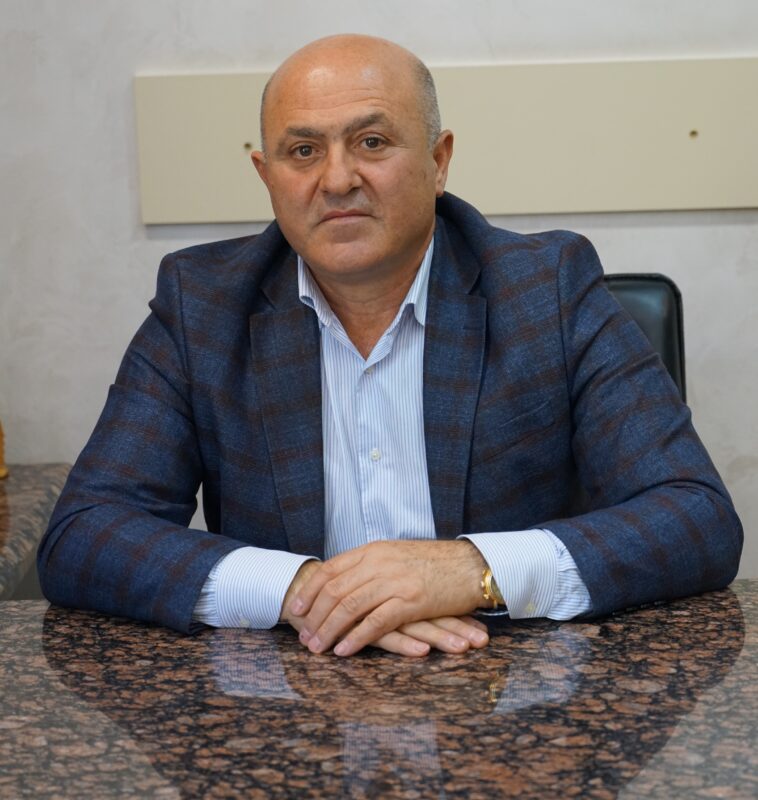
Khachatur Andreasyan (photo Aram Arkun)
Population and Work in Meghri
Read also


Andreasyan said that about 12,000 people live in what is called the enlarged municipality of Meghri, which includes about 4,000 people in the town of Meghri, the same number in the neighboring town of Akarak, and the remainder spread throughout the villages in the municipal district. (The perhaps slightly outdated 2022 Armenian census gives a total of 8,977 permanent population in the enlarged municipality.) Meghri is part of the Armenian province of Syunik. One major base of the economy is agricultural, with Meghri’s fruits, especially pomegranates, figs and persimmon, recognized as of the highest quality, Andreasyan said.
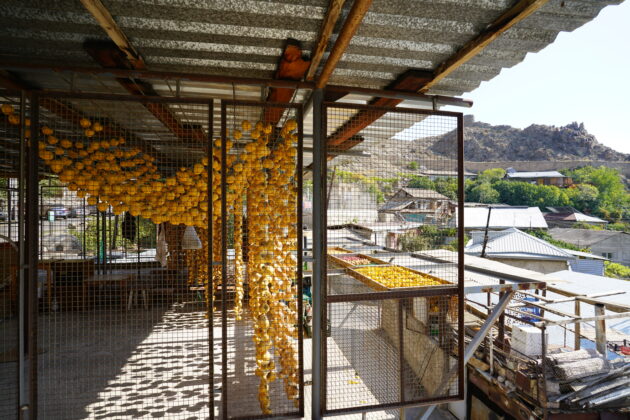
The local standard of living is higher than other regions of Armenia, he said, and there are plenty of jobs, so that unemployment is very, very low in the municipal region. Only having the desire to work is necessary, Andreasyan said. In fact, in order to fill the demand for workers, there are more than 100 Indian nationals who have come to work and live in Meghri. Four Indian citizens work for the municipality, including a garbage truck driver and other cleaners. Indians receive the same salaries as local Armenians for the same jobs.
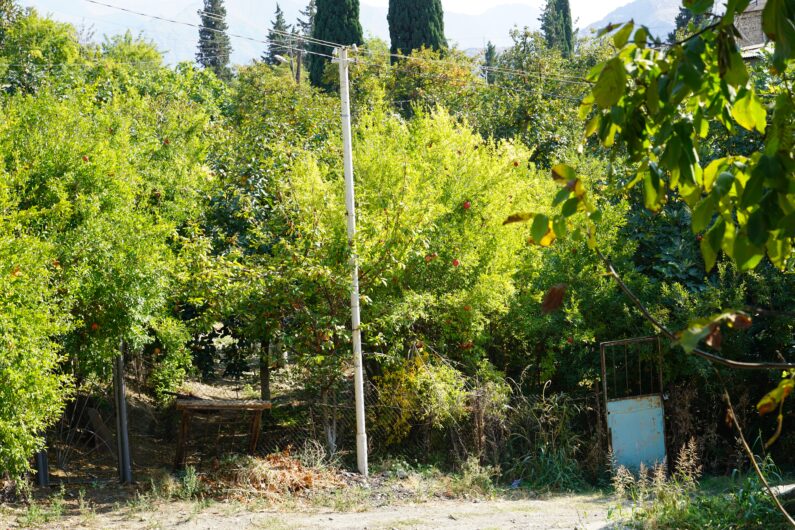
There are pomegranate trees in many yards in Meghri (photo Aram Arkun)
Workers receive a salary of 165,000 drams (about $436) monthly. Andreasyan said in neighboring municipalities it is 130,000 or 140,000 drams, but since there is sufficient money in his budget, “I want our workers to live well too. If I could, I would give them 200,000 [drams]. Let them feel good. … When you receive a high wage, you think about your work. When you receive little, you do whatever…thinking, if I don’t work here, I will work there and get the same 100,000 [drams].”
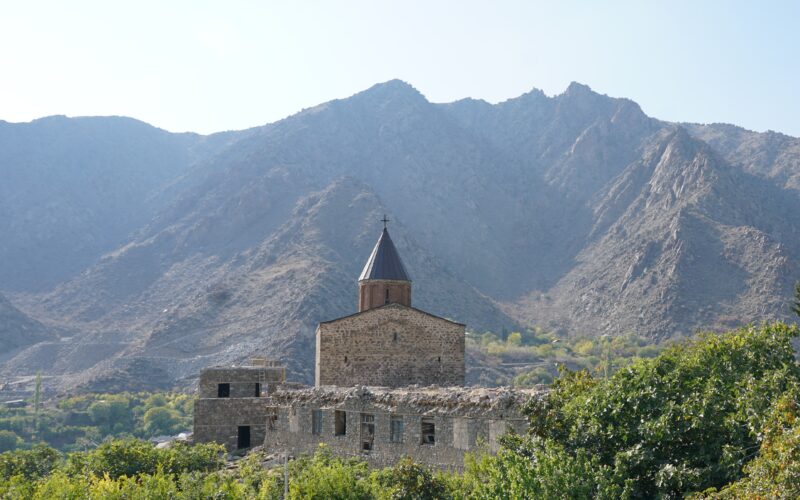
The exterior of the 17th century Sourp Hovhannes Church, also called Anapastanats, located in the Mets Tagh or Large Quarter of the town of Meghri (photo Aram Arkun)
Although there are no exact figures on the numbers of Iranians in the municipality, Andreasyan estimated that there are at least 2-300, including some 60 working on loadbearing trucks. They also drive 10 excavators and a number of smaller vehicles. Iranians work in relatively large numbers on the construction of a local portion of the North-South highway and the same Iranian company doing that won the contract to build a new customs house. They also are preparing high voltage current wires that will bring electricity from Yerevan. It will form a third line that will go into Iran.
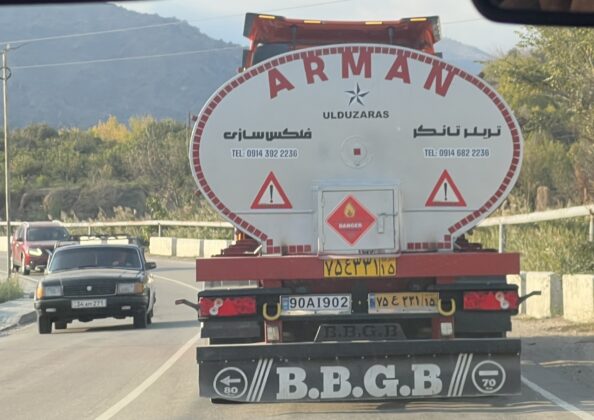
Andreasyan noted that the Iranians learn Armenian quickly. While in Meghri and Akarak, many people understand Persian; soon Persian will also be taught in local schools.
There are Russian army border guards. Before they were very numerous but now they have decreased in number, Andreasyan said, with the majority being ethnic Armenians. There are at least over 100 ethnic Russians among them too. They have their own kindergarten and school and their relatives come sometimes to visit from Russia.
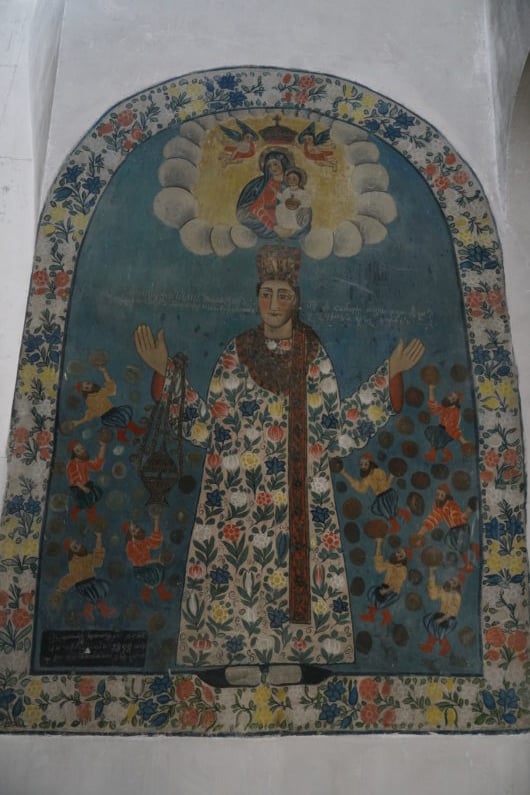
Fresco of St. Stephen the Protomartyr (Sourp Stepannos Nakhavkay) by Ohannes Simonian, 1848, in Sourp Asdvadzadzin Church of Meghri (photo Aram Arkun)
Finally, during the 2023 exodus of Artsakh Armenians, some 180 refugees came to Meghri. Andreasyan said their number varies between 173 and 175, as one family goes another comes. At present, there were 170, who chiefly live in Akarak, Meghri, Vardanidzor village and Tashtun village. They chiefly work in agriculture but also on the North-South highway construction, while others have their own businesses. They work in various places in Meghri, including bakeries. Andreasyan said that they do what they can but always are on pins and needles, hoping that they will be able to go back to their homes in Artsakh to live. “It is a tragedy,” he sighed. He said that at least none of them are starving in Meghri and he was ready to help in any matter. They call the municipal government for various issues, such as no electricity or they need wood, and the municipality helps them. Also sometimes Andreasyan has helped as an individual, or asked friends to help as individuals and they did.
He recalled his recent visit to Artsakh Armenians living in Tashtun village on the day celebrating the elderly, and said that some people there gave them homes without taking any rent. The Artsakh Armenians said to him that they were very satisfied with life there and that the locals had accepted them and acted warmly with them.
Mines in the territory of Meghri are another major source of employment, including the Agarak Copper-Molybdenum Mine, the Lichk Copper Mine and some other gold and copper mines.
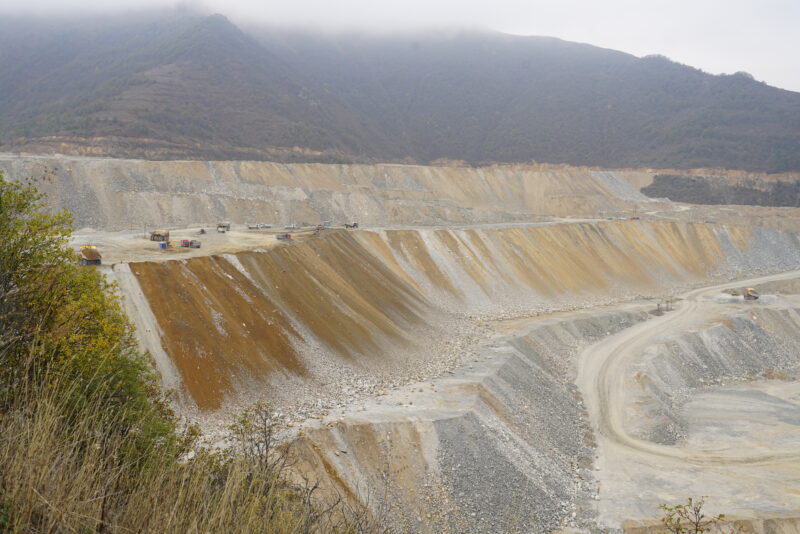
What appears to be mining work right next to the Kapan-Meghri Highway (photo Aram Arkun)
The Armenian central government is a source of employment, as it is currently making great investments in the Meghri region, Andreasyan said. Aside from the aforementioned North-South highway and customs house, on the construction of which many Meghri and Agarak residents work in addition to Iranians, there is a road from Shvanidzor village towards Lernadzor being built and two large stations for purifying drinking water.