












The current authorities have declared the last Saturday of April Citizens’ Day. Why is it not perceived as a nationwide celebration? I believe first and foremost because it carries no positive substance. We are invited to rejoice over the fact that in 2018 they—the current authorities—managed to defeat the “former ones,” the “plunderers,” and so on. Even those who continue to harbor hatred toward the antiheroes of this ruling myth (I use the word “myth” without any negative connotation) have no sufficient reason to celebrate this occasion year after year.
First, if we take into account what has happened to Armenia and Artsakh since that “historic victory.” Second, that “victory” did not unite our society; on the contrary, it deepened the divisions within it.
In general, all the steps taken by Pashinyan’s government are aimed at drawing ever new dividing lines, erecting new “walls” within society. The culmination of this policy is, of course, the fight against the Church, which can contribute not only to internal Armenian tensions, but also to the emergence and deepening of nationwide rifts.
Under these circumstances, whatever “official day” they proclaim will not generate a shared attitude and will not unite society. By contrast, April 24, as the Day of Remembrance of the Victims of the Genocide, is accepted by the entire nation, regardless of all disagreements.
Read also
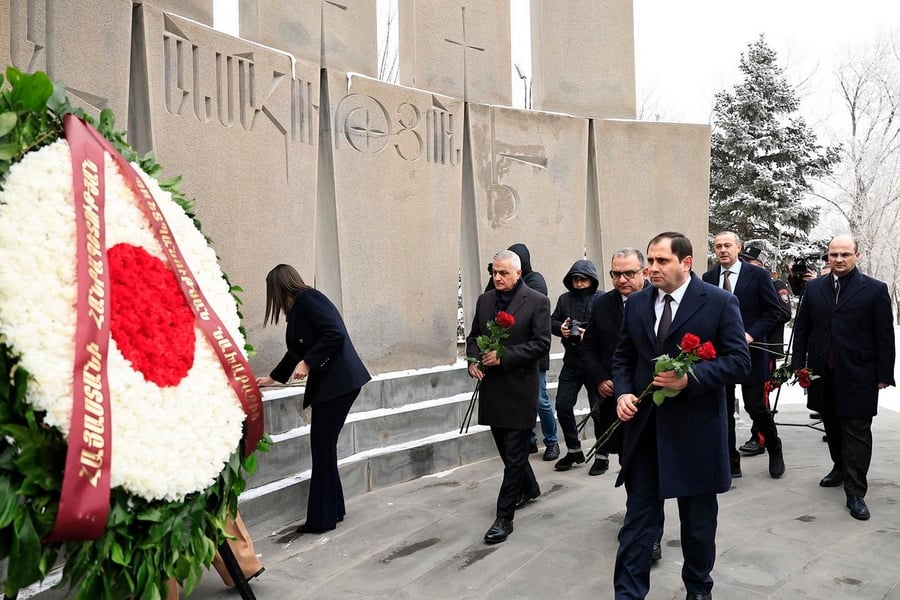
January 27, however, as a day of remembrance for those who died for the homeland, will not be accepted in the same way—and not because there are people who do not respect the memory of the fallen. In addition to what has already been mentioned (the divisive activity of the authorities), there is another reason here. For that day to unite all Armenians, or at least all citizens of the Republic of Armenia, the authorities must officially state which wars and which soldiers’ memory we are honoring. Moreover, they must affirm that Armenia, or the Armenians, took part in wars waged for just causes. Yet the official assessment of the First and Second Artsakh wars is not framed in those terms.
As an example, let us recall the Soviet myth of the Great Patriotic War (again, “myth” in a neutral sense). For a day commemorating fallen soldiers to become truly nationwide, the war itself must be sacralized, sanctified—what is sometimes referred to as a “holy war.”
Aram ABRAHAMYAN