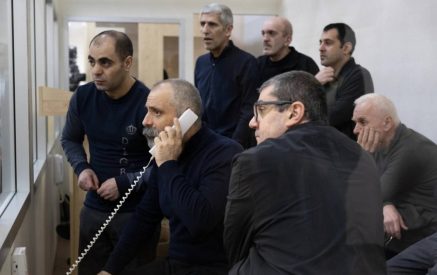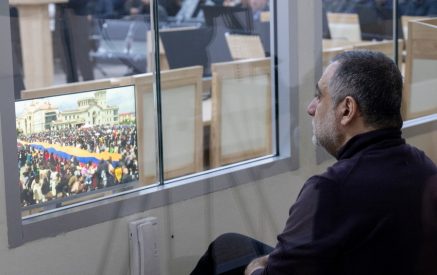




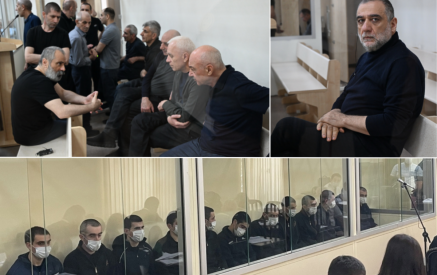
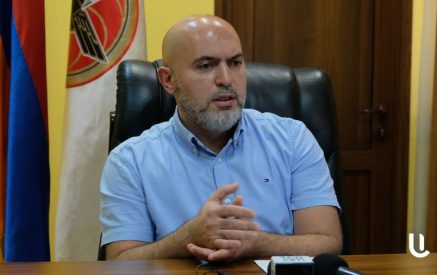

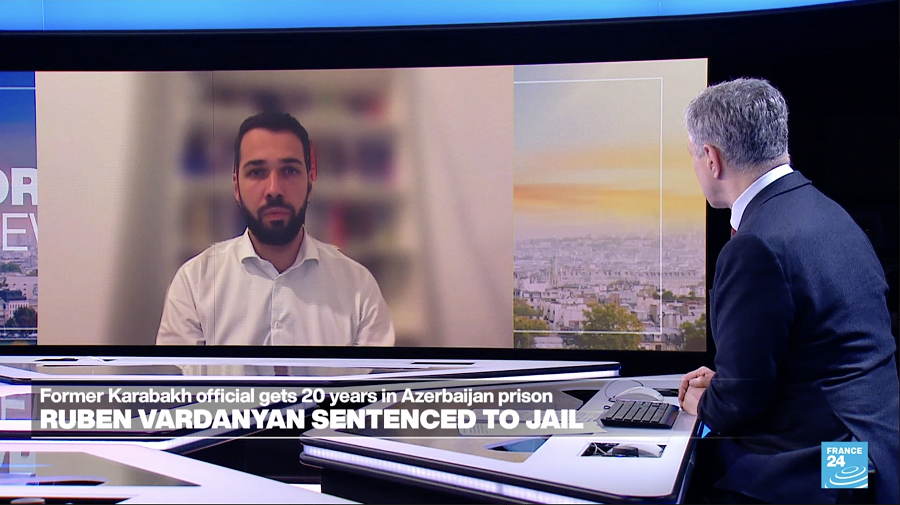
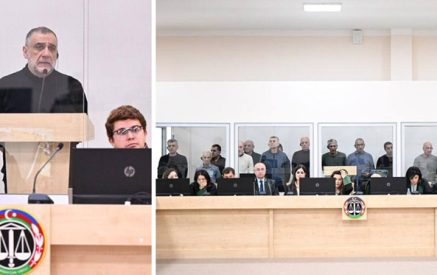
David Vardanyan, son of Ruben Vardanyan, “sentenced” to twenty years in prison in Baku, gave an interview to the French television channel France 24.
The interview is presented here in translation with some abbreviations.
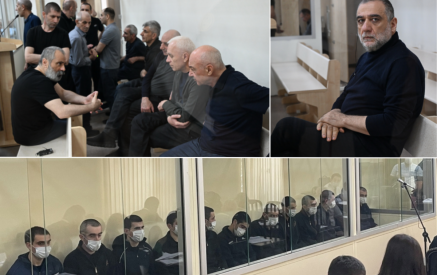
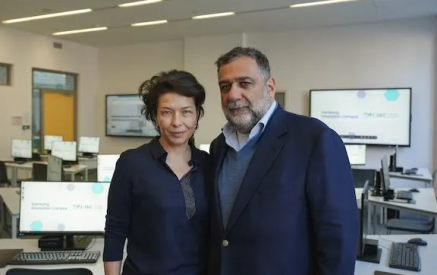
François Picard: When Azerbaijan overran the Armenian enclave of Nagorno-Karabakh in 2023, it proved decisive. Decades of fighting, followed by peace deal announcements, and handshakes. There’s also been stiff sentences for those captured during the final assault of February 2023 — the military court in Baku sentencing earlier this month the former number two of Nagorno-Karabakh, billionaire banker Ruben Vardanyan, to 20 years behind bars. For more, let’s go to Dubai and his son, David Vardanyan. Thank you so much for speaking to us here on France24.
David Vardanyan: Hi François, Thank you so much for the opportunity to talk to you.
Read also
François Picard: The press in Armenia has stated that there will be no appeal, that your family has said that, against this sentence. Can you confirm that and tell us why?
David Vardanyan: Yeah, absolutely. We, after consultation with my father over the phone, have decided not to appeal in the Azeri courts, considering the biased and one-sided position that the Azeri court took. Unfortunately, this is very clear — both, you know, the Amnesty International report highlighted that the mere fact that a civilian, who has never held a military position, was tried in a military tribunal, goes against all international norms. The fact that my father’s international legal defense hasn’t been able to communicate with him once during the two-and-a-half years that he’s been in pre-trial detention, and many other complete violations of international and Azeri laws, show that this is not a real trial, but rather a political show, intended for an internal audience and perhaps some external viewers, as well. But this is definitely not a fair and legitimate trial, so my father refused to participate in this.
François Picard: David Vardayan, let’s listen to Azerbaijan’s president. He spoke to France24’s Mark Pearlman about the case, just earlier this month.
[…Ilham Aliyev…]
So it doesn’t sound like there’s clemency anytime soon, unless that’s just bluster and talking points. What are you hearing?
David Vardanyan: Well, obviously, we’re deeply concerned by the words that have been said. Also, bearing in mind that my mother is of Jewish descent, hearing such strong claims against my father, who is, you know, a humanitarian, and probably the most famous humanitarian in the region. It’s important to note, I think, for some of your viewers, as well, that Azerbaijan accuses the Aurora Foundation — which is a humanitarian prize that was organized and cofounded by my father, together with humanitarians, such as the late Elie Wiesel, Vartan Gregorian, Mary Robsinon, Ernesto Zedillo, among others — as a terrorist organization.
So, these claims are very strong and substantive, and, I think, really, kind of, are very strong words that haven’t really been substantiated. We, of course, hope for a resolution to this conflict and ultimately, what we all want in the region, both Azeris, Armenians, and everyone who lives there, is a true and lasting peace, and I think that the only way that this can be achieved, is once all hostages from one side are released and returned back home, and countries can normalize relations in a true way, and heal all the past traumas that have been happening to both countries.
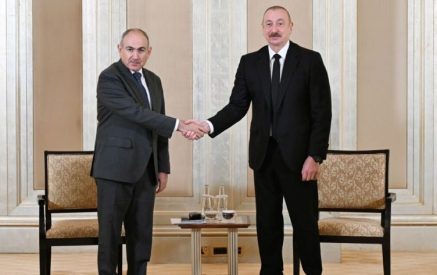
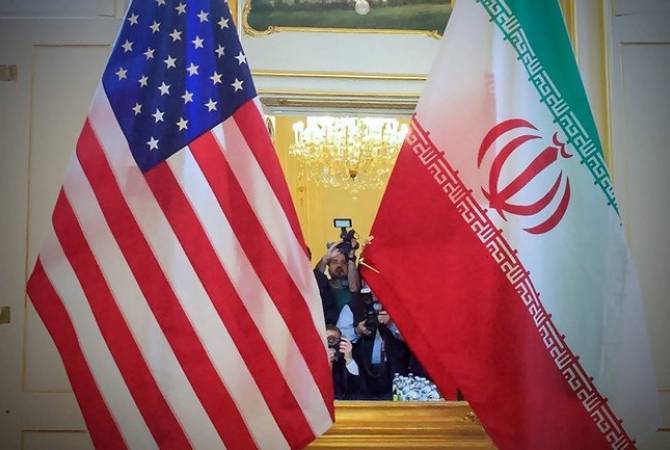
François Picard: And yet, there have been these televised handshakes between the leaders of Armenia and Azerbaijan. We saw the U.S. Vice President, JD Vance, visiting both counties before the verdict, back on February 10th. Last week, both of the leaders of those countries were present at Donald Trump’ s inauguration of the Board of Peace. Let’s take a listen.
[…Donald Trump…]
And right after that, Trump encouraging the pair to shake hands at that Board of Peace meeting in Washington. You can see Nikol Pashinyan and President Aliyev, who did shake hands. Your reaction to that handshake?
David Vardanyan: Well, you know, anything that can bring two countries together after so much bloodshed, is something that really should be sought after. I really am grateful to the Trump administration for actually attempting, in a true and very substantive way, to resolve this decades-long, very long conflict.
I think it’s also very important what President Trump said on August 8th, when he said to Prime Minister Pashinyan that there are 23 — at that time — Armenian Christian hostages being held in Baku that he will help in this regard, as well. Vice President Vance, as well, during his trip to both Armenia and Azerbaijan, raised this issue, as he confirmed, during his visits with both leaders. So, I think the Trump administration also understands that it’s very important, in the normalization of relations, to also have the release of the hostages.
I am very, very hopeful that Armenia and Azerbaijan can find a true and lasting peace. But, a piece of paper that is signed, when there is no good will between the countries, is just a piece of paper. As I think you know, the famous photo of Neville Chamberlain — if we can go back in history — showed, as well, that a piece of paper is just a piece of paper without true and tangible actions.
François Picard: And that trip by JD Vance to the region, did it sort of brush aside your father’s plight?
David Vardanyan: Well, not at all, this was actually a historic trip for both nations. This was the highest ranking U.S. official to ever visit Armenia or Azerbaijan, and the fact that the U.S. is taking such an active role in the region shows that the South Caucasus is important, and the fact that the vice president confirmed, publicly, that the issue of the Armenian hostages was going to be raised by him, during his meetings with Prime Minister Pashinyan and President Aliyev, actually was a very important step in resolving this issue, because it’s only with countries such as the U.S. and the current administration, who has the authority with both countries, that can push for difficult solutions, but ones that must be taken for a true and lasting peace in our region.
François Picard: How about Moscow? Is Moscow applying any pressure? Your father holds a Russian passport.
David Vardanyan: Well, actually, my father is an Armenian citizen, as well, and all the other Armenian hostages are only Armenian citizens. So, it’s a very important point that you raised, that ultimately, it is the fundamental responsibility and obligation of the Armenian government to ensure the timely release of all of these prisoners. And it’s not only about my father, but also the other 18 illegally held Armenian hostages, as well as the unaccounted for people. I hope that any of the important players in the region help in resolving this matter, but ultimately, it’s the utmost responsibility of the Armenian government to ensure its citizens are returned home safely.
François Picard: One final question for you, David Vardanyan. What has your father told your family in the last days?
David Vardanyan: You know, despite all the difficulties, the challenges, and the conditions that he has found himself in over the last 860 days, he remains very hopeful. He tells us always not to lose hope, to stick to our principles, because that’s what he’s doing, despite all the pressure that he has faced and is facing to give up on his belief that Armenia and Azerbaijan must coexist in a truly lasting peace that’s based on mutual respect, he still sticks to his principles, and he urges us all not to give into fear, and to still stand up for what’s right, despite everything that is happening, no matter how difficult it is. He remains hopeful, and he doesn’t hold any anger toward anyone, and it’s his sincere hope that Armenia and Azerbaijan do find a way to coexist together, as neighbors.
François Picard: David Vardayan, so many thanks for joining us from Dubai.
David Vardanyan: Thank you, François. Thank you so much.