










If a visitor to Yerevan were to stop by the memorial dedicated to the victims of political repression in Armenia, it would seem entirely appropriate to present them with a book about the Stalinist purges. If the visitor went to an Armenian–Iranian research center, perhaps it would make sense to give them a study on relations between our two peoples. And at the Komitas Museum-Institute, one could imagine presenting a collection of Armenian folk songs as a gift. Deciding which book to give to which guest is entirely the prerogative of the institution, organization, or institute in question.
By the same logic, at the Armenian Genocide Museum-Institute it is the director of that institution who decides which book to present to visitors. In my view, a book about Artsakh is entirely appropriate, because the governments of the Committee of Union and Progress (the Young Turks), Kemalist Turkey, Soviet Azerbaijan SSR, and independent Azerbaijan have all acted—and continue to act—have all followed the same genocidal logic. Incidentally, one of the best-known international bodies dealing with this issue, the Lemkin Institute for Genocide Prevention, holds the same view.
Of course, there may be citizens in Armenia—including the prime minister, ministers, or members of parliament—who hold a different opinion. But the crucial point here is that neither my opinion nor theirs should be decisive. The decision is made by the head of that institution, guided by their knowledge and professional judgment.
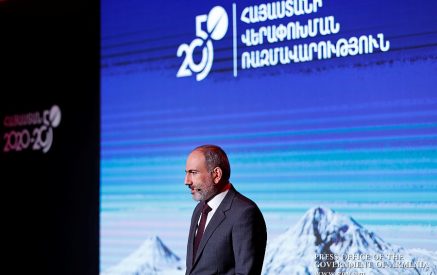
When the executive branch interferes in the decisions of academic institutions and uses its political preferences to resolve staffing issues, that is a hallmark of authoritarian regimes. In such systems, academic and educational institutions fall under the complete control of a single individual. That is precisely what Pashinyan is striving for.
Read also
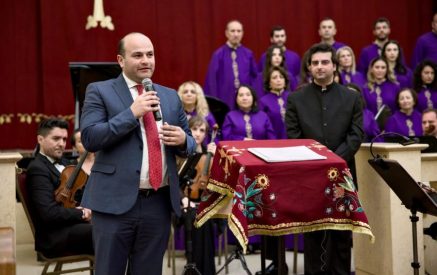
And why stop at those institutions? Through courts effectively under his control, he is also attempting to bring the church under his control—effectively claiming the power to ordain or defrock priests and to appoint or dismiss the heads of dioceses. Recently, the prime minister has even decided to monitor the content of church services, ensuring that the word “Artsakh” is not uttered during the liturgy. I would not be surprised if court cases soon emerge over that issue as well.
Aram ABRAHAMYAN