





















By Harut Sassounian
Prime Minister Nikol Pashinyan committed, last week, the sin of attacking the clergy of the Armenian Apostolic Church and his domestic political opponents before the European Parliament. Regardless of internal disputes, it is unacceptable for the head of the Armenian government to disparage his people to a foreign audience. He should not disseminate outside of Armenia his feuds with local opponents.
Pashinyan began his remarks in Strasbourg on March 11 by praising himself for making “such changes in Armenia and in the South Caucasus in general, which have a century-long, if not a millennium-long significance.” In reality, his constant concessions to Aliyev and Erdogan have brought Armenia to its knees.
Read also
He then spoke of a non-existent “complete peace” with Azerbaijan, well before any peace treaty was signed.
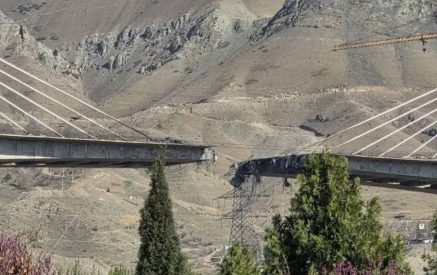
Pashinyan repeated another false claim about a road crossing Armenia, linking Eastern Azerbaijan with Nakhichevan. This so-called “Trump Path” (TRIPP) was included in the memorandum signed on August 8 at the White House by Pashinyan, Aliyev, and Trump. The memorandum described TRIPP as an “unobstructed” path through Armenia which was done at the demand of Aliyev, who calls this road a “corridor,” implying that the Armenian territory it crosses belongs to Azerbaijan.
Although the Prime Minister is harming the country, he portrayed himself as Armenia’s savior, claiming that “in the months of March-April 2024 we had reached the brink of Armenian statehood, and if in April 2024 we had not made a decision to launch the demarcation process with Azerbaijan, the Republic of Armenia would today not be an independent state, but at most a territory under foreign rule.” This claim is delusional and detached from reality.
Pashinyan then claimed, “And how did we solve the problem? We talked to our employer, the people.” In fact, since promising to consult the public in spring 2018, Pashinyan has never sought the people’s opinion. He makes all governmental decisions alone, bypassing the government’s ministers, Parliament, and the President. The country has become a one-man show — a de facto dictatorship.
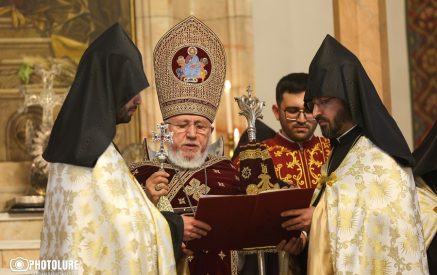
Pashinyan denied “that the Armenian government is restricting freedom of conscience, that a dictatorship is being established in Armenia, that there are political prisoners in Armenia.” All three statements are facts, despite his denials. He blamed the “de facto head of our church…, the emissaries of the clergy, and representatives of certain lobbying organizations affiliated with them.” Actually, the clergy and opposition groups are attempting to make a last-ditch effort to save the country from his destructive policies.
Ironically, Pashinyan speaks of the rule of law while violating just about every law as well as the constitution by meddling in the Church’s internal affairs. He wants to decide who should be the head of the Armenian Apostolic Church and what the clergy can say in their sermons. He has accused clergy members of being foreign agents, without a shred of evidence. If true, the government would have taken legal action.
Near the end of his 26-minute speech, Pashinyan referred to “Karabagh” Armenians disparagingly, claiming that they are being given “false hopes.” Contrary to his defeatism, Artsakh Armenians hope to return to their homeland when circumstances allow. He also asserted that Artsakh Armenians “must receive Republic of Armenia citizenship,” despite being citizens of Armenia and possessing passports of the Republic of Armenia. Pashinyan is rejecting their Armenian citizenship to prevent them from voting against him in next June’s parliamentary elections.
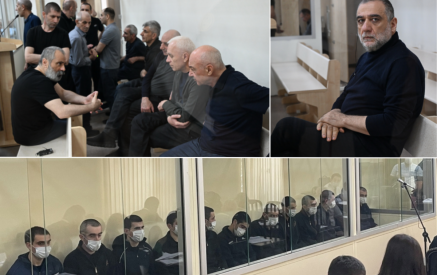
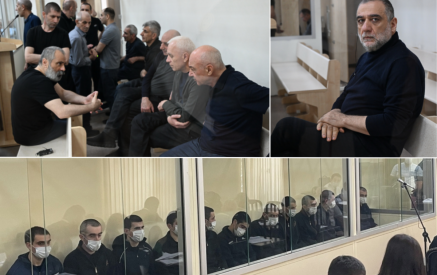
To deflect from his failure to secure the release of the Artsakh leaders held in Baku, he cited four Armenian prisoners released in January by Azerbaijan. He did not disclose that they were exchanged for two Syrian Jihadist mercenaries who had been serving life sentences in Armenia after their capture in the 2020 war, while fighting for Azerbaijan.
In 2019, when Prime Minister Nikol Pashinyan addressed the Parliamentary Assembly of the Council of Europe (PACE), I wrote a commentary commending him for his speech and particularly his spontaneous answers to members’ questions. My commentary was titled, “Pashinyan passes first political test in the international arena.”
A few days later, Pashinyan shared my commentary on his Facebook page, after adding the following introductory note: “I am happy that one of the most prestigious newspapers of the Diaspora, ‘The California Courier,’ has appreciated in this way my speech at the Parliamentary Assembly of the Council of Europe (PACE).” His post received 3,900 likes, 181 comments, and 195 shares.
Months later, when I visited Armenia, the Prime Minister received me in his office. During our hour-long meeting, we discussed the critical issues facing Armenia, as I have done with all previous leaders of Armenia.
Given Pashinyan’s zero tolerance for criticism, I doubt he will share my new commentary on his Facebook page, let alone express his appreciation.