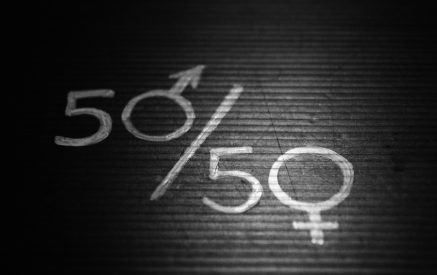





YEREVAN (25 March 2026) – Armenia should build on recent legislative reforms and policy initiatives by advancing from formal to substantive gender equality to ensure lasting progress, the UN Working Group on discrimination against women and girls said today.
“We commend the Government of Armenia for its sustained commitment to promoting gender equality through legislative reforms, policy measures, and programmes aimed at empowering women and girls,” the Working Group said in a statement after a 10-day visit to the country.
“These steps provide a solid and encouraging foundation upon which further transformative and lasting change can be built, and sustainable peace and development achieved.”
The experts called for deepening these efforts by moving beyond a primary focus on formal equality and legal guarantees of non-discrimination towards achieving substantive gender equality, including through the application of the CREATE framework.
Read also
“This transition is essential to address entrenched patriarchal stereotypes and ensure that all women and girls can fully enjoy their rights in everyday life,” the experts said.
They also called for the full and consistent application of international human rights and gender equality standards across executive, legislative, and judicial practice.
“Bridging the gap between legal frameworks and effective implementation remains a key challenge,” they said.
They called for prioritisation of gender-sensitive statistics and encouraged improved collection and use of disaggregated data to better inform policy and measure progress, alongside an intersectional approach to address overlapping discrimination.
“Policies must reflect the lived realities of all women and girls, particularly those in vulnerable situations,” the experts said.
The Working Group also highlighted the value of continuing to develop a coherent legal and policy framework in collaboration with civil society and international partners. “This requires gender impact assessments, gender-responsive budgeting and gender mainstreaming across all sectors and levels of governance,” the experts said.
The experts noted that unequal care responsibilities continue to limit women’s economic and political participation.
“One in two working-age women are excluded from the labour force, representing a loss of human potential and constraints on inclusive economic growth,” they said. “Ensuring women’s full and effective participation in all spheres of life, alongside gender-sensitive social services, is fundamental to achieving substantive equality. As many women stressed during the visit, “We deserve to be at the table and participate in decision-making.”
The experts called for a safer, more enabling environment for girls and women human rights defenders, activists, journalists and politicians, to ensure they can engage in public life free from intimidation, hate speech and violence, both online and offline.
They also called on Armenia to uphold the rights of girls. “Girls in Armenia have a clear and inspiring vision for their future – one grounded in equality, inclusion and opportunity. It is essential that this vision is supported and realised,” the experts said.
The Working Group remains committed to supporting Armenia in building a more gender-equal, inclusive and just society for all.
The Working Group will present its final report on the visit to the UN Human Rights Council in June 2027.
The experts: Claudia Flores (Chair), Ivana Krstić (Vice-Chair), Dorothy Estrada Tanck, Haina Lu, and Laura Nyirinkindi, the Working Group on discrimination against women and girls
Special Rapporteurs/Independent Experts/Working Groups are independent human rights experts appointed by the United Nations Human Rights Council. Together, these experts are referred to as the Special Procedures of the Human Rights Council. Special Procedures experts work on a voluntary basis; they are not UN staff and do not receive a salary for their work. While the UN Human Rights office acts as the secretariat for Special Procedures, the experts serve in their individual capacity and are independent from any government or organisation, including OHCHR and the UN. Any views or opinions presented are solely those of the author and do not necessarily represent those of the UN or OHCHR.
Country-specific observations and recommendations by the UN human rights mechanisms, including the special procedures, the treaty bodies and the Universal Periodic Review, can be found on the Universal Human Rights Index https://uhri.ohchr.org/en/
Press Release