
















Part 1
Following the logic of the global order, Armenians were building democracy.
That period came to an end in 2020–2023.
Before that the protection of Armenian rights and security has been intertwined with the expansion of democracy.
Read also
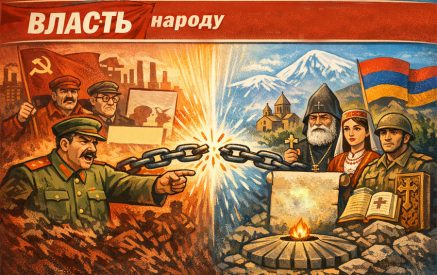
However, in 2023, the democratic world accepted that a 12,000 square kilometer democratic territory on planet Earth—Artsakh—could pass under the control of an authoritarian state, Azerbaijan. Not only did it accept this, but it also welcomed it, as it served the interests of the democratic world as an anti-Russian strategy.
Over 30 years, Artsakh had five presidents, while in Azerbaijan the same family has ruled for three decades. In Artsakh, the branches of power were independent; in Azerbaijan, they are concentrated in the hands of one person. In Artsakh, the rights of national minorities were protected, while in Azerbaijan, minority leaders are killed in prisons, for instance, Novruzali Mammadov (2009) and Fahreddin Aboszoda (2020), and their language and culture are suppressed.
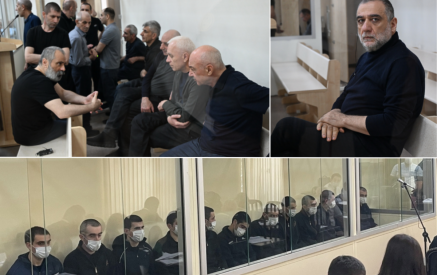
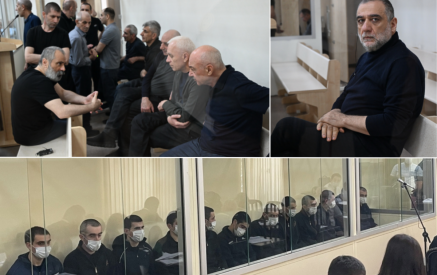
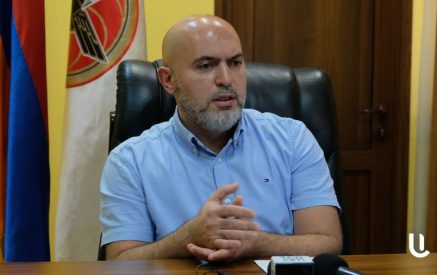
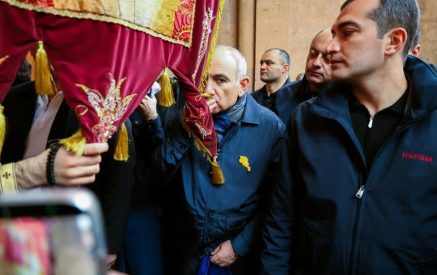
Along with the 12,000 square kilometers of democratic territory, political, military figures and entrepreneurs—born of and developing Artsakh’s democratic system—also ended up in the prisons of authoritarianism; all of them Armenians.
Being deprived of freedom in Azerbaijan, they endure suffering not only for the defense of their national identity, but also for the advancement of democracy and humanity.
As a result of this reality, Armenian nationalism acquires a universal significance. Thus, the boundaries of the Armenian mission expand: from building democracy, Armenians become a people who teach and spread democracy. It is through suffering for an idea that individuals become its true bearers and disseminators.
At the core of democracy lies the protection and freedom of the individual. Due to the course of events, the mission of Armenians becomes to spread values of personal protection and freedom, its importance, and the forms of human coexistence.
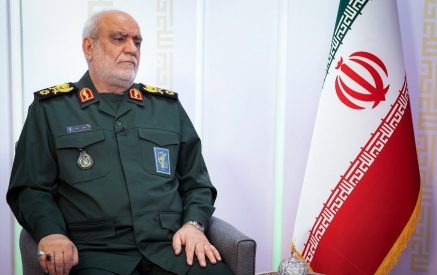
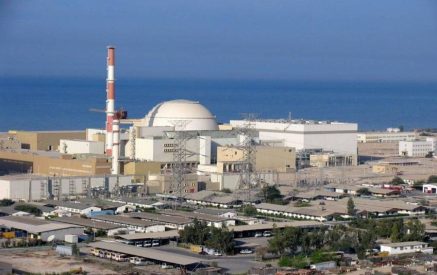
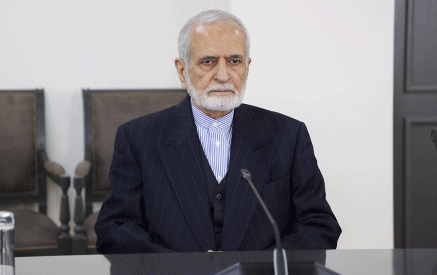
In January 2026, at the Davos summit, French President Emmanuel Macron repeated the idea of Azerbaijani President Ilham Aliyev, according to which there is no longer order in the world, and everything is based on force. With the attack on Iran by Israel and the United States, and the killing of Iran’s and the Shiite world’s spiritual leader Ali Khamenei, members of his family, and around 170 Iranian girls, the disorderly world—whose path had been opened by the fall of Artsakh—was reaffirmed.
This state of disorder is anti-human and contradicts the logic of humanity’s development. Justice is grounded in the rule of law and in the principle of not oppressing the weak. Laws are written for the weak, and their protection and freedom contribute to the development of the planet.
One of the centers of global freedom—France, armed with nuclear warheads—in the 21st century adopts the ideas of a dictator who destroys democracy, replacing Michel de Montaigne’s Ideas and Jean-Jacques Rousseau’s “Social Contract” with Aliyev’s metallic sculptures of the fist. French political logic would require France to condemn both the occupation of democratic Artsakh and the killing of Ali Khamenei, instead France backed Armenia’s prime minister Nikol Pashinyan to hand democratic Artsakh to authoritarian Azerbaijan.
When France and a democratic world based on order are absent, the place remains open for the subject that must return nations to the logic of order—within the framework of a new international law.
The seal of establishing that order is in the hands of Armenians, because since 2018 Armenians have continued to address the injustices and brutalities inflicted upon them through civilizational means and, despite their suffering, have not altered their civilizational worldview or strategy.
That seal can be placed by replacing national egocentrism with a national universal mission, which we will discuss in the next part of the article.
Hovhannes ISHKHANYAN