



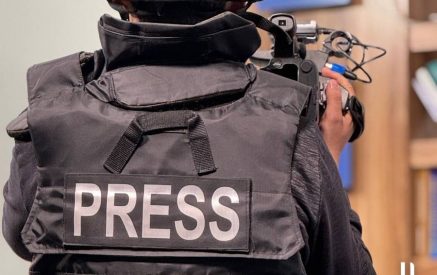














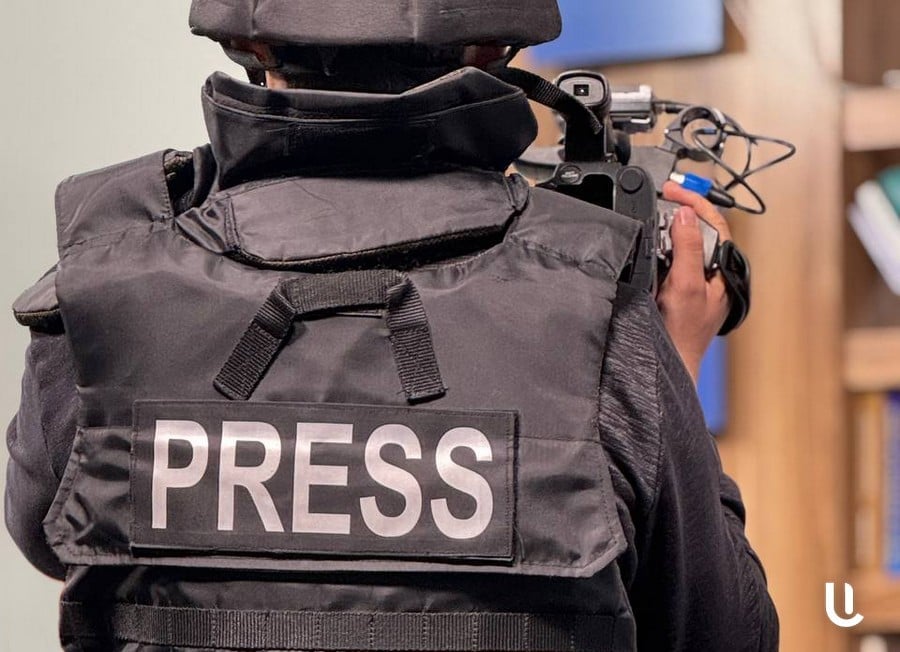
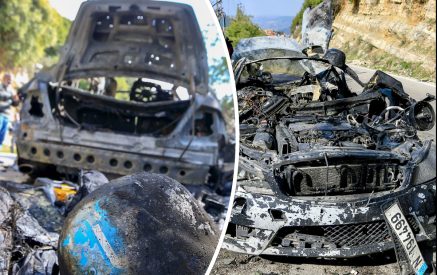
The Lemkin Institute for Genocide Prevention and Human Security is deeply concerned over the killing of three Lebanese journalists in a series of Israeli airstrikes on 28 March 2026 near Jezzine in southern Lebanon. According to multiple credible reports, the victims included two journalists from Al-Mayadeen, Fatima Ftouni and her brother, Mohammed Ftouni, who worked as her cameraman, and Ali Shoeib, a long-standing correspondent for Al-Manar. Their vehicle, clearly marked “PRESS,” was reportedly struck by munitions while traveling along a forested road approximately 25 kilometers north of the Litani River. Subsequent strikes allegedly targeted the same location, including during rescue efforts, resulting in the deaths of two paramedics. Video evidence and witness testimony raise serious concerns that these follow-up strikes may constitute “double-tap” attacks. Such incidents are not isolated. Israel has reportedly carried out at least five double-tap strikes in Lebanon, a tactic in which an initial strike is followed by a pause, allowing medical workers and first responders to arrive before the area is struck again. This pattern, also seen in Gaza, has disproportionately endangered paramedics and rescue personnel responding to initial attacks.
The Lemkin Institute is particularly moved by the personal history of the victims of the 28 March attack. Fatima Ftouni had previously survived an Israeli airstrike in Hasbaya in October 2024 that killed three journalists covering hostilities in the area. Reports further indicate that she and her brother had lost seven members of their family in a separate Israeli airstrike in the village of Toul earlier this month. The killing of siblings who had already endured repeated loss underscores the cumulative and devastating human toll of Israel’s wars on civilians and media workers.
The Israeli military has acknowledged the strike and alleged that Ali Shoeib was affiliated with Hezbollah’s Radwan force. However, Israel has provided no evidence to substantiate this claim, and no explanation has been offered regarding the targeting of the other journalists or the subsequent strikes that killed rescuers. Instead, the IDF fabricated evidence to justify the killing of Ali Shoeib, by circulating an image portraying the journalist as a Hezbollah member before later admitting that the photograph had been digitally altered.
The Lemkin Institute would like to recall a principle that should not need to be restated: Under international humanitarian law, journalists are civilians and are afforded full protection from attack unless and for such time as they directly participate in hostilities. The dissemination of media content, including material characterized by the attacker as propaganda, does not in itself constitute direct participation in hostilities and therefore does not justify attacks on them. Any interpretation to the contrary dangerously erodes the civilian protections enshrined in the Geneva Conventions.
Read also
Furthermore, the reported use of multiple strikes, including against individuals attempting to assist the wounded, raises serious legal concerns. Individuals who are wounded or otherwise hors de combat are protected under international law and must not be targeted. Attacks on medical personnel or those engaged in rescue efforts constitute grave breaches of the Geneva Conventions and may amount to war crimes.
This incident appears within a broader and deeply troubling pattern. Since October 2023, at least 11 journalists have reportedly been killed and 10 wounded in Lebanon in incidents attributed to Israeli military actions. The increasing frequency with which clearly identifiable media workers are harmed while performing their professional duties suggests a possible pattern of conduct that warrants urgent international scrutiny. Israel’s attacks on journalists in Lebanon are of course hardly unprecedented. Israel has engaged in similar attacks in the Gaza Strip, where Israeli forces have killed more than 260 media professionals. According to Reporters Without Borders, Israel was the leading killer of journalists globally in 2025.
We are particularly alarmed by the cumulative effect of such incidents, which indicate the normalization of attacks on individuals documenting conflict. Systematic or widespread targeting of civilians, including journalists not directly participating in hostilities, may rise to the level of crimes against humanity.
The Lemkin Institute expresses its full support for the position of Lebanon’s Minister of Information to refer this incident to the United Nations Security Council. Such action is necessary to ensure international oversight, accountability, and the protection of civilians and journalists in situations of armed conflict.
We also strongly support UN experts’ call for an international independent investigation into Israel’s killing of journalists. On 2 April, three independent special rapporteurs strongly denounced what has become a “standard and dangerous practice” of targeting and killing journalists and then claiming, without credible evidence, that the victims were affiliated with armed groups. Prior Israeli attacks on journalists in Lebanon have not resulted in meaningful accountability or effective judicial outcomes. On 13 October 2024, an Israeli strike on a group of seven journalists in South Lebanon killed Reuters journalist Issam Abdallah and injured six others. According to an Amnesty International investigation the group was visibly identifiable as journalists and the Israeli military knew or should have known that they were civilians yet attacked them anyway in two separate strikes 37 seconds apart. To date, there has been no accountability or justice for Issam Abdallah or his colleagues. We strongly believe that the absence of accountability contributes to the persistence of Israeli attacks on journalists. Had those responsible been held to account, Israel may have thought twice about further violations. Responsibility therefore lies not only with those who carry out such crimes, but also with those who fail to ensure that perpetrators are held accountable for their crimes.
The international community must take all necessary steps to ensure the protection of journalists and uphold the integrity of international humanitarian law. The protection of those who bear witness to conflict is not optional, it is a legal and moral imperative. Without it, we sacrifice truth and any chance of meaningful genocide prevention work.
The Lemkin Institute for Genocide Prevention