























Statement Condemning the Forced Resignation of Dr. Edita Gzoyan, Director of the Armenian Genocide Museum-Institute
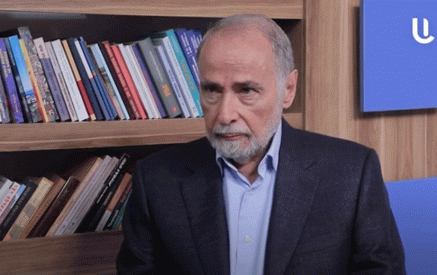
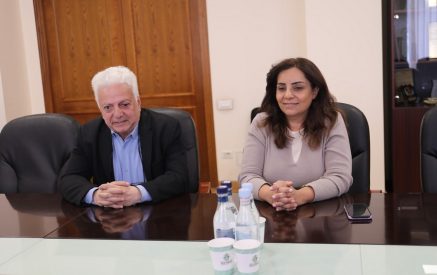
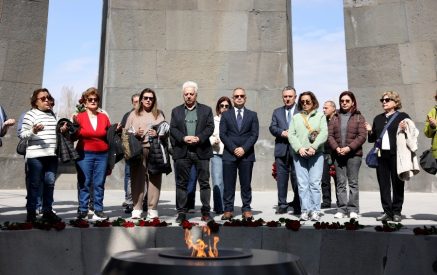
The Lemkin Institute for Genocide Prevention and Human Security strongly condemns the forced resignation of Dr. Edita Gzoyan, Director of the Armenian Genocide Museum-Institute (AGMI), following the 10 February 2026 visit of U.S. Vice President J.D. Vance to the Tsitsernakaberd Genocide Memorial Complex, where Dr. Gzoyan spoke with him about the Armenian genocide and subsequent massacres of Armenians in Sumgait, Kirovabad, and Baku in the late 1980s. As part of the visit, Dr. Gzoyan gifted the Vice President with four books about the Armenian genocide. She was later forced to resign by Armenian Prime Minister Nikol Pashinyan, who objected to one of the four books, Azeri Aggression against Armenians in Transcaucasia (1905-1921): Reports from the U.S. Press, edited by Ara Ketibian. Her forced resignation demonstrates the authoritarian style of politics increasingly embraced by Prime Minister Pashinyan, as well as his politicization of the historical record, especially as it pertains to genocides against Armenians.
At a 12 March press conference Prime Minister Pashinyan confirmed that he himself “instructed” Dr. Gzoyan to resign. He asked the press, “Giving a foreign guest a book about the Artsakh [Nagorno-Karabakh] issue, what does that mean?”—ostensibly referring to Azeri Aggression against Armenians in Transcaucasia. He then accused Dr. Gzoyan of conducting an alternative foreign policy. “In this country,” he said, “how many people are capable of conducting foreign policy? […] Any state official in Armenia who makes a statement that contradicts the foreign policy pursued by the government should be dismissed from their position. What is there to discuss?”
Apart from the fact that Dr. Gzoyan was simply doing her job as AGMI director, the accusation that she was conducting an alternate foreign policy is telling. The Prime Minister must be coming under heavy pressure from his neighbors. His sensitivity to the book, Azeri Aggression against Armenians in Transcaucasia, which is a collection of articles published in the U.S. press from 1905-1921, can be explained by the fact that he is being shepherded by the United States, the UK, and the European Union, with the possible support of Russia, through a “normalization process” with Armenia’s neighbors, who have committed – and continue to deny – multiple genocides against Armenians. Armenia’s neighbor Azerbaijan is particularly sensitive to anything that mentions the historically Armenian land of Artsakh (Nagorno-Karabakh), which is the site of many of the instances of Azeri aggression in the twentieth and twenty-first centuries. The ‘Artsakh issue’ is a thorn in Azerbaijan’s side. The latter, which claims Artsakh as its own (and calls it Karabakh), invaded and conquered the territory between 2020 and 2023, committing genocide against the Armenians living there and effectively depopulating the region. It continues to illegally detain Armenian prisoners of war and members of the Artsakh government. Azerbaijan and Türkiye have pressured Prime Minister Pashinyan to give up the “Karabakh Movement” (a movement for a free, independent and secure Armenian presence in Nagorno-Karabakh, referred to as “Artsakh”) as part of the “normalization” process.
Read also
Since the “normalization” process is one-sided, Armenia’s government is given the job of Armenians’ history to accommodate its more powerful neighbors, as the Prime Minister’s recent move makes clear.
Dr. Gzoyan is an internationally respected genocide scholar who has raised the global profile of the AGMI. The Genocide Museum-Institute has hosted numerous international conferences and published several important works of scholarship under her direction. She presented the U.S. Vice President with three books in addition to the one objected to by the Armenian PM. They were The Armenian Genocide: Prelude and Aftermath: As Reported in the U.S. Press. The New York Times, Volume I (1890-1914) & Volume II (1915-1922), compiled and edited by Rev. Vahan Ohanian and Ara Ketibian (2018); Ravished Armenia: The Story of Aurora Mrdiganian (2020); and Documenting the Crime: The Armenian Genocide in Words and Images (2024). All of these books, including Azeri Aggression against Armenians in Transcaucasia, focus on the first two decades of the last century. They focus precisely on the history the AGMI is meant to address. The presentation of books is routine diplomatic protocol at genocide memorials and museums.
The Lemkin Institute condemns this unprecedented pressure on an academic institution by the Armenian government, particularly within the context of the mission of the Museum-Institute, which is to “raise the awareness of the Armenian Genocide, promote the value of human rights and foster recognition and prevention of genocides.” The fact that the Prime Minister finds the issue of Azerbaijani aggression against Armenians to be an inconvenient topic given his foreign policy does not change the history of the region or the scholarship that has been written about it. The Prime Minister and the many global powers involved in the “normalization process” in the South Caucasus may wish that the Armenian Genocide and its enduring violence, as evidenced by Azerbaijan’s genocide in Artsakh from 2020-2023, would just go away, but that is not how history or genocide work.
The Prime Minister’s interference in the directorship of the Genocide Museum-Institute is not simply an undemocratic and authoritarian violation of the academic and institutional freedom of the Museum-Institute. It also appears to be an effort to deny the historical existence of Armenians in Artsakh, or at the very least an effort to ensure that the U.S. Vice President is not given access to historical evidence to inform his own understanding of the region. Requiring the public erasure of 3000+ years of an autonomous Armenian presence in Nagorno-Karabakh, and censoring the sharing of books that might mention this fact, is a dangerous “foreign” policy indeed.
The Lemkin Institute agrees with an important warning made by the AGMI board members who resigned when they learned of Dr. Gzoyan’s forced resignation: “National memory and identity are strategic assets, especially for small nations; a blurred national memory and identity constitute a vulnerability that cannot be compensated for by any weapon.” The Lemkin Institute views national memory and identity as important tools in genocide prevention. Assaults on them are assaults on a people’s ability to ensure their survival.
Armenia will face numerous serious ongoing threats to its political sovereignty, regional security, and economic growth in the coming decades. The Prime Minister’s politicizing of the issue of genocide, alongside his undermining of the independence of one of Armenia’s truly superior research institutions for political gain, does not instill confidence that the Armenian government is up to the challenge.
The Lemkin Institute for Genocide Prevention and Human Security joins the numerous scholars in Armenia and worldwide in condemning the forced resignation of Dr. Edita Gzoyan. We urge the Armenian authorities to reinstate Dr. Gzoyan immediately and to guarantee the Genocide Museum-Institute’s right to academic freedom. In a world where genocide memory is under attack, and where the project of genocide prevention has been abandoned, the intellectual integrity of academic institutions dedicated to the study and prevention of genocide is more important than ever. We must defend them if humanity is ever to build a more peaceful future.
There are many powerful figures, states, and well-funded organizations putting pressure on Armenia to adopt a revisionist, and indeed, genocide denialist national narrative in exchange for a promised ‘peace’ with its powerful neighbors Azerbaijan and Türkiye. These include the U.S., UK, EU, and, importantly, Israel, which relies heavily on Azerbaijan for oil and for military access to Iran. These powers are actively supporting genocide elsewhere and seem dead set on pursuing a foreign policy in the region that is indifferent to potential mass atrocity. But empowering genocide denial only empowers the genocidaires, and the world has no reason to believe that either Azerbaijan or Türkiye have changed their genocidal approach to Armenians. As we have seen with Israel, genocidal states with impunity create regional chaos that threatens to embroil the whole world in war.
The one-sided “normalization process” is a grotesque betrayal of genocide survivors, of historical truth, and lasting peace in the region. If the Great Powers want peace, they would be better served to encourage and fund an independent international truth and reconciliation process between Armenia, Azerbaijan, and Türkiye that would work towards political and social peace between the countries through historical dialogue based on the evidentiary record. Otherwise they are setting the stage for more violence, and we fear it will be Armenians who will once again bear the brunt of Great Power meddling.
The Lemkin Institute for Genocide Prevention