


























“ACNIS ReView from Yerevan”. If a global survey were conducted asking people which human character trait they find most intolerable, we could predict the overwhelming response with minimal error: troublemaking. One person might call it poor upbringing, another might consider it improper behavior, and a third might describe it differently—but none of these labels would change the essence of the problem. Troublemakers have always existed, and they continue to exist today—in nearly every sphere of public life and across all areas of human activity, from the smallest institution or enterprise to the largest state structure. Even within neighborhoods, one can find individuals who take pleasure in stirring discord, reporting on others, and casting doubt on their loyalty.
Petty meddlers are, perhaps, harmless, gullible individuals who generally pose no serious threat to society. The true misfortune begins when someone prone to intrigue, scheming, and slander from childhood somehow—God forbid—ascends to a high and responsible state position. Once firmly entrenched there, such a person begins to wreak havoc, spreading malice and hatred around them. Naturally, figures like these are neither liked nor trusted; people turn away from them. Who needs such repulsive characters, seemingly born to make others’ lives miserable, to sow discord, to destroy families, and even to undermine state institutions and national foundations?
Woe to the state and especially woe to the people who must rely on the mercy of leaders possessing the qualities described above. In this respect, Armenia has been unfortunate: we have inherited a governing system, call it a pyramid if you wish, comprising members, along with their chief, who seem to have remained in the first grade for seven consecutive years and have never managed to overcome the threshold of ignorance. The higher a member stands within this “pyramid,” the greater his capacity to act. The greater their capacity to act, the stronger the blow they can inflict. And the stronger the blow, the more painful the disaster brought about by each new act of mischief.
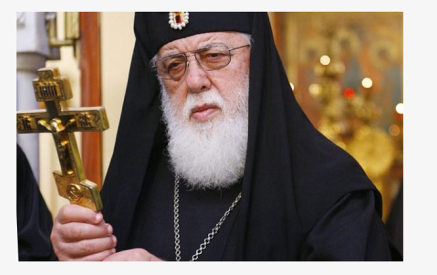
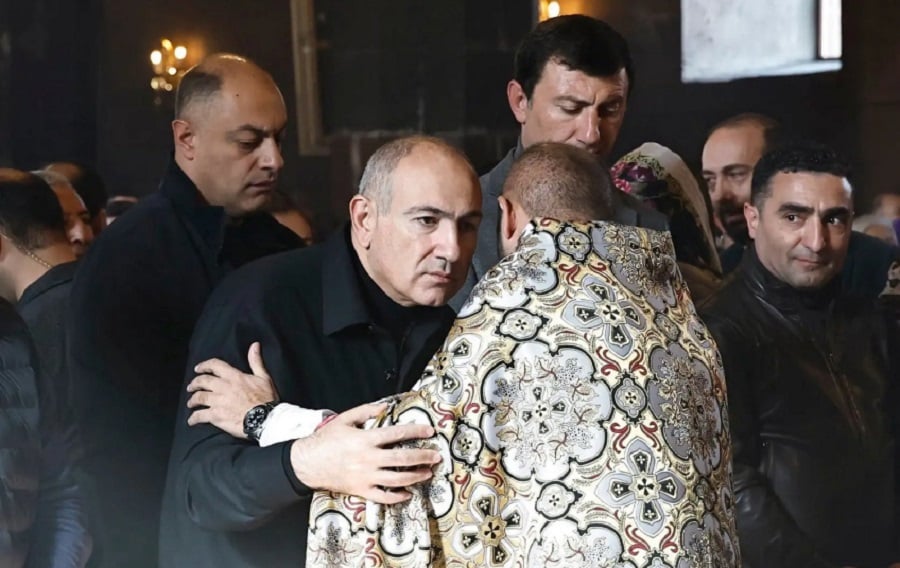
A recent example of major troublemaking in Armenia is the reprehensible conflict between the individual occupying the office of prime minister and one of the most foundational pillars of the Armenian nation—the Armenian Apostolic Holy Church (AAHC), an institution that has shaped Armenian identity for over 1,700 years, including its supreme leader, Catholicos of All Armenians Garegin II. No wonder this conflict generated great enthusiasm in adversary Azerbaijan. It is particularly striking that Pashinyan, neglecting his actual duties, has launched what he calls a campaign against the Church’s “corrupt practices,” relying on several defrocked priests and, more recently, 8–10 rebellious clerics who have aligned themselves with him. By using “compromising materials,” the country’s number-one troublemaker has managed to bring 10 of the 54 high-ranking clergymen of the Mother See—including the Primate of the Artsakh Diocese—“under his sword.”
Read also
The campaign that Nikol Pashinyan and his satellites have waged for months against the Armenian Apostolic Church and continue to wage is a grievous act of provocation aimed at dividing the Armenian public and undermining the nation’s identity. It is a blow to one of the core pillars of Armenian preservation and a crime committed by the authorities against their own people and state. How did this vicious cycle begin? Six months ago, toward the end of May, the well-known individual referred to churches as “storage rooms,” then intruded into the personal lives of clergymen and, through unacceptable means, slandered the Catholicos, accusing him of breaking his vow of celibacy, of being discredited, and claiming he should step down.
Now Pashinyan has gathered a disorderly crowd made up of repeatedly discredited and oath-breaking clergymen—among them schismatics, figures tainted by corruption, offenders, and individuals devoid of national and moral principles. And at the head of this group, the number-one troublemaker has intensified his assaults on the Church. The greatest irony lies in who is fighting whom and for what. There is little more to be said.