




























Dr. Hratch Tchilingirian
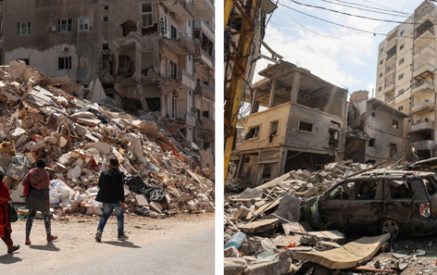
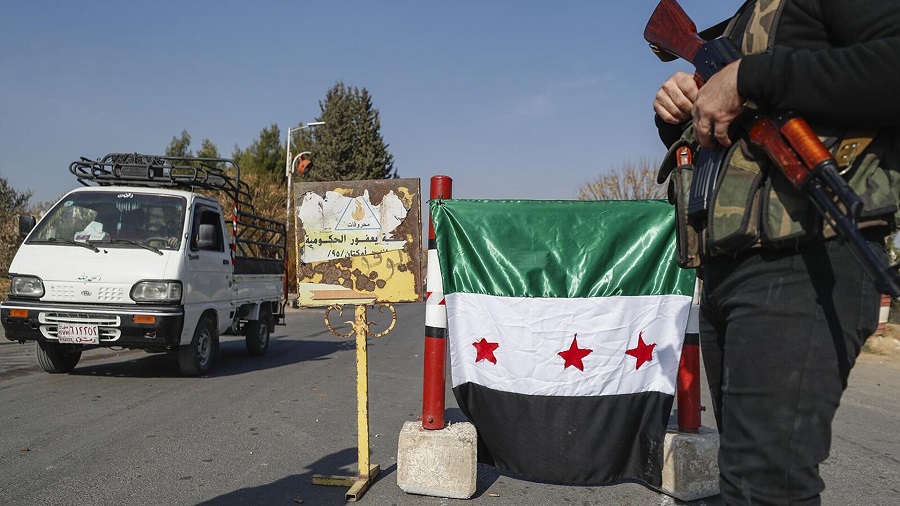
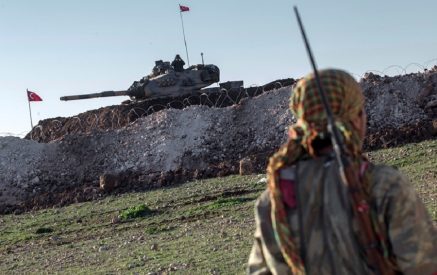
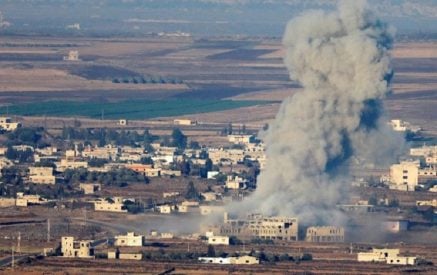
Syria today remains a politically and militarily fragmented country, defined not only by the legacy of a devastating civil war, but also by unresolved tensions between the country’s central authorities and the Kurdish forces operating in the northern and northeastern regions. Periodic clashes, shifting alliances, and contested systems of governance continue to generate instability and uncertainty, particularly for minorities caught between competing centers of power. Under these vulnerable conditions, Christian minorities—including Armenians—are forced to ensure their survival and security without genuine guarantees of equal citizenship.
Historically, Armenians in Syria have formed an integral part of the country’s social and cultural fabric. For many decades, Aleppo was one of the most vibrant centers of Armenian diasporic life, with its schools, churches, press, and cultural institutions. This strong communal presence, however, sharply declined after 2011 as a result of mass displacement, economic collapse, and security instability.
Today, Syria’s Armenian community has diminished in number, its institutions have weakened, and its future is uncertain. What for many years was a self-sufficient community has been reduced to a vulnerable remnant, surviving primarily thanks to Christian churches and support from the diaspora. This situation has created a profound and dangerous rupture in the historical trajectory of the Armenian presence in Syria.
Read also

Under these conditions, the three Armenian religious denominations—Apostolic, Catholic, Evangelical—continue to play a broader role than mere spiritual leadership. They function as pillars of community governance, organizers of humanitarian assistance, and intermediaries with the state. During the years of war, churches also became places of refuge and protection, continuing a historical tradition deeply rooted in Eastern Christianity.
Relations between Armenians and other religious communities in Syria have generally been peaceful, but they have always been based on pragmatic coexistence rather than genuine equality. The war exposed the fragile nature of this coexistence and the vulnerability of minorities amid the disintegration of state authority.
Armenian cultural and religious heritage in Syria remains deeply rooted, yet seriously endangered. Places such as Deir ez-Zor serve as reminders that this presence is not merely cultural, but also part of historical memory and collective suffering.
Under the current circumstances, the issue is no longer solely one of reconstruction, but of securing the political and legal conditions for survival. Without equal citizenship, stable security, and genuine rights, the future of Syria’s Armenian community remains bleak. The same fate threatens other Christian communities as well, regardless of which force controls a given territory.
Unfortunately, amid rapid geopolitical developments and the serious, ongoing crises unfolding in the region, the condition of Syria’s Armenian community seems no longer to be a priority for much of the diaspora. In this environment of limited international attention and limited diasporan capacity, Armenians in Syria remain on the margins, facing existential challenges and an uncertain future.
* Dr. Hratch Tchilingirian is a sociologist, university lecturer, and innovation executive. For a more extensive discussion of Armenians in the Middle East, see Tchilingirian’s chapter on the subject published in a book in 2023.