











































How “Fighters for Justice” Establish Dictatorship
In Armenia, priests, bishops, and diocesan leaders are already being “appointed” through pocket courts. Back in 1991, no one could have imagined that we would slide into this abyss of dictatorship. Yet the road to it was opened—surprisingly enough—after the 2018 elections, elections whose legitimacy, it seems, no one seriously disputes.
It must be said that this is neither the first nor, unfortunately, the last case in human history when, under populist slogans “in the name of justice,” “against the elite,” and “to eradicate corruption,” people genuinely win the hearts of the masses—only to later surpass those they fought against in arbitrariness, repression, and lavish living.
Much has been said about Hitler and National Socialism. Perhaps closer to us is the example of Benito Mussolini. The Italian dictator, incidentally, was a former journalist. In 1922, he organized a mass march on Rome, ultimately forcing the king to appoint him prime minister. After that, normal elections were no longer held; and in 1928 everything culminated in a referendum in which citizens were asked to say “yes” or “no” to the Fascist Party’s list—while all other parties were simply banned. This is precisely how dictatorships are legitimized.
Read also
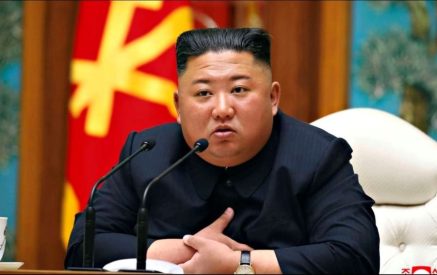
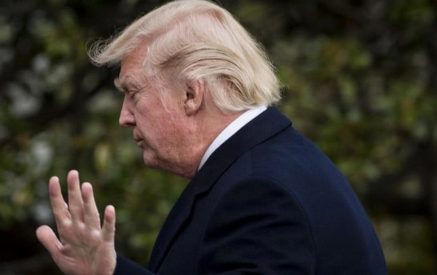
The stories of how Putin, Lukashenko, Erdoğan, and Hugo Chávez acquired unchecked power and became dictators are well known. The scheme, however, has been roughly the same since time immemorial. Suffice it to recall the tyrants of Athens and Syracuse—Peisistratos (561–527 BC) and Dionysius the Elder (405–367 BC).
Authors of historical studies examining the history of “elected” dictators—from Ancient Israel and the tyrants of Athens to Chávez—show how such regimes are established, step by step:
A crisis created by the “former rulers” (who usually deny responsibility), societal polarization, and external threats.
The public’s yearning for a “strong leader,” a “hero,” a “savior.”
The future dictator promises justice and protection of the people from the former elite, oppressors, and plunderers—“you are not alone, not alone, not alone.”
The “expression of the people’s will”—not elections in the classical sense (between parties, programs, and ideas), but acclamation: the people endorse their “saving hero” (recall Mussolini).
Restrictions on freedom, persecution of opponents, and the subordination of courts to the dictator.
Despite the evils brought by the dictator, the public continues for some time to trust and support him. The reasons are many—above all, the inertia of hatred toward the “former rulers” and the fear that they might return or that relative stability could collapse.
The result is that the “savior” effectively becomes a usurper who concentrates power in his own hands; all state institutions—including parliament and the courts—turn into mere decorations, external ornaments. Elections become a periodic “procedure” to reaffirm the ruler; the constitution (in modern times) becomes a scrap of paper. Because the dictator was “chosen by the people,” he is convinced he can do anything, disregarding all institutions.
You may well be wondering how such tyranny ends, and what ultimately happens to dictators. There are many possible outcomes; in today’s world, solutions are usually peaceful to one degree or another. But there is a formula offered long ago by the Greeks—more precisely by the historian and statesman Polybius (c. 200–118 BC): tyranny collapses in the same way it is created—through fear, hatred, and excess; and the dictator falls when he is no longer needed by anyone. When that will happen in Armenia, however, no one can say.
…In Uzbekistan’s 2000 presidential election, Islam Karimov’s sole “opponent” was Abdulhafiz Jalalov. Before the vote, the “alternative candidate” declared that he himself would vote for Karimov.
If Pashinyan’s rule is “eternalized,” this will be our future as well.
Aram ABRAHAMYAN