




























by Suren Sargsyan
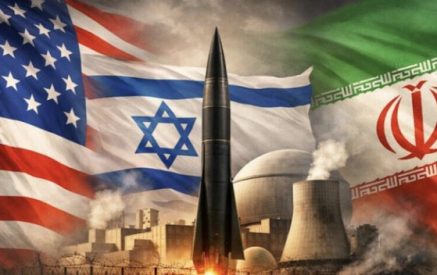
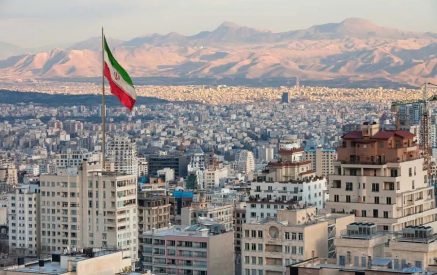
Although nearly 3 weeks have passed since the beginning of the war against Iran, and the United States has managed to kill Iran’s Supreme Leader and several high-ranking military officials, destroy parts of the navy, and strike key infrastructure, the war is far from over. Initially, the plan was to carry out rapid and targeted military strikes against Iran based on the assumption that the Iranian system of the government would not be able to resist effectively. The expectation was that the population would not rally around the leadership, that uncontrollable public uprisings would occur, and that a decapitated leadership would be unable to function.
However, these expectations have not materialized so far. On the contrary, Iran’s power centers appear consolidated, and the system shows no visible signs of internal fracture yet. It is important to understand what Washington’s miscalculations were and how the US currently assesses the situation. One thing is certain: at this point, Iran has managed to disrupt the US–Israeli plan for a quick victory.
Read also

Expectations in Washington that a broad coalition would support the United States and Israel against Iran have also failed to materialize. Prior to “Operation Epic Fury,” many within the Trump inner circle believed that various states and regional actors would join the confrontation once the operation began. Despite those expectations, no direct involvement occurred from Iraqi Kurdish units, NATO members, Saudi Arabia, Azerbaijan, or other actors historically at odds with Iran.
The issue is not that these states have resolved their disputes with Tehran. Rather, they understand that airstrikes alone cannot achieve government change. Such a goal would require a ground operation — likely even more complex than the wars in Iraq and Afghanistan — and neither the United States nor Israel appears prepared for such an undertaking.
At the same time, predictions that the Iranian opposition would seize the moment and launch a large-scale uprising have also proven unrealistic. Although Iran experienced protests months earlier, mass demonstrations have largely disappeared since the start of the war, likely due to wartime conditions and fear of harsher punishments under emergency rule. There is also a fundamental difference between opposing one’s government and confronting a foreign military attack while outsiders encourage government change.
Regional actors are also acting cautiously. Kurdish forces remember their experience in Syria, where heavy losses produced little strategic gain. Meanwhile, pro-Iranian forces in Iraq and Iranian strikes in northern Iraq have suppressed Kurdish militant activity.
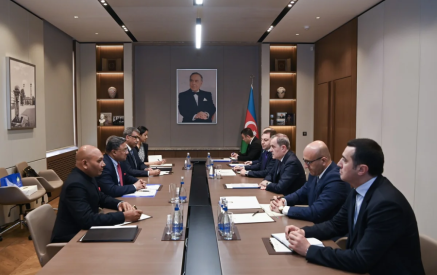
Saudi Arabia is also avoiding direct involvement, wary of Iran’s military capabilities and the risks posed by escalation. Similarly, Azerbaijan — initially considered by some in Washington and Tel Aviv as a possible additional front — has avoided confrontation. Baku understands the imbalance of power and is unlikely to act unless Iran becomes significantly weaker.
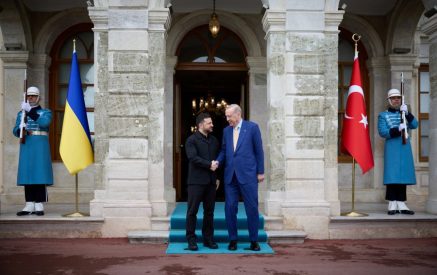
Another factor is Turkey. As Azerbaijan’s strategic partner and a regional competitor of Iran, Ankara prefers a weakened but not collapsed Iranian state. The collapse of Iran could destabilize the region and strengthen Kurdish separatist dynamics — an outcome Turkey seeks to avoid. Moreover, Turkish policymakers may calculate that after Iran, other regional powers could eventually become targets of strategic pressure.
Ultimately, regional actors understand a basic geopolitical reality: while American warships may eventually depart the region, Iran will remain a permanent neighbor as it has been there for thousands of years, even though weakened.
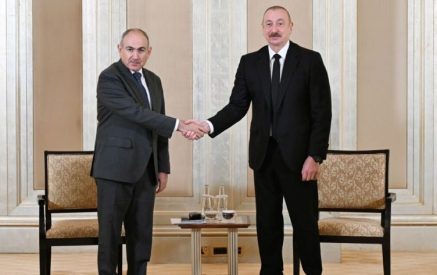
Azerbaijan also faces logistical challenges. Due to tensions with Tehran, the Iranian border has been partially closed, complicating access to the Nakhichevan exclave. At present, the most viable land route connecting Azerbaijan with Nakhichevan runs through Iranian territory. If the connection between Nakhichevan and Azerbaijan is disrupted due to the Iranian side, Azerbaijan will have to find alternative ways to ensure that connection. Such a development could be dangerous for Armenia to some extent, particularly for the Syunik region as the Trump Route for International Peace and Prosperity (TRIPP) doesn’t exist yet and under current circumstances it is difficult to judge how Iran is going to handle the situation in that regard. Azerbaijan may use the momentum and demand a land corridor from Armenia as the TRIPP is yet not ready for use. The statement of Aliyev on using “a Zangezur Corridor” without Armenians special permission is still very dangerous.
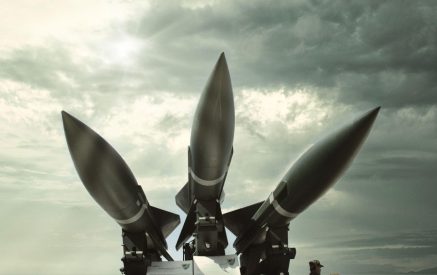
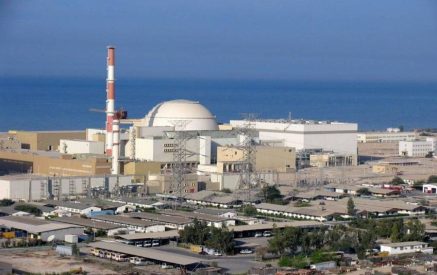
Within the Trump administration itself, there were skeptics about the feasibility of government change. As a result, the strategy focused on goals that could realistically be achieved and would allow the United States to declare victory and disengage. Officially, the mission centered on destroying Iran’s missile capabilities, neutralizing its naval forces, and preventing the development of nuclear weapons.
Regime change, while often discussed rhetorically, was never formally declared as an official objective. This ambiguity may serve as a deliberate exit strategy, allowing Washington to end the war at a moment of its choosing while claiming that its stated goals were accomplished. The killing of Iran’s Supreme Leader on the first day also created an opportunity to frame the campaign as a major success. For the American public, such a development can be presented as a decisive victory. However, policymakers understand that without a large-scale ground operation, change of the government remains virtually impossible — something the United States is unlikely to pursue due to political, military, and strategic constraints.
The New Leader, but the Old Leadership
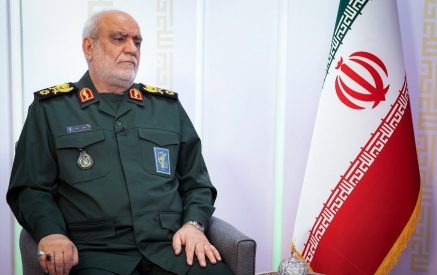
Iran’s response to the assassination of its Supreme Leader challenged expectations in Washington. Rather than producing internal fragmentation, the political system rapidly consolidated around a successor.
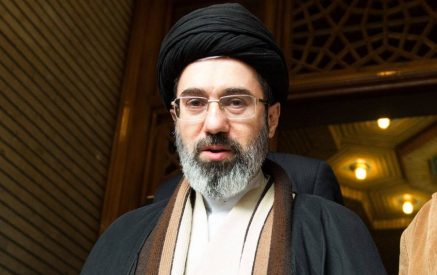
The election of Ayatollah Mojtaba Khamenei as Supreme Leader sends several messages. First, it demonstrates the continuity and resilience of Iran’s political structure. Second, Mojtaba Khamenei is widely viewed as a powerful figure within Iran’s political and security establishment, particularly due to his close ties with the Islamic Revolutionary Guard Corps. Under wartime conditions, this choice reflects not only religious authority but also strategic and military considerations. It also signals that external powers cannot determine Iran’s leadership. In other words, the assumption that leadership change would automatically lead to a shift in Iran’s political course proved incorrect.
The final outcome of the conflict depends largely on how success is defined. If the main objective of the US–Israel alliance was to degrade Iran’s nuclear and missile capabilities, then the campaign may eventually be framed as successful. However, if the underlying goal was regime change, that objective appears far less attainable. Even the assassination of Iran’s Supreme Leader has not fundamentally altered the country’s institutional structure or foreign policy orientation.
The most likely outcome may therefore be a clash of narratives: Washington declaring victory after achieving limited military objectives, while Tehran argues that it successfully preserved its political system. Another possibility is a prolonged war of attrition. Yet such a strategy would be costly and politically unpopular in the United States, especially ahead of midterm elections. A long conflict could also intensify domestic political tensions and strengthen the influence of rival powers such as Russia in the region. For these reasons, a prolonged war is unlikely to serve Washington’s long-term interests, making a controlled disengagement the most probable strategic option.