





















For now, the most realistic scenario for Armenia is the dictator’s natural death
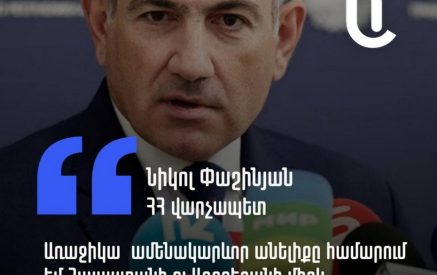
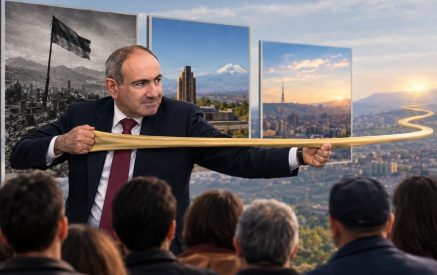
Nikol Pashinyan will fight to retain power until his last breath. The most recent rigged elections proved that unequivocally. In this respect, he is unlike Robert Kocharyan, who handed power over to Serzh Sargsyan (although he now seems to regret it), or Levon Ter-Petrosyan and Serzh Sargsyan, who resigned: the former under “palace” pressure, the latter under “revolutionary” pressure. The “cement” binding Pashinyan to his “chair” is a hundred times stronger, for a number of reasons. The first is perhaps that Pashinyan faces a hundred times grimmer a fate if (or when) he loses power. And that, in turn, has a very simple explanation: no previous leader has brought Armenia a catastrophe on the scale of the one Pashinyan has inflicted on it.
What do history and political science tell us about when authoritarian rule comes to an end and the possibility of democratic reforms emerges? First, of course, one caveat: the removal of an autocrat does not necessarily lead to a change of regime. Nevertheless, let us list the possible triggers for a dictator’s departure: 1) the autocrat’s natural death (for Armenia, at present, the most likely outcome); 2) a mass uprising or revolution — unlikely; 3) a military coup — almost out of the question; 4) a palace coup — there are no “actors,” meaning people capable of carrying it out; 5) a deal among the ruling elite — out of the question, because Pashinyan is incapable of surrendering even a millimeter of his power for the sake of the state; 6) defeat in war and the dismantling of the state — both have already happened, thanks to Pashinyan’s own “efforts”; 7) strong external pressure — theoretically possible, although there are no signs of it for now. More on that at the end. For now, let us turn to the “main” scenario.
Theory offers three main possibilities.
Read also
1. The dictator goes, but the institutions and basic rules remain. After Stalin’s death, the Soviet system survived. The nature of the regime remained unchanged, although its manifestations became milder. There may be no “softening” at all, however: after Niyazov’s death, Berdimuhamedow essentially left everything as it was, merely “toning down” the cult of personality somewhat.
2. The autocrat’s death triggers a fierce struggle within the ruling elite. This is what happened in China, where, after Mao Zedong’s death, Hua Guofeng removed the “Gang of Four” from power and put an end to the most extreme manifestations of the “Cultural Revolution.” The repressive regime itself did not change and has survived to this day.
3. The dictator’s death becomes a catalyst for the new leadership and society to carry out genuine reforms. This scenario — naturally, the most desirable one — played out in Spain after Franco’s death.
In their 2018 book How Dictatorships Work, Barbara Geddes, Joseph Wright and Erica Frantz describe in detail the difficulties that arise after an autocrat dies. They note, in particular, that during his time in power, a dictator eliminates potential rivals, prevents independent political leaders from emerging, and brings the ruling party, the military and the security services under his control. As you can see, all these features are present in Armenia. To these, we must add the “privatization” of the courts and investigative bodies. The result is a paradox: the dictator declares, “The state is me,” but once he is gone, it turns out that the state has no viable mechanisms left to function. Thus, to the many things Pashinyan has destroyed, we must add the state institutions themselves, whose viability will be difficult to restore after his departure.
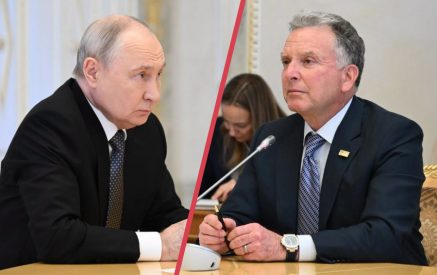
A few words about external pressure. It will not come from Russia, as some opposition figures naively believe. Although Pashinyan is no favorite of Putin’s, he is entirely useful to Russia. I have written many times about why. If pressure does come, it will be from the West. The rigged elections, escalating repression, growing corruption, the “Cultural Revolution,” and the wild ambition to replace the head of the Armenian Apostolic Church — under certain circumstances, Europeans and Americans could use all of this against Pashinyan. Under what circumstances? When the de facto war between the EU and Russia comes to an end and Pashinyan is no longer needed as an “outpost.”
P.S. Naturally, I wish no one dead; I wish everyone good health and a long life. The scenarios outlined here are theoretical.
Aram ABRAHAMYAN