


















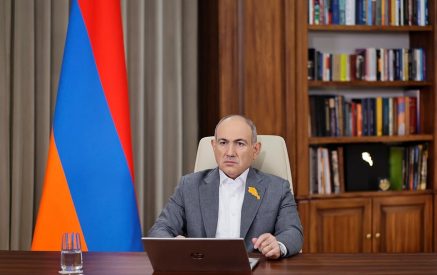
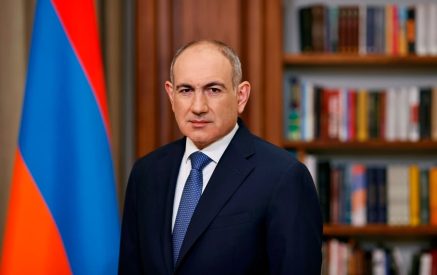




















Pashinyan is not someone with whom one can reach an agreement on any issue.
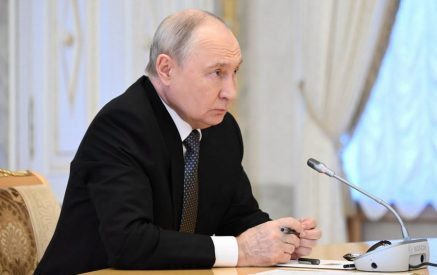
The leader of the Civil Contract Party says: “If I say I am stepping down and then don’t, there will be a revolution.” Naturally, as always, he is lying. First, as I have already written, he will never step down voluntarily, under any circumstances. He will not leave, even if 20 referendums fail or 20 terms of office expire. Just as his source of inspiration, Vladimir Putin, has done (despite the fact that Civil Contract members sometimes put on airs, pretending to be “anti-Russian”), even if his term in office expires under some constitution, he will simply “reset” his previous terms.
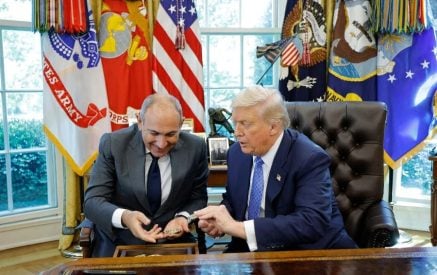
As one pro-Nikol user wrote (about me): “You’ll croak, but our Prime Minister will remain Prime Minister.” To tell the truth, I consider that scenario entirely realistic. I even doubt that I will live to see Putin, Lukashenko, Aliyev, Rahmon and Berdimuhamedov pass away. There is no other way they will leave office. Pashinyan is no different. Presumably, dictators have some secret means of prolonging their physical existence. “Very strong leaders, tough and smart,” Donald Trump says of such people. He, too, would rule until he turned 100 if he had his way, but the traditions of a democratic country and public opinion (not just the Constitution) do not allow it.
But why wouldn’t there be a revolution if the chief Civil Contract figure were to announce that he was stepping down under some particular condition and then refuse to do so? After all, wasn’t that how the 2018 change of power happened? First, let me remind you that the terrible, deadly disasters brought upon us by Pashinyan cannot be compared with the notorious case of making a promise and failing to keep it. Generally speaking, the mistakes made by Armenia’s previous leaders are mere minor flaws compared with Pashinyan’s disgraceful failures, which have humiliated every one of us.
Read also
And yet, those failures have not led to any revolution. There are several reasons for this. The first is that tens of thousands of Armenian citizens have had their minds poisoned by Nikol’s propaganda narratives about the “former rulers” and the Russians. Half of these narratives are lies, while the other half, although true, are “irrelevant” to the actual situation—in other words, they cannot serve as any kind of “justification” for the current failures. On the other hand, there are tens of thousands of Armenian citizens who are completely indifferent to all of this and are concerned exclusively with “living well.”
But there is another reason, which I believe is even more compelling, why a revolution is now unlikely. Compared with 2018, democracy in Armenia has suffered a severe setback. Since 1991, there has never been a situation in which the leaders of the country’s three main opposition political forces were all behind bars, while criminal proceedings were being pursued against numerous other public figures, including the Catholicos of All Armenians and several bishops. This legal lawlessness is compounded by moral intimidation, with accusations involving “agents,” “spies” and “internal enemies.”
Holding a referendum under conditions of such widespread repression is simply farcical. But even if one is held and, purely hypothetically, the “No” vote wins, Pashinyan will still not leave office. He is more likely to incite street unrest or come up with some other contrivance to cling to his seat. And if “Yes” “wins”—the way the Civil Contract Party “won” the last parliamentary elections—the leader of that organisation will be even less inclined to step down, instead beating his chest and proclaiming that “the people have endorsed me.”
Given all this, it is laughable that Pashinyan is offering the opposition a deal. The very idea of a deal is, of course, acceptable—but not when it comes to a person like him.
Aram ABRAHAMYAN
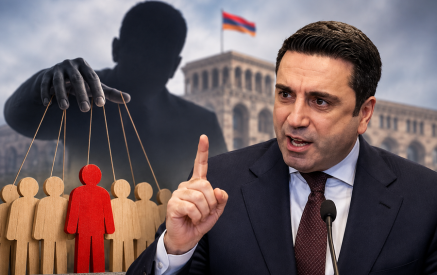
The illustration was created using AI technology