

























Attention, I quote: “We, the people of the Republic of Armenia, for the sake of the longevity and development of our statehood, guided by the mission to build an independent, peaceful, secure, and prosperous state within our internationally recognized territory, and committed to passing this state on from generation to generation, adopt the Constitution of the Republic of Armenia.
The Constitution is our collective agreement regarding the fundamental principles governing the internal and external relations of the Republic of Armenia.”
Dear people, dear citizens of the Republic of Armenia,
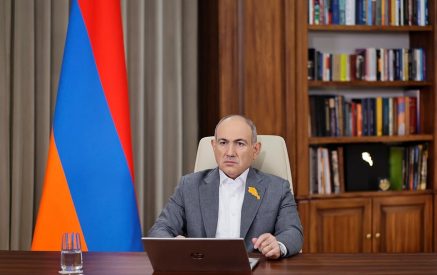
This quotation comes from the first draft of the new Constitution for the Republic of Armenia, which, at my instruction, the Ministry of Justice has published today on a specially created website. The primary objective of this website is to ensure that every citizen can review the draft in the most convenient format and submit their proposals.
Read also
We received the mandate and authority to prepare the draft of the new Constitution from you, based on the results of the 2026 parliamentary elections, and the adoption of the new Constitution is a key point in the pre-election program of the “Civil Contract” party.
I have spoken frequently in recent years about the necessity of adopting a new Constitution. The subject is so multifaceted that I will undoubtedly need to address it many more times in the near future, especially since I anticipate an active public discussion regarding the draft.
At this moment, I would like to address several motivations and arguments regarding the necessity for the Republic of Armenia, and its people, to have a Constitution.
Through the adoption of a new Constitution, we need to establish an organic link between the citizen and the legal order established in the country, a legal order that, in every instance, derives from the Constitution. While the legal order currently in place in our country does indeed derive from the existing Constitution, no organic link has been forged between the citizen and that legal order. This is for the simple reason that none of the previous constitutions were adopted through the free expression of the citizens’ will; according to a broad public consensus, the results of those referendums were rigged.
Let us conduct a small experiment right now: do you, yes, you, dear citizen, watching this broadcast, consider the Constitution currently in force in Armenia to be your own? Clearly, the answer is no. And many of our problems stem from this very point: when a citizen does not consider the Constitution to be their own, does not view the established legal order as their own, and, ultimately, does not regard the state as their own.
It is essential that the Constitution be yours, that the legal order be yours, and in this way, the state will become fully and completely yours. This is not my Constitution, nor is it anyone else’s; it is your Constitution, which states: “The founder of the Republic of Armenia is the people of the Republic of Armenia.”
In the Republic of Armenia, power belongs to the people. The people are the masters, the bearers, and the source of power.
The people are the collective body of the citizens of the Republic of Armenia.”
This draft is intended to make the legal order yours, the Constitution yours, and the state yours; for this draft of the Constitution states: “The people founded the Republic of Armenia for the purpose of ensuring their security, freedom, and well-being, protecting and developing their identity, and safeguarding the rights and freedoms of the human being and the citizen. The realization of this purpose is a state interest.”
Let me quote it again: “The people founded the Republic of Armenia for the purpose of ensuring their security, freedom, and well-being, protecting and developing their identity, and safeguarding the rights and freedoms of the human being and the citizen. The realization of this purpose is a state interest.” These are not merely sentences; they represent the choice of a state model, a completely new model of the state, and it is precisely this model that we call the 4th Republic.
How does the 4th Republic differ from the 3rd Republic? By the absence of conflict, dear compatriots.
The Third Republic of Armenia was established not for the purpose of ensuring the security, freedom, and well-being of its citizens, protecting and developing their identity, or safeguarding human and civil rights and freedoms, but rather for the sake of conflict—with conflict as its objective. This is evident not only from the statements and articles of Armenia’s leaders in the 1990s but also from the text of the Declaration of Independence adopted on August 23, 1990.
It is precisely this logic of conflict that has sidelined the individual and their dreams, opting instead for the path of confrontation; it is this very logic of conflict that has fueled the emigration draining our country; and it is this logic of conflict that has spawned figures like “General Manvel,” “Dodi Gago,” “Samo from Kaluga,” Robert Kocharyan, Serzh Sargsyan, and “Mishik”—individuals whose sole purpose and mission was to plunder, plunder, and plunder, all while hiding behind grandiloquent rhetoric about a “Greater Armenia.”
Today, at long last, these plunderers are one by one facing the punishment they deserve, and what was stolen is being returned to the state and the people. Yet, the justice system in Armenia lacks credibility. I honestly do not know, I must confess, I truly do not know which court, tomorrow, might issue a ruling that sets free one of these plunderers or corrupt figures. Due to a criminal-oligarchic justice system, which the current Constitution has placed under ironclad protection, numerous plunderers and murderers roam free, even with a government in place that holds a mandate from the people.
One of the objectives of this Constitution is to liberate the justice system from the clutches of the oligarchy, to return it to the people, and to ensure it serves both the people and the state.
As a result of the popular, non-violent, velvet revolution of 2018, power was returned to the people; through the adoption of the new Constitution, the state must be returned to the people. Through the adoption of the new Constitution, peace must be returned to the people.
Article 8 of the draft of the new Constitution states that the objective of the foreign policy of the Republic of Armenia is to ensure peace, a truly landmark declaration. And this, indeed, represents a departure from the logic of the Declaration of Independence of August 23, 1990, that is, a departure from the logic of conflict.
Never, under any circumstances, succumb to the temptation to think that we are doing this due to external pressure or for the sake of others. We are doing this to bring to life the vision of the enduring existence of our state, and to position the Republic of Armenia in such a way that it transcends the logic of an outpost.
Our goal is to transform the Republic of Armenia from a place of trenches into a “crossroads of peace”—a country that also possesses an army capable of independently defending the inviolability of the state’s borders and its internationally recognized territory.
Dear people, dear citizens of the Republic of Armenia,
I stake my entire political, personal, and moral credibility on this matter, and I declare that following the adoption of the new Constitution, we will not only sign and ratify a peace agreement with Azerbaijan, but we will also secure an institutional, lasting, and irreversible peace.
This is an unprecedented and historic situation, not merely because we will achieve an institutional peace, but because we will secure both peace and independence, peace and a state. This is, in essence, a new situation in the history of our people, for we have typically had either peace or a state.
Perhaps it was precisely for this reason, to turn peace into a mere dream, that the Karabakh conflict was instigated on the eve of the Soviet Union’s collapse; the aspiration to regain that peace was intended to lead us toward the idea of renouncing our statehood and independence.
And I want to state directly that the entire negotiation process regarding the Karabakh issue was built precisely upon this logic, and yes, that conflict brought us to the brink of losing our statehood.
Yet today, at the cost of the sacrifices made by our martyrs, and through your own suffering and hardships, dear people, we have reached a point where we have the opportunity. Can you imagine? The opportunity to possess both peace and a state, both peace and independence.
It is precisely this that the “three-headed” war party seeks to derail. This is the root of their grievance; preventing this is their very mission. How else can one explain their rejection of my proposal, a proposal that is perfectly clear and, for any reasonable opposition, would be nothing short of a dream?
And what is it that I am proposing to the opposition, and why? Since the “Civil Contract” faction in the National Assembly falls short by six mandates to call a referendum on the new Constitution, I have made the following proposal to the opposition, a proposal I now reiterate live, before your very eyes, and with full sense of responsibility. I propose that the opposition vote in favor of the decision to put the draft Constitution to a referendum, so that we may hold a constitutional referendum. In this way, an opportunity will be created for you, the people of the Republic of Armenia, the citizens, to determine the fate of the new Constitution through the results of that referendum.
The continuation of this proposal, which represents an unprecedented opportunity for the opposition, is as follows: if the people vote against the Constitution and it is not adopted, I will resign and step down from the position of Prime Minister. And if you, the people, vote in favor of the Constitution, I will not run as a candidate for Prime Minister in the next elections, whether they are regularly scheduled or snap elections. In the period leading up to the next election, I will, in my capacity as Prime Minister, focus on the institutionalization and finalization of peace, a process that I am confident will come to fruition.
In this way, Armenia will reach an entirely new historical milestone, where we will no longer be forced to choose between peace and the state, peace and independence, peace and prosperity, or peace and democracy. We must possess all of these: peace, independence, a state, prosperity, freedom, and democracy.
Dear people, dear citizens of the Republic of Armenia,
We have now reached the future I had promised, and all that remains is for us to reach out our hands and take it. I hope that the parliamentary opposition will not stand in the way; I hope the opposition will abandon its role as the sole obstacle to peace and will not attempt to hinder the true master of the Republic of Armenia—that is, the people.
Glory to the martyrs, and long live the Republic of Armenia!
Minister of Foreign Affairs and International Trade of the Republic of Armenia