





















Cultural Heritage Ombudsman of Artsakh, Honorary Board Member of the “UNESCO Armenia” NGO Hovik Avanesov
Three years ago, on 17 November 2023, the highest judicial body of international justice, the International Court of Justice, issued an Order indicating provisional measures against Azerbaijan.
The Order was announced by Joan E. Donoghue, President of the International Court of Justice of the United Nations. The provisional measures prescribed by the Court were aimed at ensuring the protection of the fundamental rights of the Armenian population forcibly displaced from Artsakh as a result of the large-scale war unleashed by Azerbaijan in September 2023.
However, today, three years after the adoption of that Order, we are compelled to acknowledge a reality that not only exposes Azerbaijan’s de facto failure to fulfil its assumed international obligations, but also demonstrates a profound crisis of respect for the international legal system, its authority, and its practical effectiveness.
Read also
The Order of 17 November 2023 was not an ordinary judicial act. It constituted an unequivocal legal demand addressed to the international community to prevent the further aggravation of the consequences of the forced displacement of the Armenians of Artsakh and to ensure the protection of the fundamental rights of the forcibly displaced population.
The International Court of Justice ordered Azerbaijan to ensure the safe, unhindered, and prompt return of Armenians forcibly displaced from Artsakh as a result of the large-scale war unleashed in September 2023; to guarantee the security of persons who remained in or returned to Artsakh; and to preserve their personal, registration, and property documents, as well as the relevant records concerning them.
However, following the formal establishment of these legal obligations, Azerbaijan has not only failed to ensure the implementation of the objectives of the Court’s Order, but continues to maintain a situation that creates obstacles to the restoration of the rights of the Armenians of Artsakh.
It is noteworthy that the Order of 17 November is not the only decision of the International Court of Justice whose requirements Azerbaijan has failed to comply with. Earlier, on 22 February 2023, the International Court of Justice of the United Nations, within the framework of the International Convention on the Elimination of All Forms of Racial Discrimination, issued an Order concerning the unblocking of the Lachin Corridor, rejecting Azerbaijan’s counterclaim.
The decisions of the International Court of Justice (ICJ) are binding upon the States parties to the respective proceedings. In the event of non-compliance, the injured party is entitled to refer the matter to the United Nations Security Council in order to secure the implementation of the Court’s decision. This procedure is provided for under Article 94 of the UN Charter, since the Court does not possess its own coercive or law-enforcement mechanisms to ensure the direct implementation of its decisions.
Article 94 of the UN Charter
- Each Member of the United Nations undertakes to comply with the decision of the International Court of Justice in any case to which it is a party.
- If any party to a case fails to perform the obligations incumbent upon it under a judgment rendered by the Court, the other party may have recourse to the Security Council, which may, if it deems necessary, make recommendations or decide upon measures to be taken to give effect to the judgment.
In the event of non-compliance with a judgment, the injured party may appeal to the UN Security Council. The Security Council may recommend appropriate actions and also impose various sanctions in order to ensure compliance with the ICJ judgment, while the General Assembly, within the scope of its powers, may adopt relevant recommendations to facilitate its implementation.
At the same time, the UN Secretary-General may also contribute to ensuring the implementation of an ICJ judgment within the scope of his or her authority and international obligations, relying on the function of “good offices” aimed at promoting the fulfilment of international obligations. This may be undertaken either with the authorization of the relevant UN body or at the initiative of the Secretary-General. In this context, the Secretary-General may act as a high-ranking official supporting the fulfilment of international obligations and possessing opportunities for political and diplomatic influence in this regard.
However, the effectiveness of international legal mechanisms and the measures undertaken by the relevant bodies must be assessed not merely by the decisions adopted and statements issued, but also by their actual consequences. Yet, three years later, the situation remains unresolved, while the rights protected by the decision of the International Court of Justice remain, in practice, unrestored.
Three years later, approximately 150,000 Armenians of Artsakh continue to remain forcibly displaced, deprived of the opportunity to live in their historical homeland, return to their own homes, exercise control over their property, and continue their normal national, cultural, and spiritual life.
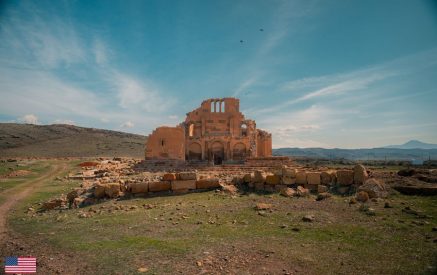
Their settlements, homes, lands, property, churches, monasteries, historical monuments, and ancestral graves remain beyond their reach, in the territory of the Republic of Artsakh temporarily occupied by Azerbaijan. This is a territory where the Armenians of Artsakh are deprived of the opportunity to freely and effectively exercise their own rights, as well as of genuine and effective guarantees of security and legal protection.
This is not merely a social issue concerning a forcibly displaced population. It is the consequence of a systematic assault directed against an entire people, forcibly deprived of its historical homeland, its national identity, historical memory, cultural continuity, and collective rights.
The forced displacement of the Armenians of Artsakh cannot be presented as a mere geographical relocation of a population. Its consequences have severed the vital ties between an entire people and its historical homeland, historical environment, community life, spiritual centres, and ancestral heritage.
People have been deprived not only of their homes and property, but also of the opportunity to live within the cultural environment created by their ancestors, preserve the historical bond between generations, and continue their educational, spiritual, and public life in their own communities.
Moreover, the consequences of forced displacement continue to unfold today. The threats of destruction, appropriation, distortion of identity, and erasure of the historical traces of Artsakh’s Armenian historical, cultural, and spiritual heritage further aggravate the consequences of violations of the rights of the Armenians of Artsakh, transforming them into an ongoing and multidimensional assault.
Consequently, the issue concerns not only the forced displacement that has already taken place, but also the continuous aggravation of its consequences, the severance of a people’s ties with its historical homeland, and the systematic restriction of the opportunities to preserve its collective identity.
International law cannot be applied selectively: inaction is also a matter of responsibility
The situation surrounding Artsakh has exposed not only Azerbaijan’s failure to fulfil its assumed international obligations, but also the international system’s inability—or, more concerningly, its lack of the necessary political will—to uphold in practice the very principles it proclaims.
For years, international organizations and individual States have issued statements in defence of peace, human rights, the security of peoples, the principle of non-use of force, international humanitarian law, and the peaceful settlement of conflicts.
However, when those principles were required to be applied in an actual situation, when it was necessary to prevent the forced displacement of an entire people resulting from the use of military force and ensure the restoration of its rights, the international response not only fell short of the gravity of the challenge, but also failed to translate into effective legal and political action.
When approximately 150,000 people are deprived of the opportunity to live in their historical homeland as a result of the use of military force, when binding decisions of an international court do not lead to their effective implementation, and when the response of international actors is largely confined to expressions of concern, fundamental questions arise.
What practical value do international law and international guarantees have if they fail to ensure the restoration of violated rights?
What is the value of a decision of an international court if the necessary monitoring, political, and legal mechanisms are not deployed to ensure its implementation?
What significance do UN statements and international resolutions have if the principles enshrined therein are not translated into genuine measures to prevent violations and remedy their consequences?
And finally, what confidence can any people place in the international security system if, in the face of gross violations of its fundamental rights, geopolitical interests prevail over the consistent defence of legal principles?
The silence of international organizations is not neutrality. Political inaction cannot be presented as a balanced position, and tolerance of non-compliance with international obligations can under no circumstances be regarded as the protection of international law.
When international violations are not followed by commensurate legal and political consequences, a dangerous environment of impunity emerges. This not only aggravates the consequences of mass violations that have already taken place, but also encourages disregard for international obligations, creating a dangerous precedent for new conflicts, the use of force, and the recurrence of forced displacement.
The international community must recognize that such conduct threatens not only the rights of the Armenians of Artsakh, but also the authority and integrity of the international legal order and confidence in its fundamental principles.
The depopulation of Artsakh of its Armenian population cannot become a new political reality accepted by the international community
Of particular concern is the political tendency to attempt to confine the Artsakh issue exclusively to the framework of the normalization of relations between Armenia and Azerbaijan, while simultaneously circumventing the fundamental rights of the Armenians of Artsakh, including the essential issues of their security, protection of property and cultural heritage, return to their historical homeland, restoration of statehood, and restoration of the territorial integrity of the Republic of Artsakh.
The rights of the Armenians of Artsakh cannot be subsumed under the agenda of interstate relations. They cannot be disregarded in the context of peace treaties, regional communications, economic cooperation, or geopolitical arrangements.
No interstate agreement can, by virtue of its legal force, extinguish the fundamental rights of a forcibly displaced people or the international obligations aimed at protecting those rights.
The fate of the Armenians of Artsakh cannot become an issue discussed behind closed doors in political negotiations, subject to compromise, or subordinated to geopolitical interests.
Their rights cannot be limited solely to temporary residence in the Republic of Armenia, social assistance, employment, or integration programmes. Such measures can and must serve to address the current social and economic needs of forcibly displaced people; however, under no circumstances can they replace the right to return to their historical homeland, the fundamental objective of restoring Armenian statehood, or the restoration of the territorial integrity of the Republic of Artsakh.
There is no basis for placing the social integration of the Armenians of Artsakh in the Republic of Armenia in opposition to the international protection of their right to return to their homeland. These are distinct yet complementary directions, neither of which can nullify or replace the other.
The right of return must guarantee not merely formal presence, but a full and dignified life exclusively under Armenian jurisdiction
It is necessary to clearly state that the right of the Armenians of Artsakh to return cannot be interpreted merely as the possibility of physically returning to a geographical territory.
The return of the Armenians of Artsakh must be considered in the context of the restoration of Armenian statehood and the territorial integrity of the Republic of Artsakh, as well as the provision of a free, secure, and dignified life exclusively under Armenian jurisdiction.
It cannot entail the retention of any form of control, governance, jurisdiction, or presence by the Azerbaijani authorities. The full exercise of the right of return must exclude any form of Azerbaijani state, military, administrative, police, security, or other presence in the territory of Artsakh.
The return of the Armenians of Artsakh must guarantee not the restoration of residence under the control of the Azerbaijani authorities, but a genuine opportunity to live in their own historical homeland exclusively under Armenian jurisdiction and to restore Armenian statehood.
Genuine return presupposes the creation of such legal, political, and security conditions as will guarantee people’s free, safe, dignified, and permanent residence in their homeland, under conditions ensuring the restoration of Armenian statehood and the territorial integrity of the Republic of Artsakh.
It must include:
Full recognition, protection, and restoration of property and inheritance rights;
A genuine opportunity to return to former places of residence and establish permanent residence there;
Guarantees of freedom of movement, personal security, and physical integrity;
Full access to education, healthcare, employment, and public life;
The right to preserve and restore Armenian historical, cultural, and spiritual heritage;
The unhindered preservation and expression of national, religious, linguistic, and cultural identity;
Family reunification, restoration of community life, and ensuring the continuity of the historical environment;
The opportunity to restore the state institutions and system of public administration of the Republic of Artsakh;
Restoration of the territorial integrity of the Republic of Artsakh and establishment of Armenian jurisdiction over its entire territory.
Return cannot take place under conditions in which the returning population would be subjected to threats, persecution, discrimination, intimidation, coercion, or denial of its national identity.
A fundamental prerequisite for the return of the Armenians of Artsakh must be the exclusion of any form of Azerbaijani state, military, administrative, security, or other presence and the establishment of exclusively Armenian jurisdiction.
Otherwise, discussions about return may turn into merely formal political declarations that would neither restore people’s violated rights nor ensure their security, dignity, and fundamental freedoms.
Safe return cannot depend on the goodwill of the Azerbaijani authorities or their unilateral promises. It must be based on international legal obligations, independent monitoring, effective guarantees, and clear and effective mechanisms of accountability in the event of violations of those guarantees.
It is necessary to move from statements to legal, political, and practical accountability
The international community is obliged to revise its approach and consider remedying the consequences of the depopulation of Artsakh of its Armenian population not as a matter of managing the consequences of an event that occurred in the past, but as an ongoing legal, political, and humanitarian obligation.
To this end, the following urgent measures are necessary:
- Monitoring the implementation of the decision of the International Court of Justice.
Ensure consistent international monitoring of the implementation of the Order of 17 November 2023, demand clear accountability from Azerbaijan, and raise the legal consequences of its non-compliance on relevant international platforms.
- International guarantees for safe return.
Develop and implement international mechanisms for the safe, dignified, unhindered, and sustainable return of the Armenians of Artsakh, excluding any form of Azerbaijani state, military, administrative, security, or other presence and ensuring that return takes place exclusively under Armenian jurisdiction.
These mechanisms must also be directed towards creating the conditions necessary for the restoration of Armenian statehood and the territorial integrity of the Republic of Artsakh.
- Protection of property rights.
Document, at the international level, violations of the housing, land, economic, and other property rights of forcibly displaced Armenians of Artsakh, and ensure legal avenues for the recognition, protection, and restoration of those rights.
- Protection of cultural and spiritual heritage.
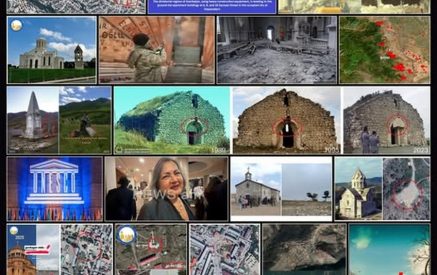
Ensure independent monitoring, satellite surveillance, and international documentation of Armenian historical, cultural, religious, and spiritual heritage in the territory of the Republic of Artsakh temporarily occupied by Azerbaijan.
Demand that the relevant international organizations respond appropriately to every documented case of the destruction of monuments, appropriation, distortion of identity, and erasure of historical traces.
- International legal accountability.
Consistently advance legal proceedings concerning forced displacement, deprivation of property rights, destruction of cultural heritage, and other alleged violations of international law, ensuring an independent examination of the facts and an appropriate and comprehensive consideration of the issue of accountability.
- Inclusion of the Artsakh issue on international agendas.
Make the rights of the Armenians of Artsakh an integral component of international negotiations, discussions on regional security, and the activities of international organizations.
No negotiation process should circumvent the rights and legitimate demands of the forcibly displaced people, including the fundamental issues of return to their historical homeland, restoration of Armenian statehood, and restoration of the territorial integrity of the Republic of Artsakh.
- Ensuring international political pressure and accountability.
International organizations and States must cease limiting themselves to general statements and apply effective political and legal measures in accordance with their respective powers and international obligations, aimed at ensuring Azerbaijan’s compliance with its assumed international obligations.
These demands do not constitute any political claims and cannot be interpreted as an attempt to interfere in the internal affairs of another State. They derive from the fundamental principles of human rights, international humanitarian law, and international justice, as well as from the obligations undertaken by the international community.
Three years have been sufficient to recognize that inaction cannot be justified
Three years have been sufficient to understand that the mere existence of a decision of an international court does not, in itself, ensure justice. The vitality of law depends on the existence of the political will to defend it, legal consistency, and genuine and effective mechanisms of accountability.
Otherwise, the international legal system becomes an institution whose authority is preserved only in documents, while the fundamental values and principles it is meant to protect continue to be violated in real life.
The international community cannot disregard the fact that every unfulfilled obligation, every violation left unanswered, and every assault left unprevented further deepen injustice and reinforce an atmosphere of impunity.
The protection of the rights of the Armenians of Artsakh must not depend on changes in international political agendas. It cannot become secondary merely because new geopolitical priorities have emerged in the region.
The return of the Armenians of Artsakh is not a matter of any State’s benevolence, political concession, or unilateral permission. It is a fundamental right, the protection of which constitutes a legal and moral obligation of the international community.
This right cannot depend on the arbitrary decisions of the Azerbaijani authorities, changes in regional interests, or the political priorities of international actors.
The return of the Armenians of Artsakh must entail the full restoration of their right to live in their own homeland, exclusively under Armenian jurisdiction, in the absence of any form of Azerbaijani presence, and through the restoration of Armenian statehood and the territorial integrity of the Republic of Artsakh.
The factor of time must not be disregarded either. When a forcibly displaced people remains deprived of the opportunity to return to its homeland for years, when its homes and property remain inaccessible, and when its historical and cultural heritage is exposed to the threat of destruction, appropriation, and distortion of identity, each passing day further deepens injustice and makes the restoration of violated rights increasingly difficult.
Time cannot be used as a mechanism for the loss of rights. The prolonged existence of the consequences of forced displacement cannot render them lawful or acceptable. The international community must not allow the consequences of forced displacement to be transformed over time into an allegedly irreversible political reality, or the deprivation of a people of its historical homeland into a fact tacitly accepted in international relations.
The international community must answer a fundamental question
Today, the question is not merely what happened in Artsakh. The question is what kind of international order is taking shape when the use of military force can determine the fate of an entire people, forcibly deprive it of its historical homeland, and subsequently leave international legal obligations without practical implementation.
If decisions of international courts are not backed by genuine monitoring, if the rights of a forcibly displaced people are excluded from the agenda of political negotiations, and if the threats of cultural heritage destruction and the erasure of historical memory do not provoke an adequate international response, then it is not only the future of the Armenians of Artsakh that is at stake, but also the credibility of international law as a system of universal protection.
If international law cannot protect a forcibly displaced people, then tomorrow no people will be immune to the same fate.
The right of the Armenians of Artsakh to return must become one of the priority issues on the international agenda. Justice cannot be postponed until it loses its practical significance. Peace cannot be built upon the tacit acceptance of the consequences of forced displacement, the loss of a historical homeland, the destruction of cultural identity, and impunity.
What is presented today as the establishment of regional stability cannot be regarded as genuine peace as long as approximately 150,000 people remain deprived of the opportunity to live in their own historical homeland, and no genuine international legal and security guarantees have been established for their safe and dignified return on the basis of exclusively Armenian jurisdiction, the restoration of statehood, and the restoration of the territorial integrity of the Republic of Artsakh.
Without remedying the consequences of the depopulation of Artsakh of its Armenian population, fully restoring the rights of the Armenians of Artsakh, restoring Armenian statehood and the territorial integrity of the Republic of Artsakh, and ensuring safe return exclusively under Armenian jurisdiction through the exclusion of any form of Azerbaijani presence, no calm established in the region can be regarded as sustainable and just peace.
It is merely a temporary pause amid unresolved issues, unrestored justice, ongoing violations of rights, and the threat of new tragedies in the future.
Justice demands not yet another statement, but action. International law demands not a selective response, but consistency. And the Armenians of Artsakh demand not sympathy, but the recognition, protection, and full restoration of their rights.