












Cultural Heritage Ombudsman of Artsakh Hovik Avanesov
PROTECTING THE RIGHTS OF INDIGENOUS PEOPLES WITHOUT PROTECTING THE RIGHTS OF THE INDIGENOUS PEOPLE OF ARTSAKH?
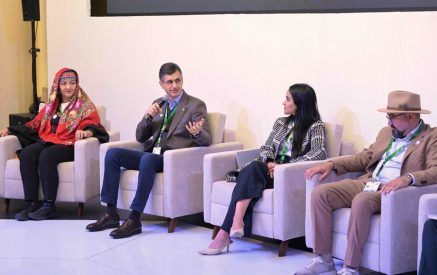
Armenia’s Minister of Environment, Hambardzum Matevosyan, presented the decision adopted within the framework of COP17 in a Facebook post as a historic achievement, placing particular emphasis on the adoption of the terms of reference for the Subsidiary Body on Article 8(j) and Other Provisions of the Convention on Biological Diversity related to Indigenous Peoples and Local Communities.
However, such statements inevitably raise serious political, moral, legal and fundamental questions. How credible is the official rhetoric concerning the protection of the rights of Indigenous Peoples when, under those very same principles, the rights of the Indigenous People of Artsakh are disregarded, while the genocide perpetrated against them is, in essence, excluded from the international environmental and humanitarian agenda?
Read also
❗ It is unacceptable and profoundly contradictory to portray the protection of Indigenous Peoples’ rights as a historic achievement in international policy while simultaneously overlooking the reality that the Indigenous People of Artsakh have been deprived of the opportunity to live in their ancestral homeland, subjected to genocide and forced displacement, and that their spiritual, historical, cultural and natural heritage remains under the threat of destruction, appropriation and systematic eradication.
Moreover, this context raises a fundamental question: why, within the framework of COP17, where the rights of Indigenous Peoples, local communities and biodiversity conservation are being discussed, has no adequate attention been devoted to the ecocide perpetrated and continuing to be perpetrated by Azerbaijan in Artsakh? Why has the international community’s attention not been drawn to the destruction of Artsakh’s forests, the deliberate damage inflicted upon natural ecosystems, fires, biodiversity loss, encroachments upon water and land resources, as well as the irreversible environmental damage caused during the war?
It is particularly unacceptable to overlook the need to investigate and publicize evidence concerning the use by Azerbaijan of prohibited weapons and munitions during its military operations against Artsakh, including weapons and ammunition that raise grave concerns under international humanitarian law. The international environmental agenda cannot turn a blind eye to environmental disasters resulting from warfare or to their long-term consequences for human populations, fauna and flora, natural habitats and ecosystems.
⚖️ Equally alarming is the disregard for the continued captivity in Baku of representatives of Artsakh’s military and political leadership and the sham trials being conducted against them. The fundamental rights of the Presidents of Artsakh, its state and military-political officials, as well as other Armenian prisoners, cannot be separated from the principles of human rights protection, justice and the rule of international law. The issues of their release and the termination of their unlawful detention must constitute an integral part of the agenda of prestigious international events hosted by Armenia.
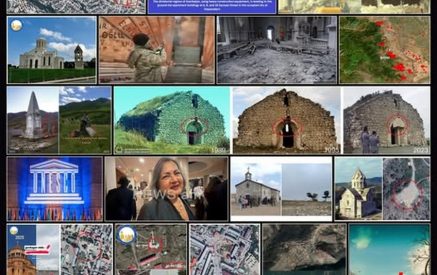
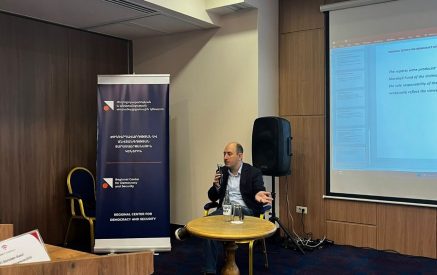
Furthermore, serious questions arise regarding COP17’s organizational and representational policies. Why were non-governmental organizations working on Artsakh-related issues and the protection of its natural and cultural heritage not provided with adequate opportunities and exhibition space to present their work, fact-finding activities and documentary evidence concerning crimes committed in Artsakh to the international community (https://www.facebook.com/share/p/19XNTmpxqk/) ? Why have precisely those organizations been deprived of the opportunity to be represented on an international platform—the very organizations that, for years, have documented and raised the alarm over violations targeting Artsakh’s natural environment, historical and cultural heritage, and the rights of its indigenous population?
If COP17 is intended to serve as a platform for amplifying the voices of Indigenous Peoples and local communities, why has insufficient space been allocated to Artsakh’s civil society organizations? Do the evidence, research and warnings presented by these organizations somehow fail to correspond to the conference’s declared objectives? Or has the international presentation of the truth about Artsakh itself become inconvenient?
The rights of Indigenous Peoples cannot be selective, contingent upon circumstances or subordinated to political expediency. They are universal and indivisible human rights, and their protection requires not merely eloquent declarations, the adoption of international decisions and official statements, but also a consistent and impartial position on violations of the rights of specific peoples.
It is particularly perplexing that such issues are being raised in the context of a prestigious international conference held in Armenia, while the Indigenous People of Artsakh’s right to return to their homeland, the consequences of their forced displacement, the protection of their cultural heritage (https://www.facebook.com/share/p/1Ff5yPh6fD/,https://www.facebook.com/share/p/1Mr7kDunka/) , the destruction of their natural environment, documented acts of ecocide, the release of prisoners of war and civilians, as well as the unlawful captivity of Artsakh’s military and political leadership, are not being accorded the attention they deserve.
What historic achievement can one speak of when an Indigenous People’s right to live in its own ancestral homeland remains unprotected, its natural and cultural heritage is being destroyed, and its elected representatives and state leaders continue to be held captive by Azerbaijan?
🌱 The international environmental agenda cannot be confined to technical and institutional mechanisms for biodiversity conservation while disregarding the fundamental issues of preserving peoples’ historical presence, traditional living environments, cultural identity and centuries-old relationship with nature. The destruction of an Indigenous People’s ancestral natural environment, the eradication of its settlements, encroachments upon its natural resources and the systematic degradation of its historical landscape cannot be treated as matters separate from environmental concerns.
The disregard for the rights of Artsakh’s Indigenous People, the restriction of the voices of its representatives, the denial of adequate opportunities for Artsakh’s civil society organizations to secure representation on the international stage ( https://www.facebook.com/share/p/19yGYqsyUs/) , as well as the omission of ecocide, the use of prohibited weapons and the plight of Armenian prisoners of war, reveal a profound contradiction between the values proclaimed by COP17 and their practical implementation.
The protection of Indigenous Peoples’ rights must be universal, not selective. Environmental justice cannot remain silent in the face of ecocide; human rights protection cannot disregard people held in captivity; and the international agenda on the rights of Indigenous Peoples cannot exclude a people forcibly displaced from its ancestral homeland.
❓ And if the principles of protecting the rights of Indigenous Peoples are not extended to the Armenian people of Artsakh as well; if their right to return, the freedom of their unlawfully detained leaders and prisoners, and the destruction of their natural and cultural heritage are not accorded due attention, then what value do the official declarations concerning the protection of these rights actually have?
The rights of the Armenian people of Artsakh must not be excluded from the international agenda. Silence is not neutrality, and selective justice is not justice.