








































THE DESTRUCTION OF ARTSAKH’S CULTURAL HERITAGE AND THE INACTION OF INTERNATIONAL ORGANIZATIONS
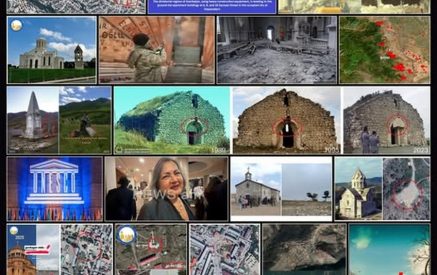
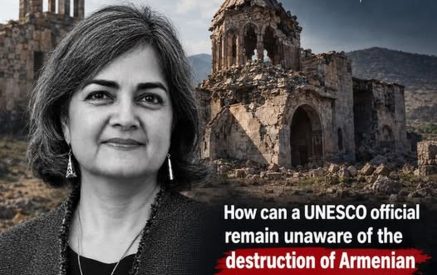
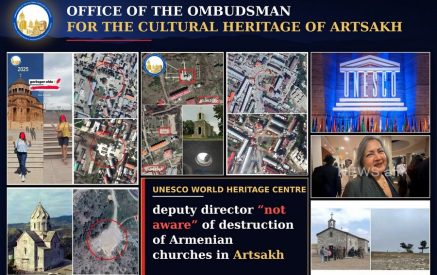
At the initiative of the Office of the Ombudsman for the Cultural Heritage of Artsakh, detailed information and documentary evidence have been submitted to Lazare Eloundou Assomo, Director of the UNESCO World Heritage Centre, and Jyoti Hosagrahar, Deputy Director of the same Centre. The materials concern documented cases of the destruction, damage, appropriation, and distortion of the historical identity of Artsakh’s cultural heritage by Azerbaijan since the 2020 war.
The submitted materials document and systematize the key challenges concerning the protection of Artsakh’s historical and cultural heritage, with particular attention to actions directed against Armenian churches, monasteries, khachkars, cemeteries, memorial complexes, and other significant testimonies of historical memory.
The purpose of submitting these materials is to draw the attention of international professional bodies and competent institutions to the continuing threats facing Artsakh’s cultural heritage, to promote the proper examination of documented incidents, and to secure the implementation of concrete and effective measures aimed at safeguarding cultural property.
Read also

The silence of the international community cannot justify the destruction of cultural heritage
The continued actions targeting Artsakh’s cultural heritage raise serious questions about the willingness, consistency, and effectiveness of international organizations in fulfilling their commitments and obligations.
Despite repeated statements emphasizing the importance of cultural heritage protection, the responses of international institutions are often not accompanied by urgent, practical, and effective measures capable of preventing the irreversible loss of historical and cultural assets.
The mandate of international organizations cannot be confined to expressing concern, issuing statements, or reaffirming universal principles of cultural heritage protection. These principles acquire practical significance only when supported by consistent monitoring, independent professional investigations, preventive action, and measures designed to ensure legal accountability.
Statements without action cannot substitute for accountability
When reports of the destruction, damage, or distortion of the historical identity of cultural heritage do not lead to commensurate monitoring, independent fact-finding missions, continuous surveillance, and preventive measures, legitimate questions arise regarding the effectiveness of international protection mechanisms.
International inaction and the risk of impunity
The inadequate responses of international organizations, delayed intervention, and lack of practical action may have grave and irreversible consequences for Artsakh’s cultural heritage. When the necessary measures to protect endangered monuments are not taken in a timely manner, every delay increases the likelihood that irreplaceable historical evidence will be lost forever.
Moreover, the continued passivity of international institutions may contribute to the consolidation of a climate of impunity, creating conditions in which the destruction of cultural property, the denial of its historical affiliation, or the distortion of its identity can continue without adequate preventive measures or proper legal assessment.
Where information about the threats is available and the loss of cultural property may be irreversible, inaction can no longer be regarded as a merely neutral position.
The accountability of international institutions must be assessed not only in light of their public statements but also in the context of the concrete measures they have taken-or failed to take-within the scope of their respective mandates and commitments.
Public statements and general appeals cannot be considered an adequate response when monuments are at risk-monuments that constitute irreplaceable testimonies to millennia of history, a people’s identity, spiritual heritage, and historical memory.
What value do internationally proclaimed principles of cultural heritage protection have if their practical implementation fails to ensure the effective safeguarding of endangered cultural assets?
This question demands a clear answer-not through yet another general statement, but through the examination of evidence, the accountability of responsible institutions, and demonstrable results.
Artsakh’s cultural heritage is a universal human value
The protection of Artsakh’s cultural heritage is not merely a matter of preserving Armenian historical memory. It is an imperative of safeguarding universal cultural values, the historical identities of peoples, religious and cultural diversity, and the world’s shared heritage.
The destruction of historical and cultural monuments, or the distortion of their historical identity, damages not only the heritage of the people concerned but also humanity’s collective historical memory.
Accordingly, the responsibility of the international community cannot be limited to expressing concern or reaffirming the importance of preserving cultural property. It entails consistent monitoring, independent fact-finding, professional assessments, the application of legal mechanisms, and the implementation of necessary measures.
The effectiveness of UNESCO and other competent international institutions must also be assessed by the extent to which their actions genuinely contribute to protecting endangered cultural assets and preventing their irreversible loss.
Immediate action must replace statements
The Office of the Ombudsman for the Cultural Heritage of Artsakh calls upon UNESCO and other competent international institutions to:
Conduct independent and continuous monitoring to assess the current condition of cultural heritage sites located in the territory of the Republic of Artsakh under temporary Azerbaijani occupation and to document any changes.
Ensure access for independent expert missions to the relevant territories in order to examine the actual condition of monuments, document damage, and assess the measures required for their protection.
Publish professional assessments and documented findings concerning recorded cases of destruction, damage, appropriation, and distortion of historical identity.
Implement the necessary preventive and protective measures, within the framework of international law and the respective mandates of the relevant institutions, to prevent further losses of cultural heritage.
Ensure the proper legal assessment of, and examination of accountability for, actions directed against cultural heritage, in accordance with applicable rules of international law.
Publicly disclose information on the measures undertaken and their outcomes, thereby ensuring transparency and accountability in the activities of international institutions.
The credibility of international institutions must be measured not by the number of statements they issue, but by the acts of vandalism they prevent, the monuments they save, and the accountability they secure
The Office of the Ombudsman for the Cultural Heritage of Artsakh will continue to systematically document actions targeting Artsakh’s cultural heritage. In doing so, it will also draw upon publications by specialized organizations and experts in the field, scientific and academic research, and available documentary and analytical materials.
The collected and examined evidence will be submitted to international institutions, calling for its proper examination, an adequate and consistent response, and the implementation of clear, effective, and practical measures to safeguard cultural heritage.
The true significance of international commitments in the field of cultural heritage protection lies not merely in their public reaffirmation but in their consistent implementation. It is therefore necessary not only to document the existing situation but also to assess clearly the effectiveness of the measures taken and identify the gaps that allow harmful actions against cultural property to continue.
The destruction of historical memory must not become another silent chapter in the history of international indifference
The protection of cultural heritage requires not merely promises, but action; not merely expressions of concern, but accountability. Silence does not save monuments, and a delayed response cannot restore historical assets that have been irreversibly lost.
The protection of Artsakh’s cultural heritage is an obligation of the international community, while its preservation is a responsibility owed to history, justice, and future generations.