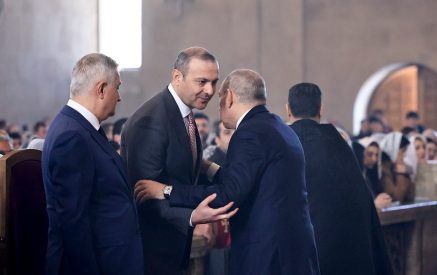












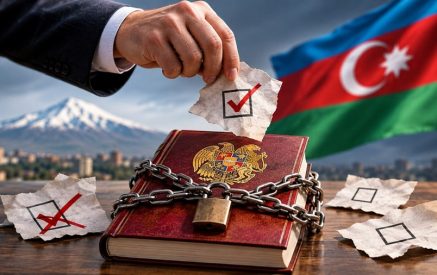



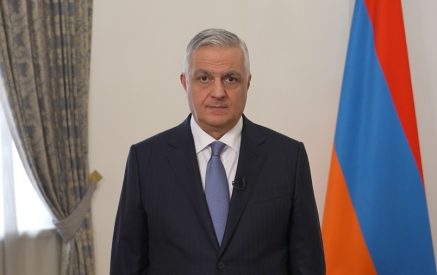



















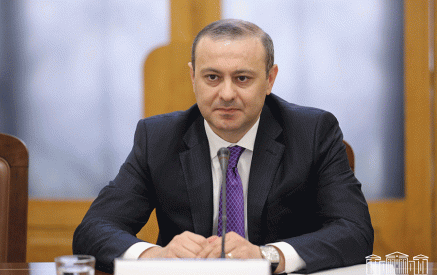
Armenia’s former Security Council Secretary Armen Grigoryan, who has been working for some Western consulting organization since leaving office, says that the more vigorously Armenia moves towards the West, the more deeply it falls under Russia’s influence. He argues that this has been the historical pattern and points to the current situation as well: before the adoption of the much-discussed law on launching the process of Armenia’s EU accession, Armenia had been able to steadily reduce its dependence on Russia. But after the law was passed, the picture changed, and there is now a significant risk that the opposite will happen.
It is indeed difficult to argue with Armenia’s former Security Council Secretary on this point. What is surprising is that he never voiced such concerns while he was still in office. After all, it was precisely during his tenure that Armenia’s parliamentary majority passed that law—a piece of legislation that is perhaps unique in the history of world parliamentary practice, because, essentially, it is a law about nothing. Did Armen Grigoryan voice his concerns at the time? Did he tell Nikol Pashinyan that passing this law would make things worse and prove counterproductive, that it would actually play into Russia’s hands? At any rate, he expressed no such concerns publicly.
The paradox is that the law was adopted at the initiative of pro-government civil society and political groups in Armenia that were staunchly pro-Western and explicitly anti-Russian in their positions. Armen Grigoryan, too, was one of the Armenian government’s most emphatically pro-Western figures, enjoying the confidence of the West. So what we have is one staunchly pro-Western figure, through a very transparent hint, criticizing a law initiated by other staunchly pro-Western figures and forces—implicitly, if not directly, portraying it as a service to Russia.
Read also

Has a “battle” broken out within Armenia’s governing system, among the “pro-Western” camp? Such situations usually arise when something starts running out and there is no longer enough to go around. What is it that is now running out for Armenia’s ruling system?
Hakob BADALYAN