







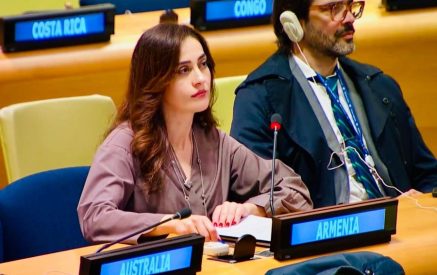



There is a fairly widespread belief in Armenia that Russia has already “given up” on Nikol Pashinyan and no longer expects anything from him. In other words, he has been “written off.” In that case, the question arises: what is the purpose of the ultimatums that continue to be issued over the EAEU–EU issue? If Nikol Pashinyan has been “written off” or Russia has “given up” on him, then decisions should follow that would “implement” those definitive approaches toward him. Yet we see that Moscow, together with the other EAEU members, seems to be playing a “cat-and-mouse game” when it comes to Armenia or Pashinyan.
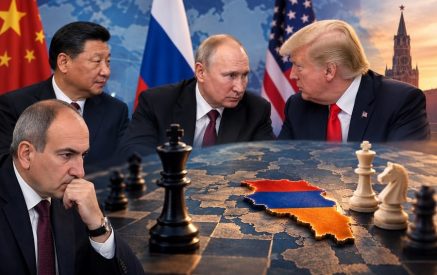
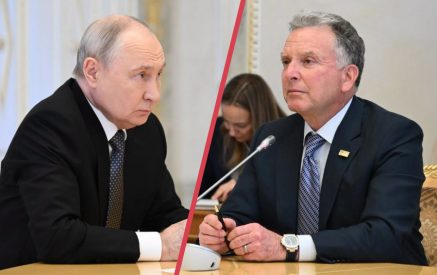
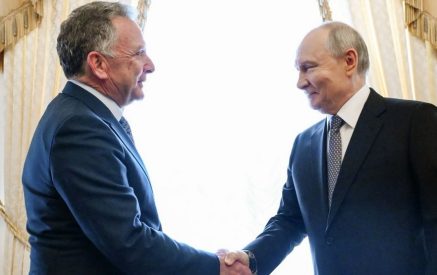
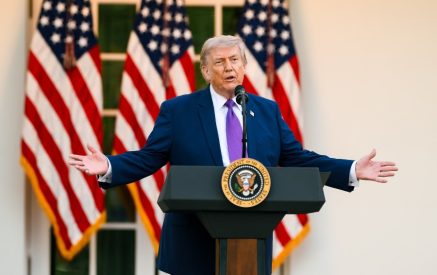
Consequently, this means that the perceptions I mentioned above may be far from reality, may be inaccurate, and may not reflect the essence of the political situation. In that case, what is that essence? To examine this, perhaps the issues need to be considered in a broader context. Yesterday in St. Petersburg, U.S. Special Presidential Envoy Steve Witkoff held talks with Putin. Although on the surface those talks were supposed to focus on a settlement in Ukraine, there is nevertheless a strong possibility that the actual discussions concerned the upcoming trilateral summit—its preparation or coordination. In November, the summit of the Asia-Pacific organization will be held in China, and both Putin and Trump have announced that they will attend. Moreover, Trump has also openly described a trilateral summit with Putin and Xi Jinping as a possibility. In international expert circles, such a summit is already being characterized as “Yalta 2”—that is, as the “groundbreaking” for a new world order. That characterization may be exaggerated, but the overall assessment is perhaps accurate.
In essence, the “fate” of Armenian-Russian relations may be decided precisely within this process. This is not merely about that possible trilateral meeting, since the meeting would more likely lay the groundwork for a process rather than resolve all the issues. Until that process reaches some milestone, it is perhaps premature to say that Russia, for example, may have a formulated long-term position on the question of power in Armenia. The issue here is not whether Russia trusts Pashinyan or not. Russia, or Putin, or the Kremlin—call it what you will—but trust is not the issue. The point is that Moscow’s more fundamental approaches toward Armenia’s authorities can take shape only once the role and logic of Armenian-Russian relations within the new world order begin to emerge. Moreover, in this context, the question of Armenia’s authorities is a broader concept than simply the question of Nikol Pashinyan.
Hakob BADALYAN