



































In 2027, the GDP is designed at 13 trillion 614 billion drams. The State budget revenues will amount to 3 trillion 604 billion drams, representing 26.5 percent of GDP. Tax revenues will total 3 trillion 463 billion drams, or 25.4 percent of GDP—a figure projected to improve by 0.6 percentage points compared to 2026.
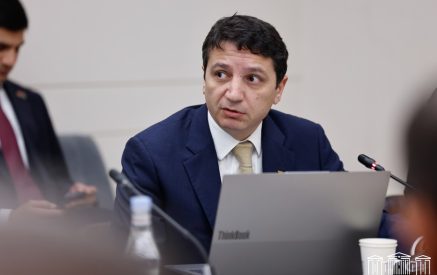
At the sitting of the Standing Committee on Financial-Credit and Budgetary Affairs the draft law On the RA 2027 State Budget was debated. The RA Minister of Finance Vahe Hovhannisyan presented the abovementioned data.
The state budget expenditures will amount to 4 trillion 72 billion drams, which is 29.9 percent of the GDP. The capital expenditures will amount for 5.6 percent of the GDP, totaling 761 billion drams, compared to the 704 billion drams envisaged in the 2026 budget.
The defense expenditures will make up 44 percent of capital expenditures. Compared to 2026, an increase will be recorded for the Ministry of Health by 136 billion drams, for the Ministry of Labor and Social Affairs – by 91 billion drams, and for the Ministry of Defense by 53 billion drams. In the security and defense sector, it will amount to 835 billion drams – a 13 percent increase; in the economic sector, 496 billion drams – a 10 percent increase; in the social sector, 1 trillion 868 billion drams – a 15 percent increase; the expenditures for legislative and executive bodies, 668 billion drams – a 5 percent increase; justice, 82 billion drams; administrative bodies, 29 billion drams – a 10 percent decrease; and the Government reserve fund, 93 billion drams.
Read also


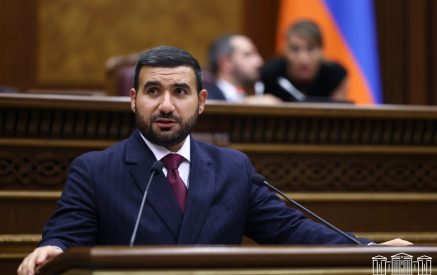
The Minister also spoke about the economic developments and the situation in international markets. The positive economic developments were recorded in 2026. International markets are currently characterized by an inflationary environment, with rising prices for copper and oil. According to Vahe Hovhannisyan, forecasts suggest that oil prices will decline in the near future—a trend that was already noticeable last week. “The export volumes from Armenia are decreasing; however, if we exclude re-exports, the export volumes are actually growing. We have based our projections on the assumption that the re-export factor will diminish or disappear entirely next year,” the Minister noted and added that money transfers continue to grow by 21.5 percent: under these conditions, the Central Bank intervened, resulting in a significant increase in reserves.
In response to the deputies’ questions, Vahe Hovhannisyan addressed topics including forecasts regarding the external environment and their impact on the budget, programmatic indicators, the effect of recent business closures on the economy, the specifics of programme-based budgeting, export destinations, and other sector-related issues.
National Assembly of Armenia