
























Three More Armenian Parties Back Swiss Peace Initiative for Nagorno Karabakh
Yerevan and Baku urge Bern to ignore cross-party consensus ahead of June 7 elections
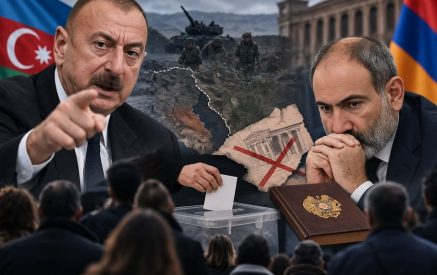
ZURICH / YEREVAN — A pre-election split has opened between Armenia’s incumbent government and a growing cross-section of opposition parties over the Swiss Peace Initiative for Nagorno Karabakh, an initiative by the Swiss parliament to convene a peace forum between Azerbaijan and representatives of the 150,000 forcibly displaced Armenian Christians of Nagorno Karabakh.
The government of Prime Minister Nikol Pashinyan has joined Azerbaijan in notifying the Swiss Foreign Ministry that the peace initiative is “not desired.”
Read also
Pashinyan’s stance places his ruling party, Civil Contract, at odds with virtually every other political force participating in Armenia's June 7 parliamentary elections and which holds seats in the current National Assembly.
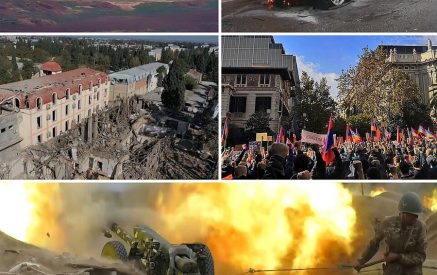
In March 2025, the Swiss parliament adopted Motion 24.4259, which mandates the Swiss government to organize a peace forum under international supervision between Azerbaijan and representatives of the Armenian people of Nagorno Karabakh (Artsakh), who were driven from their homeland by an Azerbaijani military offensive in September 2023.
The purpose of the forum is to negotiate the safe and collective return of the Armenians to their homeland – a land which had been home to one of the oldest Christian communities in the world, but which has now been emptied of its inhabitants, and whose religious heritage is now being destroyed by Azerbaijani forces.
On May 5, Christian Solidarity International (CSI), a Switzerland-based human rights organization, announced that five opposition parties, movements and blocs had endorsed the Swiss Peace Initiative. Over the past week, Strong Armenia, the Republican Party of Armenia, and the National Democratic Alliance added their names.
“It is troubling that, as Armenians prepare to vote, the party in power has chosen to tell the Swiss government to ignore the displaced victims of ethnic cleansing — a position rejected by almost every other party on the ballot,” said Dr. Joel Veldkamp, Director for Public Advocacy at Christian Solidarity International.
“Motion 24.4259 was adopted by both chambers of the Swiss parliament as an act of moral clarity. No foreign government's objection — least of all one that does not represent the displaced themselves — relieves the Swiss Federal Council of its obligation to act,” Veldkamp added.
The parties, blocs and movements supporting the Swiss Peace Initiative to date are:
- Armenia Alliance (including the Armenian Revolutionary Federation);
- Country to Live Party;
- HayaQve National Civil Union (campaigning with Strong Armenia Party);
- Mother Armenia Party (in alliance with Prosperous Armenia Party);
- National Democratic Alliance;
- Republican Party of Armenia;
- Strong Armenia Party;
- Wings of Unity Party.
The initiative is also supported by the leadership of the exiled Nagorno Karabakh community. In February, Ashot Danielyan, the Acting President of the Artsakh Republic and Speaker of the National Assembly, wrote a public letter to Swiss Foreign Minister Ignazio Cassis, urging him “to take the necessary initiative to give effect to this mandate.”
The “150,000 displaced people of Nagorno Karabakh do not seek to alter the geopolitical order or undermine the peace process between Armenia and Azerbaijan,” Danielyan wrote. “We remain hopeful that Motion No. 24.4259 will come to fruition, offering the displaced people of Nagorno Karabakh a credible and principled pathway toward the realization of their most fundamental right: a safe and dignified return to their homes.”
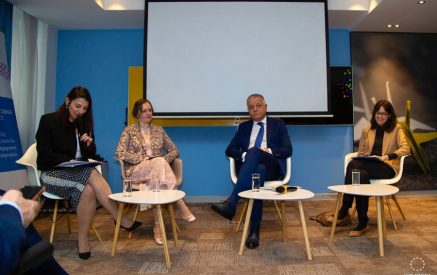
On April 30, Danielyan and other community leaders from Nagorno Karabakh visited Switzerland’s parliament house, where they participated in a dialogue with Swiss members of parliament about the Initiative.
The need for this mandated peace forum has only grown more critical since the dissolution of the OSCE Minsk Group, which for over 30 years was tasked with finding a peaceful solution to the Nagorno Karabakh conflict. Its closure, demanded by Baku as a precondition for the Washington declaration of August 8, 2025, has left a vacuum for the fulfillment of humanitarian demands as basic as the ability to visit cemeteries, protect religious heritage, and to exhume loved ones for reburial in Armenia, which the Swiss Peace Initiative is uniquely positioned to fill.
Christian Solidarity International calls on the Federal Council to proceed with the peace forum without delay.
Christian Solidarity International (CSI) is an interconfessional Christian human rights group, campaigning for religious liberty and human dignity, and assisting victims of religious persecution, victimized children, and victims of catastrophe.
CSI is an NGO with consultative status at the United Nations Economic and Social Council. Christian Solidarity International was founded in Switzerland in 1977 by Rev. Hans Stückelberger and is active in more than 20 countries with public advocacy initiatives and humanitarian aid projects.
Christian Solidarity International