






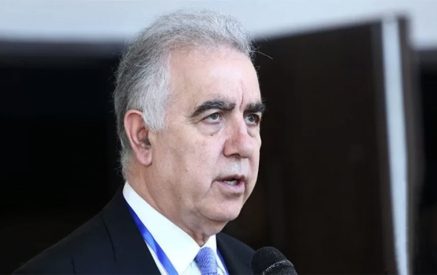

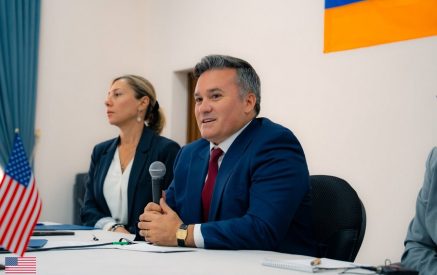

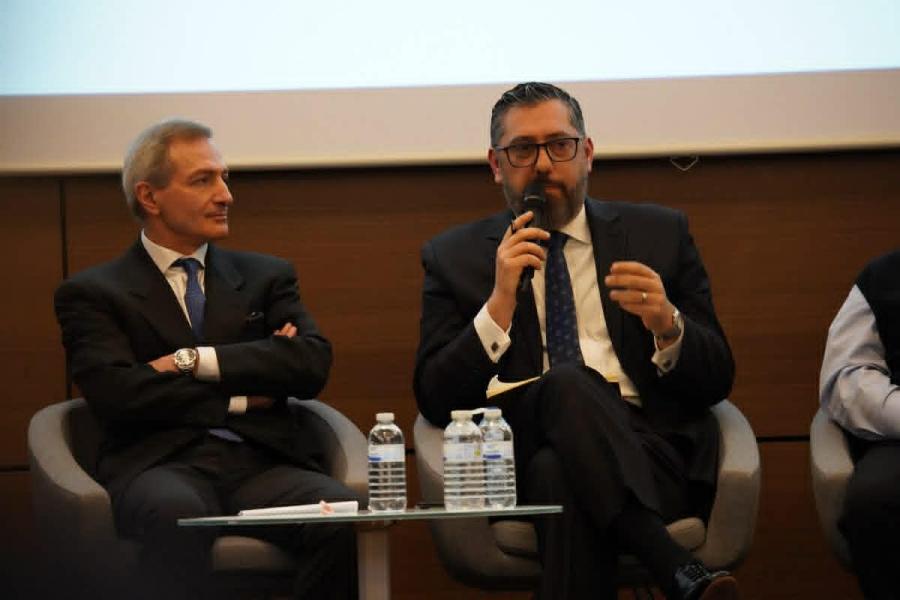
Azg.am. Armenian-American lawyer Karnig Kerkonian warns that Armenians are currently facing an ongoing genocidal process. In his view, historical acts of violence – from the Hamidian massacres to recent events in Artsakh – must be understood as part of a single historical continuum.
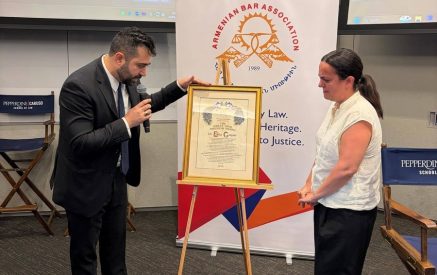
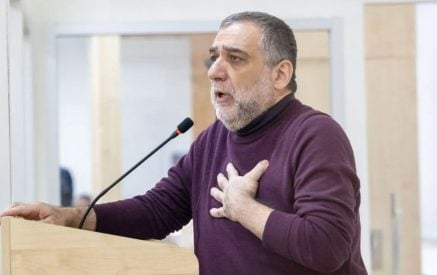
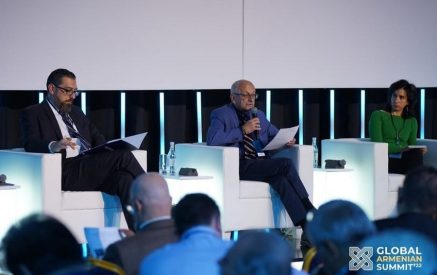
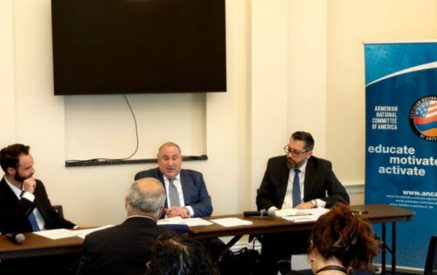
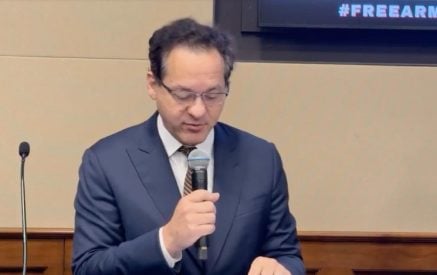
“Our biggest mistake is viewing each episode in isolation, without realising that we are in the midst of genocide,” explains Karnig Kerkonian, an Armenian-American lawyer and member of the Committee for the Protection of the Fundamental Rights of the People of Artsakh. He expanded on this argument during the conference on the national mobilisation of the diaspora, held in Paris on 11-12 April, as well as in an interview with the Parisian radio station AYP FM on 24 April.
According to him, the massacres during the reign of Sultan Hamid, the events in Istanbul in the 1950s and 1960s, the pogroms in Sumgait, Kirovabad and Baku, as well as the ethnic cleansing in Artsakh, are all linked. They form an unbroken historical sequence. And it is not over yet: we are still living through this continuum of violence. “It was the second or third week of May 1915,” recalls Karnig Kerkonian, “and my grandfather, then aged 12 and living in Ayntap, saw hundreds of families from Marash arriving: 100 families, 200 families, 1,000 families. His father, a cobbler, got together with the other cobblers of Ayntap to sew leather water skins so they could distribute water to these families from Marash. Why is this story important today? Because my grandfather, then aged 12, was witnessing the Genocide. He watched the families from Marash, driven into the desert, and he witnessed the genocide without realising it; he perceived it as an isolated incident. Yet genocide was not a one-off event, but a protracted process. Yet my grandfather, an Armenian from Aintap, did not understand this and said to me: “Back then, we could never have imagined that our turn would come later.” He didn’t believe it. Why didn’t he believe it? Because when a person experiences something, they perceive it as an event rather than as an unfolding historical dynamic. Unfortunately, genocide is not an event. It is a continuing process.” He adds that the victims’ disbelief often stems from an inability to grasp the broader pattern as a whole. Historians will not treat these tragedies as isolated episodes, but will instead place them within a single historical continuum. “And what will we see then? We will see the sequence of this campaign; we will see the chain of events.”
In Kerkonian’s view, what happened in Artsakh in 2023 constituted one of the final stages of this process; plans for a “corridor” in Syunik, as well as the TRIPP, are also part of the ongoing genocidal programme.
“It is crucial to understand the current situation: we are in the midst of a genocidal campaign. Even the 7 June elections in Armenia fit into this context. It is striking that on 24 April, we commemorate 1915 whilst we are enduring the same thing today. It is incredible that we have not yet realised that this trajectory is continuing and never stops, especially when we have failed to learn the most important lesson of the Second World War: peace is not achieved through concessions,” the expert stresses one of the central geopolitical lesson. “It is a difficult lesson we must learn; we must stand up and say: this is my red line. Furthermore, historians should be well aware of what has been planned since the 1880s and how Turkey has supported Azerbaijan. To what end, if not to advance the Armenian genocide until it reaches the last 20 to 25 kilometres remaining [of Syunik] to achieve their Turan plan? Is that not so?” he asks.
Read also
‘And the most astonishing thing is that this is no secret to anyone. You don’t need to listen to me; listen to what Erdogan says: during the military parade in Baku after the war, Erdogan himself mentioned Nuri Pasha’s name and declared that Nuri Pasha’s soul had now found peace. This means that the criminals know exactly what they are aiming for. ”
It should be recalled that after entering Baku on 14 and 15 September 1918, Nuri Pasha, a general in the Ottoman Army and the brother of Enver Pasha, the Ottoman Minister of War, began the ethnic cleansing of the Armenian population of Baku and sought to exterminate Armenians in neighbouring provinces, particularly in Artsakh, as well as to subjugate the southern and eastern borders of Armenia. The entry of the Ottoman army into Baku under the command of Nuri Pasha and the massacre of the unarmed Armenian population marked the final act of the policy of extermination of the Armenians pursued by the dying Ottoman Empire. At that time, around 30,000 people were killed as a result of the ethnic cleansing carried out by the Turkish and Azerbaijani authorities.
“The next step was to be not only the capture of Artsakh,” explains Karnig Kerkonian, “but also Syunik. It is quite clear that we are victims. Yes, we are victims. We are a nation that has been victimised. I do not need to experience this personally; I have already felt it through the people of Artsakh. What happened in Marash did not happen only the the Armenians of Marash — it happened to our nation as a whole. And if we broaden our understanding a little and look to the future to understand what we are facing, we will see that this is part of the same historical campaign.”
In conclusion, Karnig Kerkonian stresses that unless this cycle of violence is presented as a coherent whole on the international stage, the policy of extermination will continue. He emphasises that the right of return for the people of Artsakh must remain a top priority on the pan-Armenian agenda.
Mariam Khatlamajyan