
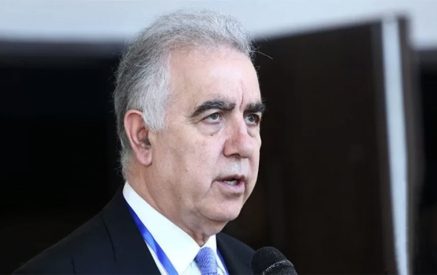





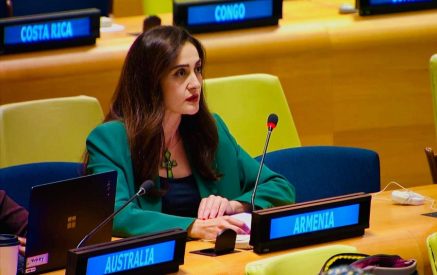










In the past, Armenia’s foreign policy and the Foreign Ministry were a “ministry of martyrdom,” while now Armenia is moving from a “policy of martyrdom” to a “policy of living.” This is the idea put forward by Armenia’s Foreign Minister Ararat Mirzoyan, who is pursuing this “policy of living.”
It turns out that when Armenia’s foreign policy ensured the country’s dignified agency in the Nagorno-Karabakh conflict settlement process, as well as in processes concerning the region, defending Armenia’s rights and identity and, in a broader sense, its dignity, that was “martyrdom.” But when Armenia surrenders to the visions of Azerbaijan and Turkey, and to those of geopolitical centers that make arrangements with them at Armenia’s expense, that is what it means to “live.”
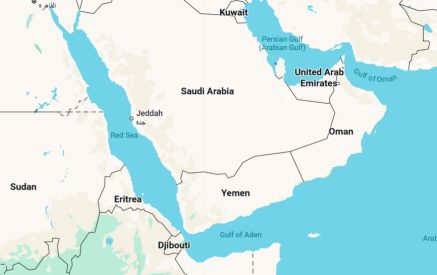
Moreover, as an example of this “policy of living,” Ararat Mirzoyan cites the export of Armenian peaches to Oman thanks to diplomatic efforts. To be sure, that is a major achievement for the state. Presumably, if Armenia manages to export not only peaches but also plums or watermelons to Oman, Mirzoyan will be able to announce that a “martyred state” has been transformed into a “living superpower.”
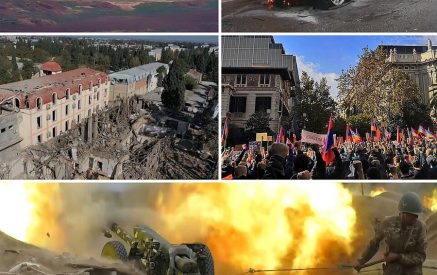
In the first hours and days of the 44-day war, Mirzoyanwho was then Speaker of the National Assembly, published a photograph of Prime Minister Pashinyan and advised people not to “get confused” about the identity of the Supreme Commander-in-Chief. According to official figures, the war resulted in nearly 4,000 Armenian deaths, including in Artsakh. Several hundred more people were killed in the following three years.
Read also
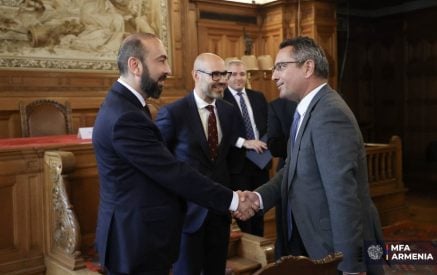
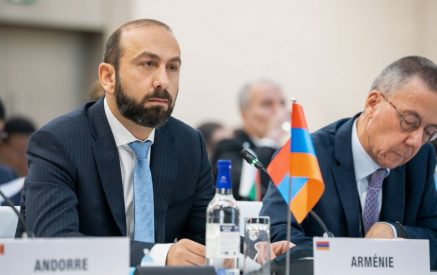
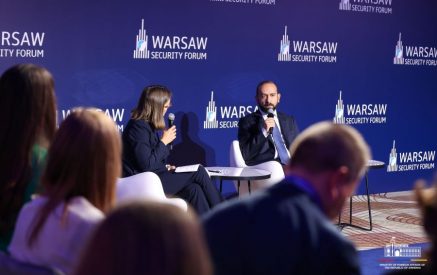
It turns out that the martyrdom of an entire generation was the price to be paid for this “policy of living,” for bringing Azerbaijani fuel into Armenia and for the diplomatic achievement of exporting Armenian peaches to Oman.
HAKOB BADALYAN