




























Authoritarian regimes ban ideas that threaten their hold on power
The history of freedom of speech—and its restriction—is, of course, highly instructive. In this regard, lists of banned books are particularly revealing. From the mid-16th century, for example, the Vatican published such lists, and over several centuries more than 5,200 books were deemed “harmful” or “obscene.” Interestingly, the ban was officially lifted only in 1966.
Around the same period, in the 16th century, England’s King Henry VIII banned dozens of books by royal proclamations, with the list changing in parallel with shifts in the king’s religious and political views.
The Russian Bolsheviks published their first such list in 1922, five years after coming to power. This situation continued for decades. There was not only censorship; books that had already been published were also banned. From time to time, books were confiscated from libraries and bookstores because their authors had, for one reason or another, fallen out of favor with the authorities. The Soviet censorship system was formally established with the creation of Glavlit in 1922, which was empowered to compile lists of publications prohibited for sale and distribution and to issue binding instructions to publishers, libraries and bookstores.
Read also
Any totalitarian or authoritarian government imposes restrictions on words and expressions that, in its view, may be dangerous. The Armenian authorities are no exception. But what makes Armenia distinctive is that, in effect, the instructions on what should be prohibited come from outside: the historical narratives, formulations and place names deemed undesirable or subject to persecution are those that are objectionable to Azerbaijan’s leadership. Moreover, there is no principle of reciprocity in this matter: Azerbaijani officials can make any insult they wish against us Armenians.
To say that nothing like this has ever happened in world history would, of course, be an exaggeration. In particular, when a country loses a war and capitulates, the victorious side may impose restrictions on various areas of the defeated country’s life, including narratives that may be perceived as “revanchist.” For example, in France in 1940–44, the Vichy regime effectively pursued the policies of Nazi Germany, although formally it was called “French.” The imposed restrictions extended to written and spoken language as well.
But even in this respect, contemporary Armenia stands out, because Hitler did not demand that France erase those parts of its history that concerned the heroic chapters of the French people—chapters that testified to expressions of French dignity.
Apparently, Azerbaijan is making a similar demand of Pashinyan’s collaborationist government, and since Aliyev is the main guarantor of the Civil Contract leader’s hold on power, he is forced to comply with those demands.
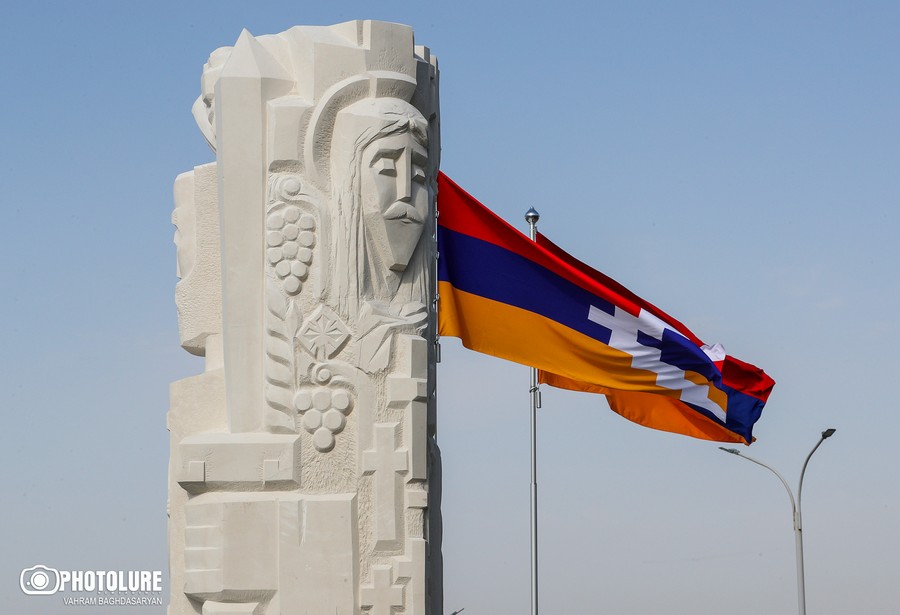
That is why words that contradict the “Real Armenia”—or, in reality, Aliyev’s demands—have officially been banned: “Artsakh,” “Ararat,” “genocide,” “Sardarapat”…
Obviously, these are not merely words, but narratives rejected by Azerbaijan and regarded there as “revanchist.” Accordingly, Pashinyan labels them “war-provoking,” while in reality they are seen as undermining the Civil Contract leader’s hold on power. That is precisely why, as he has stated, he will strictly ensure that no word is spoken in schools and universities that contradicts the “ruling ideology.”
The list of banned words will, naturally, continue to grow day by day.
Aram ABRAHAMYAN