






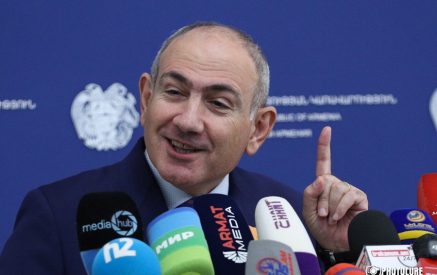
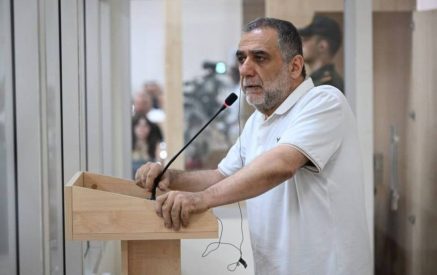




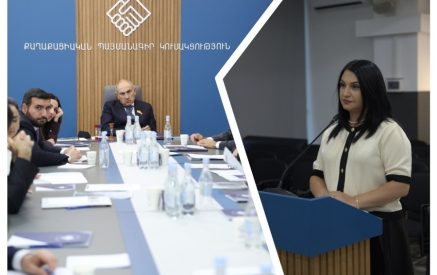
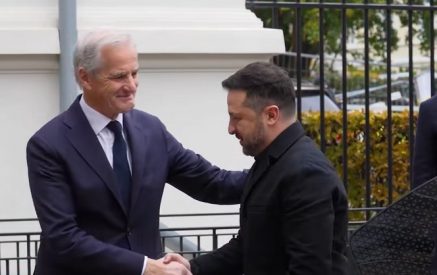


Is the debate in the Parliamentary Assembly of the Council of Europe (PACE) over the report on Armenia’s parliamentary elections a case of “the government and the opposition seeing things differently”? Naturally. That has essentially always been the case. The government has sought to “squeeze” from European platforms whatever it could use to its advantage at home, while the opposition has done the same for itself.
But what are the PACE assessments actually about when, put in plain language, they both “oil and burn” the government over the conduct of the electoral process? There is a widespread interpretation that, in doing so, Europeans recognize the election and its outcome on the one hand, while on the other they keep Nikol Pashinyan under the whip: mind you, if you do not behave as we want you to, we will lay out the problems or irregularities. That is more or less the logic.
But is the impact of Europe’s warning being overstated? Let us imagine that the Europeans say exactly that. And Nikol Pashinyan replies: So what? I will not come to Europe; I will go to Eurasia instead. Remember? Nearly two decades ago, one of the classics of Armenian politics, the late Galust Grigorych, expressed a similar thought, saying that if we were expelled from the Council of Europe, we would go to the “Muslim world.”
The point is that if Sahakyan was trying to respond to the issue with his characteristic sarcasm, Pashinyan, broadly speaking, is doing precisely that today—only not in defiance of Europe, but in Europe’s name. Armenia is steadily becoming a zone to be “appropriated” between Turkey and Azerbaijan—so far in political and “ideological” terms, but this process has been given the high-sounding name of a “European course.”
Read also
And, however strange it may sound, on the actual political ground, the European Union is perhaps the only actor on which Nikol Pashinyan does not have a one-way dependence, but a mutual one. Strange as it may sound, Pashinyan has things to do without the EU, whereas what the EU should do in the Caucasus without Pashinyan is perhaps not such an easy question.
Accordingly, it may be worth not overestimating European influence.
Hakob BADALYAN