


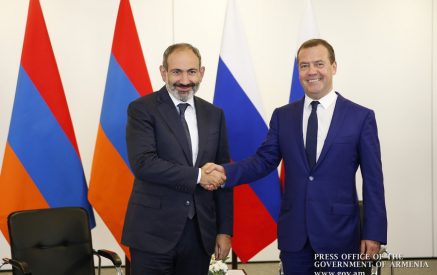


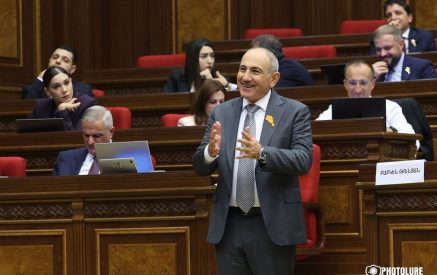





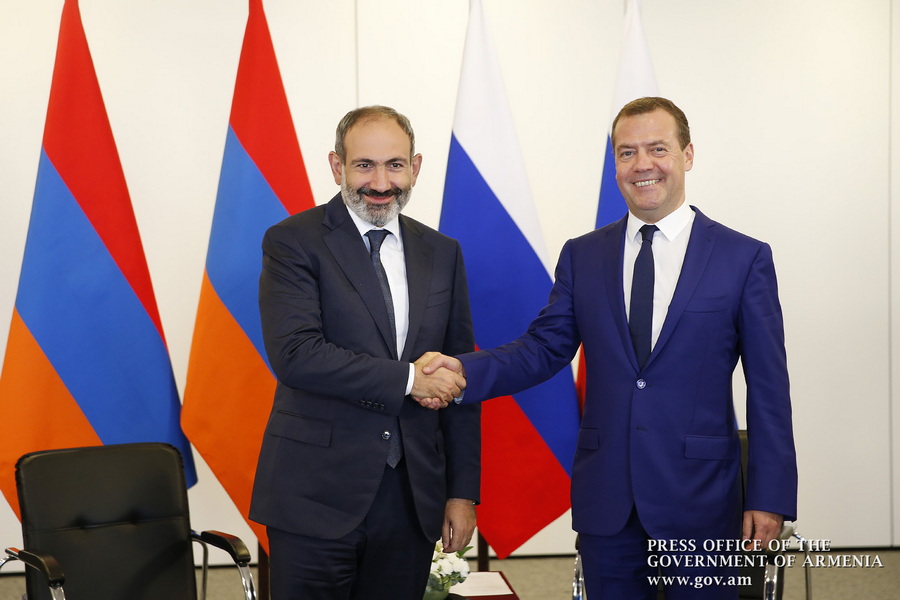
“But what are these ‘jabs’ and threats for now? By the same logic, I could have said, or anyone could have said, that Armenia was turning into a new Russia, pointing to the fact that explosions are taking place in Russia, and so on,” Nikol Pashinyan said yesterday when asked during a press briefing about a post by Dmitry Medvedev, deputy chairman of Russia’s Security Council and a former Russian president.
Pashinyan recalled that he had worked with Medvedev when the latter was also Russia’s prime minister. Medvedev had written about the risk of Armenia’s “Ukrainization” as a consequence of the policies being pursued.
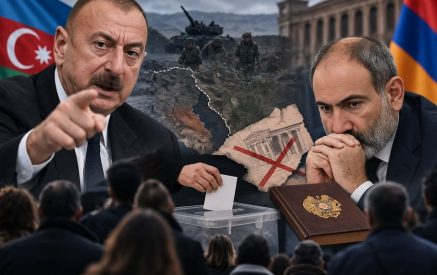
Indeed, what is the purpose of these jabs? Is it to frighten Pashinyan, or the Armenian people, so that, fearing the threat of Ukrainization, they rise up and remove him from power? This is a genuinely important question, although there may be other possible explanations for the purpose of these “jabs.” For example, could their real aim be to turn Nikol Pashinyan into a “heroic defender of sovereignty”?
In any case, if the goal is to frighten Pashinyan, Russia’s situation must be rather bleak if things have come to the point where it has to resort to Medvedev’s posts to intimidate him. And if the aim is to “frighten” the Armenian public and incite it to rise up against Pashinyan, then such posts could “frighten” certain segments of society, but they could just as easily stir up their sense of national pride, whether intentionally or not, and rally them behind Pashinyan, thereby associating him with Armenia’s sovereignty and independence.
Read also
In any case, given that hints of “Ukrainization”—and even harsher posts by Medvedev concerning Pashinyan’s policies—have appeared in the past, it is very difficult to believe that the Kremlin is so naive as to think these posts have the power to weaken Pashinyan.
And this is precisely where the question of that “third possibility” arises: could the very purpose of these “jabs” be to turn Nikol Pashinyan into a “fearless hero of sovereignty”?
One might ask: why? What would Russia gain from this? In seeking an answer, it is worth recalling how, just a few days ago, Nikol Pashinyan abandoned the “strategic decision to build a modular nuclear power plant” in favor of the possible alternative proposed by Rosatom chief Alexey Likhachev after his meeting with Pashinyan.
Hakob BADALYAN