





































Armenia’s accession to the International Criminal Court (ICC) was initiated by the Civil Contract (CC) government as part of a reassessment of security policy following the country’s defeat in the 2020 war and subsequent armed clashes with Azerbaijan. Supported by the United States and the European Union, the initiative became a significant factor in the deterioration of Armenian–Russian relations. Washington’s increasingly hard line towards the Court is changing the foreign policy context of Armenia’s membership: tensions with Moscow are now compounded by serious disagreements between Washington and Brussels. Armenia’s membership of the ICC must therefore be reconsidered in light of both the proclaimed “peace” with Azerbaijan and the growing US-EU disagreements over the Court’s activities.
The History of Accession
Armenia signed the Rome Statute on 1 October 1999. However, on 13 August 2004, Armenia’s Constitutional Court ruled that several obligations under the Statute were incompatible with the Constitution then in force, halting the ratification process. On 29 December 2022, the CC government unexpectedly revived that process in response to the new military and political circumstances that had emerged after Armenia’s defeat in the 2020 war.
Presenting the matter to the National Assembly, the government’s Representative on International Legal Matters, Yeghishe Kirakosyan, stated that “the purpose, naturally, is primarily to ensure accountability for war crimes and crimes against humanity committed by Azerbaijani servicemen.” He also underscored the relevance of the issue by noting that “Azerbaijani armed units remain on Armenia’s sovereign territory even today.” In the government’s view, international criminal justice offered an additional mechanism for protecting the country’s interests at a time when official Yerevan was questioning the effectiveness of the security guarantees provided by its traditional allies.
Read also

On 24 March 2023, the Constitutional Court ruled that the obligations contained in the Statute were compatible with Armenia’s current Constitution. The National Assembly ratified the document on 3 October; the president signed the law on 13 October; and the instrument of ratification was deposited with the UN Secretary-General on 14 November. On 1 February 2024, the Statute entered into force for Armenia, making it the ICC’s 124th State Party. From that point onwards, Armenia’s membership entailed international obligations extending beyond the original political motivations for ratification.
The administration of Joe Biden, the 46th president of the United States, and the EU welcomed ratification of the Rome Statute and endorsed Armenia’s commitments in the field of justice. Moscow viewed Armenia’s decision primarily through the lens of the ICC’s arrest warrant for Vladimir Putin. Russia’s Foreign Ministry called ratification unacceptable and warned of negative consequences for bilateral relations. On 3 October 2023, Kremlin spokesperson Dmitry Peskov described the decision as “inappropriate,” expressing concern about potential obstacles to visits by the Russian president to Armenia.
Moscow thus regarded Armenia’s accession to the ICC as a step inconsistent with Yerevan’s obligations as an ally, while Western support for the decision further deepened the disagreements between Yerevan and Moscow.
The Divergence Between US and EU Positions
During Trump’s first presidency, in 2020, the US imposed sanctions on individual officials in the ICC’s Office of the Prosecutor. The Trump administration has now extended sanctions to the Court itself as an international organisation, threatening its ability to operate.
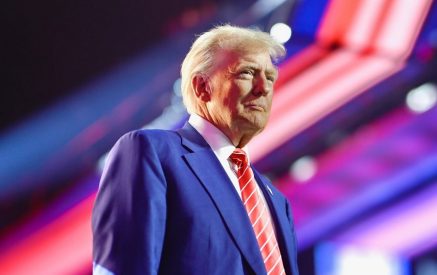
The arrest warrants for Israeli Prime Minister Benjamin Netanyahu and former Defence Minister Yoav Gallant were among the immediate triggers for increased US pressure on the ICC. Yet the disagreement runs deeper: Washington does not recognise the Court’s jurisdiction over citizens of the US or of its allies that have not joined the Rome Statute. Addressing the UN General Assembly in September, Trump declared that the Court had become “out of control” and described it as “a group of evil people.”
Recently, Secretary of State Marco Rubio presented Washington’s position as an ultimatum: either the ICC would cease activities that the US regards as a threat, or the US administration would bring about an end to the Court’s operations. Addressing allies that are ICC members and depend on American assistance, he demanded that they “rein in” the Court. Washington may therefore make its security assistance conditional on its allies’ positions towards the ICC.
The Court has described the sanctions as an attempt to obstruct international justice. To reduce the risks posed by potential restrictions, it had already reviewed its relationships with several suppliers: it switched from Microsoft software to the German openDesk platform and ended its relationship with the insurer AXA.
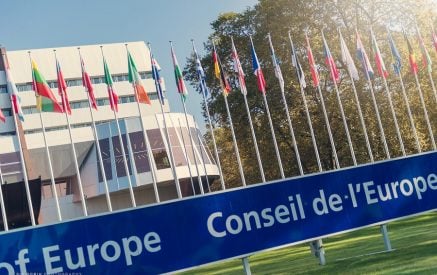
The EU has reaffirmed its support for the ICC’s independence, called on the United States to lift the sanctions, and expressed readiness to take the necessary measures to safeguard the Court’s operations. The Netherlands, which hosts the Court’s headquarters, has likewise pledged to help preserve its normal functioning. European lawmakers are calling for the use of the “Blocking Statute” to prohibit European companies from complying with US sanctions against the ICC. The deepening US–EU disagreements thus affect the practical conditions under which the Court operates and states cooperate with it.
For Armenia, this increases the risk of being caught between conflicting demands from its Western partners. Supporting the EU position could complicate relations with Washington if the US administration demands that ICC member states take punitive measures against the Court. Conversely, accommodating US demands could call into question the consistency of Armenia’s cooperation with the EU and its fulfilment of international obligations.
The “policy of peace” and the ICC
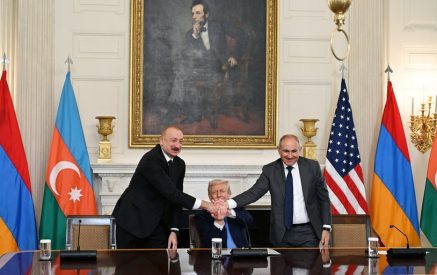
The government’s declared policy of establishing peace with Azerbaijan also requires a reassessment of the purposes of Armenia’s ICC membership. Its statements and actions concerning the end of the Armenian–Azerbaijani conflict and the establishment of “peace” suggest that Yerevan’s priority is to move away from confrontation in international courts. This approach is also reflected in Article XV of the “peace agreement” initialled in Washington on 8 August 2025. The place of ICC mechanisms in the Armenian government’s political agenda therefore needs clarification.
This question becomes particularly acute because Armenia’s leadership links the establishment of “peace” to Trump himself, who challenges the ICC’s activities. The disagreements between Washington and Brussels thus make it harder for Yerevan to reconcile two strands of its foreign policy: normalising relations with Azerbaijan through US mediation and cooperating with an ICC that enjoys EU support.
The government’s declared policy of establishing “peace” with Azerbaijan, US sanctions against the ICC, and the resulting deterioration in relations between Washington and Brussels require Armenia’s government to present the public and its international partners with an updated rationale for the country’s membership of the Court. That rationale should clarify the significance of membership for Armenia’s interests and help reduce foreign policy risks.
P.S.
On 9 October, the 2026 Nobel Peace Prize was awarded to Navi Pillay, a South African-born jurist who served as an ICC judge from 2003 to 2008. Awarding her the highest distinction for contributions to peace drew sharp criticism from the Israeli and US administrations, which condemned her role in the UN commission that concluded that Israel had committed genocide in Gaza.
Armen MARTIROSYAN
Member of Armenia’s Supreme Council and National Assembly, 1990–1999
Ambassador Extraordinary and Plenipotentiary of the Republic of Armenia