

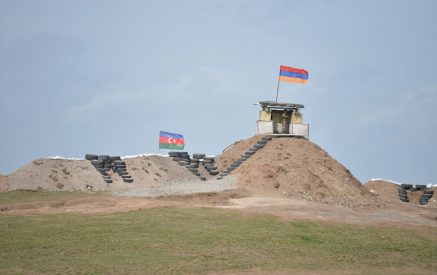




























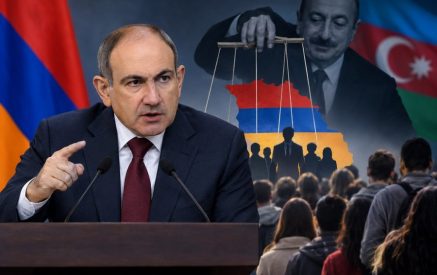

Azerbaijan is advancing politically, diplomatically and in terms of propaganda, while Armenia is retreating.
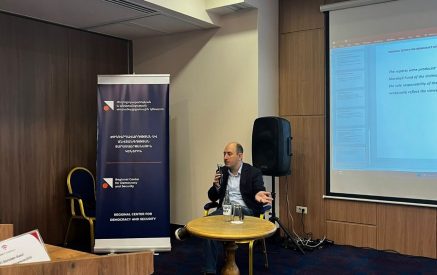
On October 26, speaking at the conference “The Language of Peace and the Fight Against Disinformation,” Azerbaijani presidential aide Hikmet Hajiyev stated: “The peace treaty may be signed, or it may remain on paper.” He then once again spoke of the precondition that Armenia change its Constitution, but did not say that once this precondition was met, the agreement would necessarily be signed.
At the same event, Hajiyev said that Armenia and Armenian society should apologize to Azerbaijanis for the fact that they have been unable to return to their homeland for 30 years. Although Aliyev’s aide did not elaborate on what he meant by “the homeland of Azerbaijanis,” the context makes it clear that he was referring to the present-day territory of the Republic of Armenia. Pay attention: not “their homes,” but “their homeland.”
We know how Azerbaijani diplomacy and propaganda operate: no talking point is voiced by accident. Over time, these talking points are repeated and disseminated through official, public and diplomatic channels, becoming part of the international agenda and also bargaining chips to be placed on the Armenian-Azerbaijani negotiating table. There are many such chips: not only those mentioned above, but also, for example, mine maps, missing persons, enclaves, moral and material compensation, and so on.
Read also
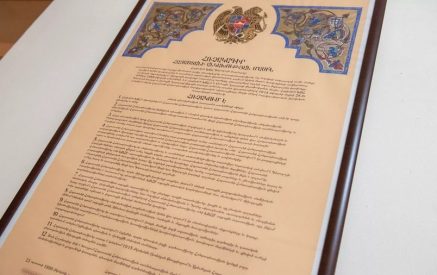
The two statements cited above—the demands to change the Constitution and to apologize—suggest that Baku is not particularly interested in our Constitution in and of itself. Seeing what kind of government Armenia has, it sees an open-ended field for humiliating our country and making ever more demands. And it remains an open question whether all this will lead to the signing of a peace agreement at all. That is how Hajiyev’s words should be understood.
The mechanism is therefore clear: “We will not sign the treaty until you change your Constitution.” Let us assume that the Civil Contract party, through its trademark brazen violations of the law, manages to hold a “referendum” and “slip through” an Aliyev-style constitution. The next possible step (one of the scenarios) would be: “Well, now apologize to the Azerbaijanis.” If Pashinyan, acting “on the mandate given to him by the people,” apologizes, they will say: “You apologized. Good for you. Now make it possible for those people to return to their homeland.” And so on, endlessly.
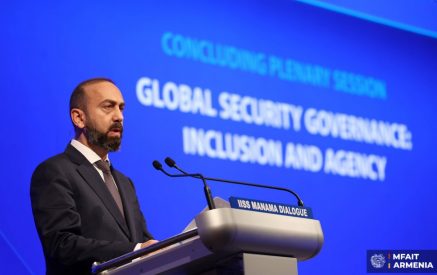
By carrying out the will of the Civil Contract leader, Armenia’s diplomacy not only fails to take countermeasures but also justifies Azerbaijan’s actions. A particular masterpiece of logic was the “lawyering for Baku” by Foreign Minister Ararat Mirzoyan (and whatever else he may be minister of): they are not making a condition that we change the Constitution; they are saying, “If you do not change the Constitution, we will not sign the peace treaty.” When someone frames their statement in conditional terms—“if… then”—simple logic, as far as it goes, tells us that this is precisely what setting a condition means.
By justifying Baku’s moves, Armenia’s authorities are surrendering one position after another. They advance; we retreat. Does this prevent the possibility of war? In my view, no. It may perhaps postpone the war, whose threat, if this course continues, is becoming more real. Genuine peace is possible when the sides put forward their respective conditions, demands and aspirations, and reach a compromise through discussion.
Such negotiations are impossible under Pashinyan.
Aram ABRAHAMYAN